Germany’s EV Surge Reshapes Household Car Costs and Investor Risks
Electric-car registrations jumped about 80% in October as fuel costs and subsidies altered the financial calculus for German drivers.
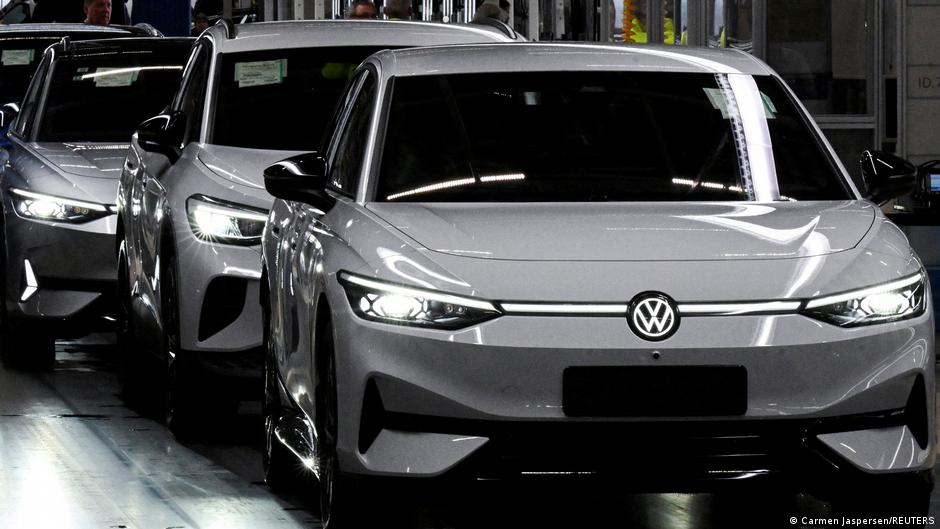
German households are shifting rapidly toward electric cars as high fuel prices and a government subsidy programme change the cost calculation behind one of their biggest purchases. Yet the financial benefits of the transition are flowing unevenly: foreign manufacturers, particularly Chinese brands, are gaining ground while German carmakers continue to lose market share and profits.
Germany registered roughly 254,500 new passenger cars in October 2026, according to the Federal Motor Transport Authority, known as the Kraftfahrt-Bundesamt or KBA. About 94,000 of those vehicles were fully electric, approximately 80% more than in the same month of 2025.
That means fully electric models accounted for a substantial portion of the month’s new registrations. For consumers, the increase suggests that more buyers now see an electric vehicle as financially viable despite the significant upfront commitment involved in purchasing a new car.
The trend has been driven by the energy crisis, expensive fuel and a government subsidy programme for electric-vehicle purchases introduced in May 2026. Those incentives can materially affect household decisions by lowering the effective purchase cost, while elevated petrol and diesel prices make the continuing expense of an internal-combustion vehicle less attractive.
Subsidies Change the Household Calculation
Registrations of cars with internal-combustion engines, a category that also includes hybrids in the reported figures, fell sharply from October 2025. The category recorded about 62,400 new registrations in October 2026, according to the KBA.
For households comparing vehicles, the figures highlight how government support and recurring fuel bills can influence demand together. A subsidy reduces the immediate financial burden of buying an electric car, while high fuel prices increase the cost of retaining or purchasing a combustion-engine model. The combination can move consumers toward electric vehicles even when family budgets remain under pressure from the broader energy crisis.
For car buyers, the shift is increasingly a household-budget decision shaped by purchase incentives and the continuing cost of fuel.
The rapid change also presents a savings question. Consumers considering a new vehicle must weigh the benefit of receiving public support against the amount of cash or financing required for the purchase. The registration data do not show whether individual buyers ultimately save money over the lifetime of their vehicles, but they demonstrate that incentives and fuel prices are already strong enough to reshape purchasing behaviour.
The subsidy programme is therefore important not only for the automotive market but also for household financial planning. Its launch in May preceded the sharp year-on-year rise reported for October. Any family basing a purchase on government assistance must consider the programme as part of the transaction price rather than looking only at the vehicle’s advertised cost.
Chinese Brands Capture More of the Growth
The strongest sales gains are being recorded by Chinese manufacturers. Their share of the German market increased from 5.2% to 8.4%, according to consulting firm EY. German producers, meanwhile, have been losing share in the electric-car market month after month.
This matters to everyday investors because the growth of a market does not guarantee that its established domestic companies will capture the additional revenue. Germany’s electric-vehicle demand is expanding quickly, but foreign groups are emerging as the main beneficiaries. Investors exposed to German automotive companies must therefore separate the positive outlook for EV adoption from the competitive position of individual manufacturers.
The loss of market share also adds pressure to German carmakers already experiencing declining profits. A larger electric-car market can still produce weaker outcomes for domestic manufacturers if competitors win a greater portion of new sales. For shareholders and retirement savers with exposure to the sector, market growth and company profitability may consequently move in different directions.
Currency considerations may also enter the picture for investors buying shares in overseas manufacturers or funds with international automotive holdings. The reported data do not establish any direct exchange-rate effect, but returns on foreign assets can differ from the performance of the underlying companies once converted into an investor’s home currency. Consumers purchasing imported vehicles may likewise pay attention to pricing, although the figures provided do not identify currency movements as a cause of the latest sales gains.
A Broader Choice, but a More Complex Decision
For German consumers, expanding competition may mean a wider range of electric vehicles to compare. The gains made by Chinese manufacturers show that buyers are not limiting their choices to familiar domestic brands. Still, the October figures measure registrations rather than the full cost of ownership, so they do not settle every financial question facing a household.
Buyers still need to judge whether the subsidy, purchase price and expected fuel savings fit their own budget. Savers and investors face a parallel decision: whether rising EV demand supports the companies they own, or whether the growth is being captured by competitors.
October’s registration data deliver a clear message on both fronts. Germany’s transition toward fully electric cars is accelerating, helped by public incentives and costly fuel. But the shift is redistributing spending as well as changing technology, benefiting Chinese producers while intensifying the financial challenge for Germany’s established automotive groups.