Melania Trump to Discuss Oleshky Truce With Russian, Ukrainian Officials
The White House talks will focus on a temporary ceasefire and humanitarian mission whose wider economic effects matter to households and investors.
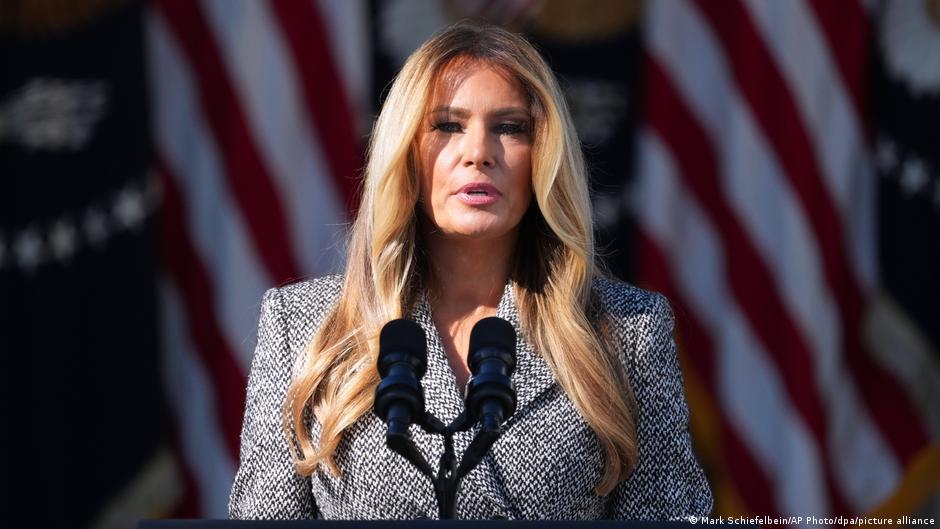
US first lady Melania Trump is expected to meet representatives of Ukraine and Russia in Washington to discuss the ceasefire in the Russian-occupied city of Oleshky, known in Russian as Alyoshki, in Ukraine’s Kherson region.
The meeting places a local humanitarian operation within a diplomatic process that could be watched closely by households, savers and everyday investors. A limited truce does not by itself change the broader economic outlook, but any evidence that humanitarian agreements can be negotiated may influence perceptions of geopolitical risk. Those perceptions can affect energy markets, currencies and the value of investments held in pensions and retail portfolios.
A notice appeared on the White House’s official website on Tuesday, November 3. It said the first lady would deliver a formal statement on the results of the humanitarian mission in Oleshky at 11 a.m. Eastern Time on Thursday, November 5. The announcement did not specify whether her meeting with representatives of Kyiv and Moscow would take place on the same day.
Delegations and the humanitarian mission
According to the RBC-Ukraine news agency, the Ukrainian representatives traveling to the White House will be Davyd Arakhamia, head of the Servant of the People parliamentary faction, and Dmytro Lubinets, the Ukrainian parliament’s commissioner for human rights.
Russia is expected to be represented by Kirill Dmitriev, a special representative of Russian President Vladimir Putin, and ombudswoman Yana Lantratova.
The ceasefire in Oleshky and surrounding areas began early on October 27 and ended at 10:59 p.m. on November 1. It resulted from an agreement between the sides reached with the participation of Melania Trump. Both Moscow and Kyiv have described the US first lady as a key intermediary in arranging the pause in fighting.
The temporary ceasefire enabled hundreds of civilians to be evacuated from the city and allowed humanitarian supplies to be delivered.
The talks at the White House are expected to address the ceasefire arrangement, while the first lady’s speech will review the humanitarian mission’s results. The source report did not indicate whether the parties would consider extending the truce or negotiating another pause.
Why households and investors may pay attention
For families, the most important immediate result is humanitarian: civilians were moved out of danger and aid reached the city. The financial significance is less direct. The war has contributed to uncertainty around energy, food, transport and financial markets, all of which can ultimately feed into household expenses and savings decisions.
A localized ceasefire should therefore be treated cautiously. It offers no firm basis for predicting lower bills, stronger currencies or higher investment returns. Its relevance lies in whether it becomes part of a repeatable process for arranging humanitarian access or wider negotiations. Without such follow-through, the event’s effect on consumer finances is likely to remain limited.
Currency markets are particularly sensitive to changing assessments of political and security risk. Any meaningful diplomatic progress could affect demand for currencies and assets regarded as safer during periods of uncertainty. Conversely, a breakdown in talks or renewed escalation could reinforce caution. Consumers exchanging money for travel, supporting relatives abroad or holding foreign-currency savings may notice such market movements even when the underlying event is geographically distant.
Everyday investors may also see short-term reactions in energy companies, defense-related assets, European markets and diversified funds. However, a single humanitarian agreement is not the same as a durable peace settlement. Retail investors assessing the news may want to separate the confirmed facts—the dates of the ceasefire, the evacuation of hundreds of civilians and the delivery of aid—from speculation about what the White House meeting could produce.
The same distinction matters for household budgeting. Geopolitical headlines can move wholesale prices and investor sentiment quickly, while changes in supermarket prices, utility bills or borrowing costs usually depend on a much broader set of forces. These include supply conditions, inflation, monetary policy and the duration of any disruption. The scheduled statement may provide more detail about the humanitarian operation, but the announcement described in the source did not contain economic commitments.
A narrow truce with broader attention
Melania Trump’s participation is unusual because the negotiations concern a specific battlefield ceasefire and humanitarian mission rather than a ceremonial first-lady initiative. Her role, as described by both sides, gives the White House event diplomatic weight, even though the pause in fighting has already ended.
For consumers and small investors, the practical takeaway is to watch for evidence of continuity: whether further humanitarian access is agreed, whether another ceasefire follows and whether official contacts broaden beyond Oleshky. Those developments would provide a stronger foundation for judging possible effects on markets and household finances than the meeting alone.
Until more details emerge, the clearest outcome remains the humanitarian operation itself. Hundreds of residents were evacuated, supplies entered the city, and representatives of Russia and Ukraine are expected in Washington for discussions centered on the temporary truce.