Abu Dhabi Ukraine Talks Put Household Finances and Markets in Focus
The November 10-11 negotiations could shape expectations for energy bills, currencies, savings and Europe’s reconstruction costs.
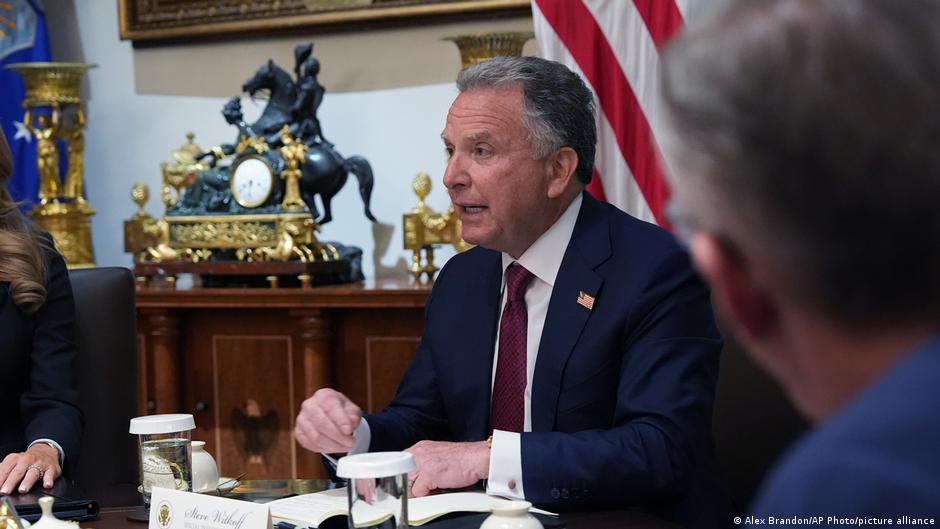
Russia and Ukraine will hold a new round of US-mediated talks in Abu Dhabi on November 10 and 11, according to Steve Witkoff, US President Donald Trump’s special envoy. For households and everyday investors, the meeting will be closely watched for any sign that geopolitical risks affecting energy costs, currencies, savings and financial markets may begin to ease.
Witkoff announced the dates on Tuesday, November 3, saying the discussions in the capital of the United Arab Emirates would address postwar security, de-escalation, humanitarian initiatives and the next steps toward peace. The talks will take place at the working-group level as part of Trump’s efforts to end Russia’s war against Ukraine.
“Discussions will focus on postwar security, de-escalation, humanitarian initiatives and next steps toward peace,” Witkoff wrote on X.
The agenda is broader than a ceasefire alone. It includes the security arrangements that could follow the fighting, immediate measures to reduce tensions and humanitarian initiatives. That breadth matters financially because household budgets and investment decisions are influenced not only by current events, but also by expectations about whether any settlement would prove durable.
Why consumers and savers will watch the talks
The negotiations do not guarantee an agreement, and Witkoff did not announce specific economic measures. Still, progress or setbacks could affect market perceptions of risk. Consumers may see those expectations reflected through movements in currencies, energy markets and investment portfolios, even before any formal peace deal is reached.
For European households, the potential relevance is particularly direct. Changes in geopolitical risk can influence expectations surrounding energy supply and costs, which in turn affect spending on heating, electricity, transport and goods whose production depends on energy. The Abu Dhabi meeting should therefore be viewed as a political milestone with possible financial consequences, rather than as an immediate promise of lower household bills.
Currency movements are another channel. Investors often adjust their exposure when the outlook for conflict, trade and regional security changes. Those shifts can affect the value of currencies and, consequently, the local cost of imported products or foreign travel. People holding international funds may also see portfolio values move as exchange rates and market sentiment respond to developments.
Savers and retail investors should be prepared for uncertainty around headlines from the talks. A report of progress could improve confidence in assets exposed to Europe or reconstruction, while signs of deadlock could renew demand for investments perceived as more defensive. Neither reaction would establish the eventual economic outcome, especially because the negotiations are taking place at working-group level and cover complex security questions.
European allies to discuss security and rebuilding
Witkoff said US negotiators will also meet representatives of France, Germany, the United Kingdom, the European Union and NATO in Brussels this week. Their discussions will cover security guarantees for Ukraine, Europe’s postwar security architecture and options for providing economic support for Ukraine’s reconstruction.
That reconstruction agenda has implications for public finances as well as private capital. Any future economic support would need to be structured and funded, making the details relevant to taxpayers, government bond investors and companies assessing potential rebuilding work. The source announcement did not specify a financial amount, funding mechanism or division of costs among participating countries.
Witkoff said the aim was to consolidate progress made in Kyiv, Oslo and St. Petersburg and move toward a comprehensive, durable peace agreement providing long-term security for future generations.
“We hope to consolidate the progress achieved in Kyiv, Oslo and St. Petersburg,” Witkoff said, describing the objective as a comprehensive and lasting peace agreement.
In October, Trump’s special envoy met Ukrainian President Volodymyr Zelensky in Oslo. He then traveled to St. Petersburg, where he held talks with Russian President Vladimir Putin. The upcoming meetings in Abu Dhabi and Brussels follow that round of diplomatic contacts.
The previous US-mediated negotiations between Russia and Ukraine took place in February 2026, shortly before the start of the US and Israeli war against Iran.
What households should look for next
For consumers, the most useful signals from Abu Dhabi will be whether the parties identify concrete next steps, agree on further meetings or announce measures that reduce immediate tensions. For investors, details about security guarantees and reconstruction financing may prove more meaningful than broad statements of intent.
Until such details emerge, households should not assume that a diplomatic meeting will quickly translate into lower prices, stronger currencies or investment gains. The talks may nonetheless influence expectations across markets. Their significance for personal finances will depend on whether the working groups turn the stated goals of de-escalation, humanitarian action and postwar security into specific and lasting commitments.