Spain Transport Minister Quits After Toledo Rail Disaster Kills 69
The resignation follows a deadly year for Spanish railways, with a €30 million aid package approved for victims and bereaved families.
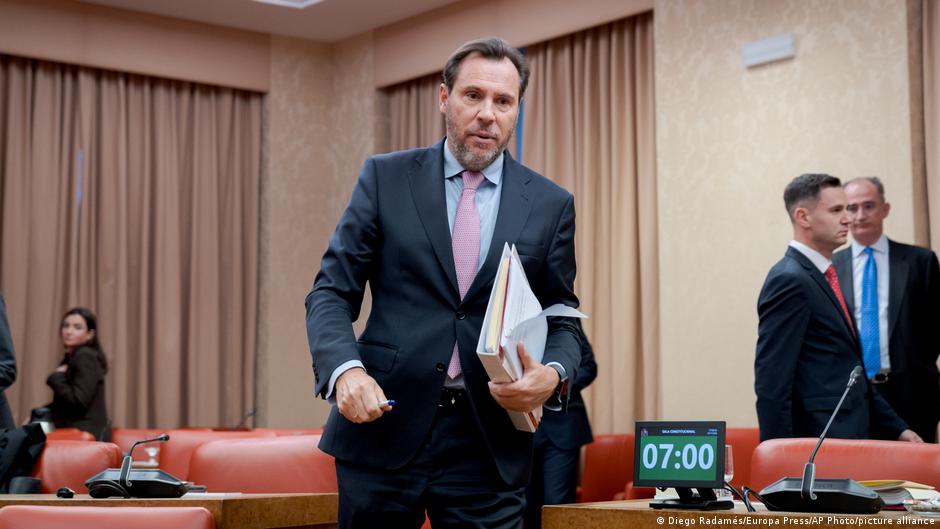
Spain’s transport minister, Óscar Puente, has resigned following a railway disaster near Toledo that killed 69 people, bringing renewed attention to the human and financial consequences of a series of deadly accidents on the country’s rail network.
Puente also said he would not stand in the forthcoming early parliamentary elections. He announced his decision on the evening of Tuesday, November 3, while appearing before a parliamentary committee in Madrid, almost a week after the crash.
“A minister cannot remain in office after two disasters of this magnitude in less than one year. It is a question of political dignity, responsibility and political sensitivity,” Puente said.
All opposition parties had demanded his resignation. The announcement was nevertheless unexpected because Puente and Spanish Prime Minister Pedro Sánchez had repeatedly ruled out such a move, according to the dpa news agency.
Government approves €30 million relief package
Hours before Puente’s statement, Spain’s government approved measures intended to improve railway safety. At its weekly cabinet meeting, it also authorized a €30 million assistance package for people injured in the crash and the families of those killed, dpa reported.
For affected households, that package is the most immediate financial element of the government’s response. Bereaved families and injured passengers can face sudden costs alongside lost income and longer-term uncertainty. The announcement establishes a defined pool of public support, although the source report did not specify how the money will be distributed, who will qualify or when individual payments will begin.
The spending also represents a direct commitment from the Spanish state budget. Any broader cost of upgrading safety systems, inspecting infrastructure or changing railway operations has not yet been quantified. For taxpayers and consumers, the eventual financial impact will depend on the scale of measures adopted after investigators determine what caused the collision.
No changes to ticket prices, rail compensation rules or transport taxes were announced in the source report. There was also no reported market reaction involving Spanish government bonds, the euro or transport-related investments. Everyday investors therefore have no confirmed financial figures beyond the €30 million relief package on which to base an assessment of the immediate fiscal effect.
Collision on the Madrid-Seville high-speed line
The disaster occurred at 8:53 a.m. on October 28 near the settlement of Urda in Toledo province, on the Madrid-Seville high-speed railway. Passenger train AVE 2080 struck the final carriage of Iryo 6076, which was standing on the tracks.
The collision killed 69 people and injured more than 50. It was one of seven railway disasters in Spain since the beginning of 2026 in which passengers were hurt, according to the source article.
Another major accident occurred on January 18 on the Madrid-Málaga high-speed line near the settlement of Adamuz and involved two trains. That crash killed 46 people and left another 150 with injuries of varying severity.
The two disasters have raised questions about the financial exposure associated with repeated transport emergencies. Beyond aid to victims, serious railway accidents can create costs connected with medical care, service disruption, investigations and safety work. However, no official total for those costs was provided, and the government has not detailed the budget required for its newly approved safety measures.
Investigations focus on different possible failures
Investigators are considering damage to the railway tracks as one possible cause of the Adamuz disaster. The inquiry into the Urda collision, by contrast, is focused on the failure of the automatic train-protection system and possible errors in instructions issued by the dispatching center.
Those findings will be important for households and investors because they may determine whether the response centers on physical track repairs, technology upgrades, operating procedures or a combination of measures. Each route could carry different costs for the government and railway operators, but no estimates have yet been released.
Puente’s departure adds political uncertainty to the process as Spain prepares for early parliamentary elections. His decision not to participate means responsibility for overseeing the safety response and any related spending will pass to new leadership at the Transport Ministry.
For consumers, the immediate priorities remain the delivery of support to victims and the safe operation of high-speed services. For savers and retail investors monitoring Spain, the key financial questions are whether further public funding will be required, how extensive the safety program becomes and whether railway operators face additional obligations. At present, the only confirmed amount is the €30 million package approved for those injured and the families of the 69 people killed near Toledo.