Drone Strike on Russia’s Arctic Gas Hub Raises New Energy Risk for Households
The reported attack in Yamal puts fresh attention on a region that supplies most of Russia’s natural gas and matters to currencies, bills and investors.
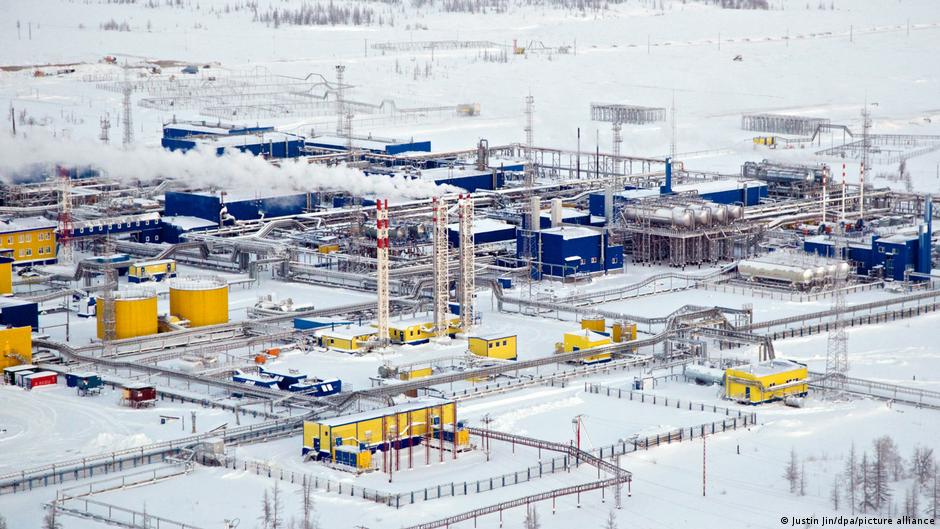
Ukrainian drones attacked Russia’s Yamalo-Nenets Autonomous District for the first time, regional governor Dmitry Artyukhov said on Wednesday, September 9, marking a significant expansion in the geography of strikes inside Russia and placing a major gas-producing region under new scrutiny from energy markets and consumers.
A fire broke out at an industrial facility in Novy Urengoy after debris from a downed unmanned aerial vehicle fell on the site, according to official statements. Russian authorities said there were no deaths or injuries. Artyukhov said the attack had been repelled, while the scale and nature of the damage were still being assessed.
For households and everyday investors, the importance of the incident lies less in the immediate reported damage, which officials have not quantified, and more in the location. The Yamalo-Nenets region is a central pillar of Russia’s natural gas system. It accounts, by some estimates, for about 80% of the country’s natural gas production. Any confirmed disruption or repeated attacks in the area could feed into energy risk premiums, currency expectations and market pricing far beyond the Arctic.
Why Yamal Matters to Consumer Budgets
Natural gas is not just a commodity traded by governments and energy companies. It sits behind home heating bills, electricity prices, fertilizer costs, industrial production and, indirectly, food prices. Even where consumers do not buy Russian gas directly, global energy markets react to perceived supply risk. A strike on infrastructure in a region as important as Yamal can therefore become part of the broader chain that influences household budgets.
Artyom Zhoga, the Russian presidential envoy to the Urals Federal District, said the target of the attack was a fuel and energy complex facility in Yamal. He also said staff at the enterprise had been evacuated in advance. Russian officials did not identify the specific site that was struck.
Russian officials said there were no casualties, while the extent of the damage at the industrial facility was still being determined.
Several media outlets and analytical projects that track strikes inside Russia reported that the possible target was the condensate preparation plant in Novy Urengoy, part of Gazprom’s gas infrastructure. The facility is considered one of the key sites for processing gas condensate in the region. The Russian authorities have not confirmed that identification.
The Novy Urengoy plant processes gas condensate from the Urengoy, Yamburg and other fields in the region. Its design capacity is estimated at about 19.5 million tonnes of feedstock per year. In market terms, that makes the site relevant not only to upstream production, but also to processing and transport links that help move energy products into the wider system.
Energy Prices, Currencies and Investor Sentiment
For consumers, the immediate question is whether a single reported incident will change utility bills. On its own, an attack that authorities say caused no casualties and whose damage has not yet been detailed does not automatically translate into higher household energy costs. But personal finance is increasingly exposed to geopolitical risk through fuel prices, power bills, inflation expectations and currency movements.
If energy traders believe that infrastructure in a major producing region is becoming more vulnerable, they may demand a higher risk premium. That can influence natural gas-linked markets and the shares and bonds of energy companies. It can also affect currencies tied to energy exports, including the Russian ruble, as well as currencies of importing countries that are sensitive to global fuel costs.
For everyday investors, the incident is a reminder that geopolitical risk can move across asset classes quickly. Energy equities, broad stock indexes, commodity funds and emerging-market exposure can all react to headlines involving supply security. Investors with retirement accounts or brokerage portfolios may not hold Russian assets directly, but they can still be exposed through global energy prices, inflation-sensitive bonds, multinational companies and currency movements.
Yamal’s role in Russian production is also relevant to Europe and Asia because global energy markets have become more interconnected since the start of Russia’s full-scale war against Ukraine. Even when pipeline routes, sanctions and trade patterns limit direct flows, expectations about available supply can affect prices elsewhere. Households feel those shifts later through utility tariffs, transport costs and the prices of goods produced with energy-intensive inputs.
A Long-Range Strike With Financial Implications
Novy Urengoy is located roughly 2,800 kilometers in a straight line from the Russian-Ukrainian border. If reports that the drones were launched from Ukrainian territory are confirmed, the attack could represent the longest known strike by Ukraine’s armed forces on Russian territory since the start of the full-scale war.
That distance matters financially because it suggests that infrastructure previously viewed as geographically insulated may be reassessed by markets, insurers and companies. Facilities deep inside Russia’s energy network could face higher perceived operational risk if long-range drone attacks become more frequent. Higher security costs, delays, repairs or precautionary shutdowns can eventually filter into corporate earnings and supply assumptions.
At the household level, the practical takeaway is not to overreact to one headline, but to understand the channels through which such events can affect personal finances. Energy shocks can push inflation higher, complicate central bank decisions and influence exchange rates. For savers, that can affect real returns on cash. For borrowers, it can matter if inflation expectations keep interest rates higher for longer. For investors, it can alter the balance between risk assets, commodity exposure and defensive holdings.
The official picture remains incomplete. Russian authorities have said the attack was repelled and that no one was killed or injured. They have not specified which enterprise was hit, nor have they provided a final damage assessment. Still, the fact that Yamal, Russia’s most important gas-producing region, has now been named in connection with a drone attack is enough to place the region firmly on the watchlist for energy markets, currency traders and consumers trying to understand where the next pressure point on household budgets may come from.