Drone Scare on Zelensky Flight Adds Risk Premium for European Households
A reported drone threat over Moldova delayed Ukraine’s president en route to Oslo, underscoring security risks that can filter into energy, currency and market costs.
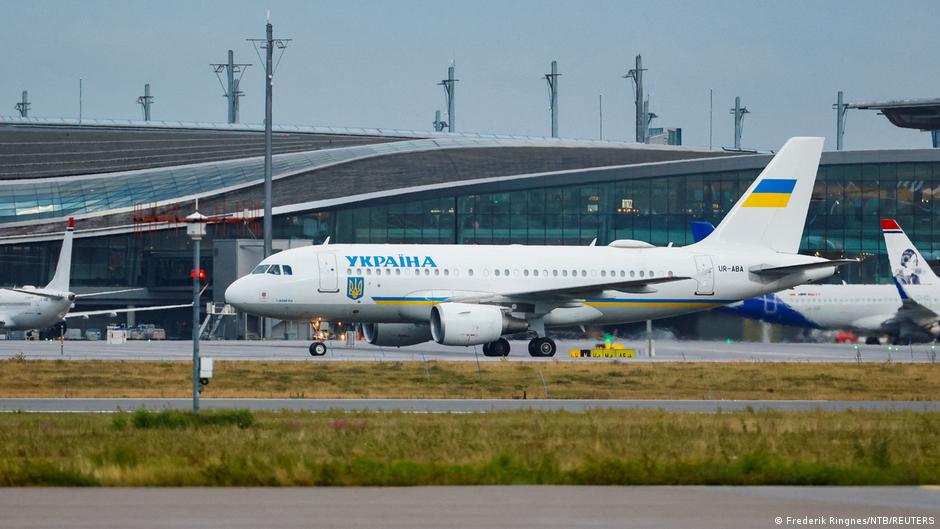
A reported drone threat involving Ukrainian President Volodymyr Zelensky’s aircraft as it prepared to leave Moldova for Norway is more than a security story. For households, savers and everyday investors across Europe, it is another reminder that the war’s risks can move quickly from airspace and border crossings into fuel bills, travel disruption, currencies and financial markets.
Norwegian Prime Minister Jonas Gahr Stoere said on Wednesday, September 9, that Zelensky’s plane had narrowly avoided a collision with a drone while leaving Moldova for Oslo. Zelensky’s office had not commented on the incident at the time of the report.
“His plane almost collided with a drone when it was due to take off from Moldova. This is the reality he is in,” Stoere said, according to NRK.
Stoere did not specify where he obtained the information. His remarks also did not make clear whether the episode was accidental or an intentional attempt to target Zelensky. The uncertainty matters for markets because investors price not only confirmed damage but also the possibility that a conflict could spill into new areas, interrupt transport routes or raise the cost of insuring people, cargo and infrastructure.
Why a Drone Threat Can Become a Household Cost
The Norwegian prime minister’s office later clarified his statement, saying there had been a drone threat in Moldovan airspace the previous day that delayed Zelensky’s aircraft on its way to Oslo. The office added that these were the kinds of threats Zelensky lives with every day and said it was not known how close the drones were to his plane.
For consumers, the immediate facts do not point to a direct change in household budgets. But the broader pattern is financially relevant. Drone activity near airports, borders and transport links can lead to delayed flights, higher security costs and pressure on logistics. Those costs may eventually be reflected in airline operations, insurance premiums, freight prices and the cost of goods moving through affected regions.
A senior Ukrainian official told DW that while the Ukrainian president’s aircraft was waiting to depart from Chisinau, a Russian jet-powered drone entered Moldovan airspace. Zelensky’s departure was subsequently delayed, and other flights were suspended. That detail links the incident directly to civil aviation, an area where even temporary closures can create knock-on costs for carriers and passengers.
Travelers do not need a market selloff to feel these pressures. When airlines face rerouting, delays or suspended operations, consumers can encounter missed connections, higher fares on replacement routes and more expensive travel insurance. Business travelers may pass some costs through companies, but households paying for family travel often absorb them directly.
Markets Watch Moldova, Ukraine and the Border Economy
Zelensky arrived in Oslo from Moldova on the evening of September 8 to attend the funeral of King Harald V. After the ceremony, he met with Jonas Gahr Stoere. The official Norwegian government statement on their talks did not mention the drone incident.
For everyday investors, the relevant issue is not only whether one aircraft was endangered. It is whether airspace near Moldova and Ukraine is becoming more exposed to sudden disruptions. Moldova sits near the European Union’s eastern edge and close to Ukraine’s Odesa region, an area important to cross-border movement and regional trade. Any sign of increased drone activity in or near Moldovan airspace can add to investor caution toward Eastern European assets and currencies.
Currency markets tend to respond to geopolitical uncertainty through demand for perceived safer assets and through pressure on currencies tied to regions seen as more exposed. The source report does not cite any market moves, and none should be inferred from the incident alone. But for households with mortgages, savings, imported goods or travel plans, currency volatility is one of the channels through which security shocks can become personal finance events.
Energy is another channel. The article does not report damage to energy infrastructure. Still, the war has repeatedly shown that drones and border-area attacks can influence perceptions of supply security. When traders build a higher risk premium into energy prices, consumers can later see the impact in electricity bills, heating costs and transport expenses. Even when prices do not move immediately, repeated incidents help keep uncertainty embedded in household budgeting.
What Was Reported on the Ground
Moldovan police said on September 9 that they had found a fallen drone equipped with a power unit. An explosion occurred when it hit the ground, leaving a large crater. Inside the drone were damaging elements in the form of metal balls. No casualties were reported.
Separately, the local regional military administration said that overnight on September 9 Russian drones attacked the Starokozache international road crossing in Ukraine’s Odesa region on the border with Moldova. NRK noted that the airport from which Zelensky flew to Oslo is roughly a two-hour drive from that border crossing.
Those facts place the reported aircraft delay within a wider picture of drone activity around Moldova and the Ukrainian border. For policymakers, that raises security and air-defense questions. For consumers, it raises a simpler financial question: how much geopolitical risk is already built into the prices they pay?
Households cannot hedge political risk the way institutional investors can, but they can make practical adjustments. Travelers heading through regions near active conflict zones may need wider buffers for connections and stronger insurance terms. Savers with large exposure to a single currency may want to understand how exchange-rate moves could affect planned spending. Investors holding European airline, energy or emerging-market funds should recognize that sudden security incidents can affect sentiment even when the direct economic damage is limited.
The reported drone scare did not come with confirmed injuries, and Zelensky’s office had not issued a comment. But the episode illustrates a persistent feature of the war’s financial impact: risks that begin as military or diplomatic events can migrate into everyday costs through transport disruption, insurance, energy expectations and currency nerves. For Money Desk readers, the lesson is not to panic, but to recognize why a drone in Moldovan airspace can matter far beyond the runway.