Ukraine Says Starlink Limits Persist, Adding to Household Financial Risks
Continued satellite restrictions and delayed interceptors could deepen fiscal pressure and uncertainty for Ukrainian households and investors.
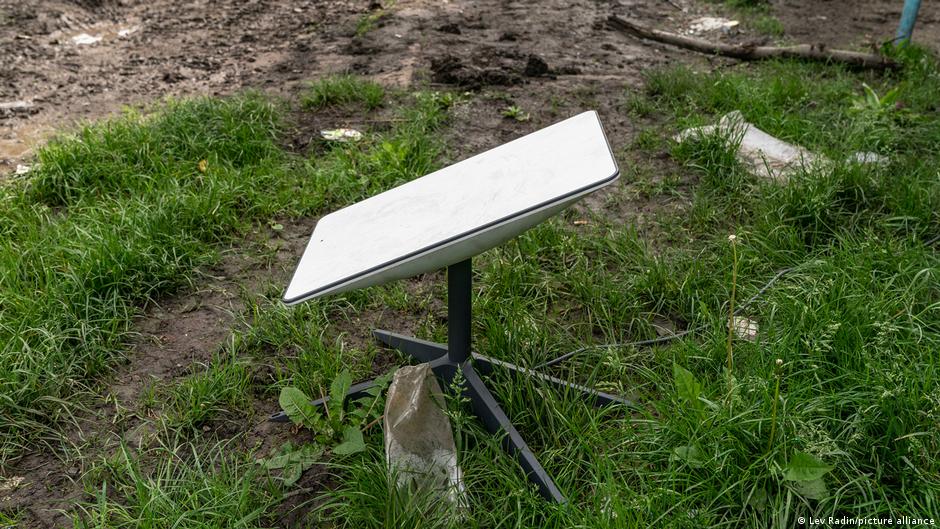
Ukraine says speed restrictions remain in place on the Starshield military communications service provided through SpaceX’s Starlink network, contradicting US President Donald Trump’s statement that the company had restored full service.
Ukrainian President Volodymyr Zelensky said during a video appearance at the Hudson Institute, a conservative US think tank, on Friday, Oct. 23, that connection speeds had not returned to their previous level. The unresolved disruption matters directly to Ukraine’s military operations, but it also carries broader financial implications for households already navigating the economic consequences of war.
“The speed has not been restored,” Zelensky said.
Starshield is described as the military package of Starlink satellite communication services used by Ukraine. The Ukrainian military relies on it, including to help guide unmanned aerial vehicles during attacks on targets in territories occupied by Russia during its war against Ukraine. Zelensky has previously said that interruptions to Starlink slow frontline logistics and restrict the use of drones.
Operational uncertainty carries a financial cost
For consumers, the immediate issue is not the price or performance of a household internet subscription. The financial significance comes from the potential effect of battlefield communications problems on government spending, economic confidence and the risks surrounding personal savings.
If military communications remain constrained, Ukraine may face added pressure to maintain alternative systems or adjust operations. The source article does not provide a cost estimate, and it does not say how any additional expense would be funded. Still, prolonged uncertainty over essential defense infrastructure can complicate public budgeting at a time when military and civilian needs compete for resources.
That matters to households because pressure on state finances can influence the wider economic environment in which families manage wages, deposits and daily expenses. It can also shape investor perceptions of Ukrainian risk and, by extension, sentiment toward the national currency and Ukrainian assets. The report provides no evidence of a specific currency move or market reaction, so savers and investors should not treat the dispute itself as a direct trading signal.
Zelensky’s adviser, Serhiy Beskrestnov, said connection speeds may in some cases rise slightly above the established limit. He suggested, however, that such instances could result from SpaceX algorithms or particular conditions of use rather than the removal of the restriction.
That distinction is important: occasional faster performance does not necessarily amount to a formal restoration of unrestricted service. For markets and household financial planning alike, clarity over the reliability of critical infrastructure may be more valuable than isolated technical improvements.
Trump and Musk deny ordering a slowdown
Trump said a day earlier that SpaceX had restored Ukraine’s full access to Starlink. He did not answer a question about who had ordered the restrictions, which had been observed in Ukraine since Oct. 14, to be lifted.
Both Trump and SpaceX founder Elon Musk had previously denied that either of them instructed the company to slow Starlink service. The conflicting accounts leave Ukrainian officials, consumers and investors without a clear timeline for full restoration or an explanation of how the restrictions were imposed.
For everyday investors, the episode highlights the political and operational risks attached to companies that supply strategically important technology during wartime. It also illustrates why statements by political leaders, company executives and service users may need to be weighed against observed performance. The article does not identify any direct impact on SpaceX’s finances or valuation.
Delayed interceptors add to uncertainty
During the same Hudson Institute appearance, Zelensky said deliveries of interceptor missiles intended to protect Ukrainian territory from Russian ballistic missiles had also been delayed. He said Ukraine was still waiting for interceptors that had already been agreed upon.
“But they still have not arrived. This is a real problem because the Russians attack us almost every day,” Zelensky said.
Delays in air-defense supplies represent another source of economic risk. Repeated attacks can threaten homes, businesses and infrastructure, potentially forcing households to devote more of their budgets to emergency needs, repairs or backup services. The source does not quantify damage or identify any new consumer costs resulting from the delayed deliveries.
For Ukrainian savers, the developments reinforce the importance of distinguishing between immediate financial facts and longer-term risks. The report confirms continuing Starshield speed restrictions and delayed interceptors, but it offers no figures on inflation, exchange rates, government borrowing or household losses. Any effect on those indicators will depend on how long the disruptions last and how authorities respond.
Zelensky also said the Ukrainian military continues to hold its defensive positions. “I am proud of how strong our people are,” he added.
The immediate financial takeaway is therefore one of elevated uncertainty rather than a measurable new hit to household wealth. Reliable communications and air defense underpin economic activity as well as military operations. Until the Starshield limits are demonstrably removed and the agreed interceptors arrive, Ukrainian families and investors remain exposed to risks that are difficult to price but impossible to ignore.