U.S. Says It Destroyed Five Iranian Oil Tankers After Missile Attacks
The latest strikes in the Gulf add fresh pressure to oil markets, household energy bills and investors exposed to currency and commodity swings.
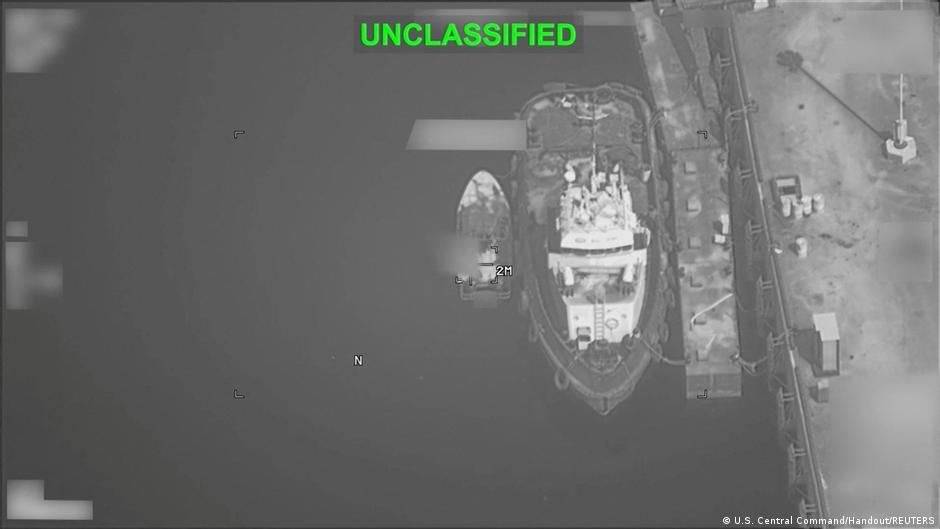
U.S. Central Command said it destroyed five Iranian oil tankers on Tuesday, September 8, after the Islamic Revolutionary Guard Corps twice attacked a U.S. Navy ship with ballistic missiles over the previous two days, according to a statement by CENTCOM on X.
The command said the U.S. vessel successfully evaded the attempted Iranian attacks and continued patrolling regional waters. No personnel were injured, according to the statement.
For households and everyday investors, the immediate importance of the announcement lies less in the military details than in what further instability around the Gulf could mean for oil prices, fuel costs, inflation expectations and currency markets. The Strait of Hormuz remains one of the most important routes for global oil shipments, and the source article describes control over the waterway as one of the central disputes in the U.S. and Israeli war against Iran.
CENTCOM said it destroyed the IRGC oil tankers M/T Kaviz, M/T Charminar, M/T Horizon 1 and M/T Riesco in the Gulf of Oman, as well as the M/T Derya near Kharg Island in the Persian Gulf. U.S. forces instructed the crews to leave the vessels before they were struck and disabled, the command said.
The ship successfully evaded the Iranian attack attempts and continued patrolling regional waters, CENTCOM said.
According to CENTCOM, Iran used the tankers as part of a multibillion-dollar “shadow” network that finances the IRGC and its regional proxies. U.S. forces also said Tehran lacks the means to protect those vessels.
Why Gulf Tensions Matter for Household Budgets
Military activity around oil routes can feed quickly into consumer finances even when the fighting is far away. Oil is priced globally, and disruption risks in the Gulf can affect what households pay for gasoline, diesel-linked delivery costs, heating fuel and, indirectly, many everyday goods transported by road, air or sea.
The report did not provide price figures or estimates of supply losses, and it did not say how much oil the destroyed tankers were carrying. Still, the fact pattern it describes points to a market risk that families and savers already know well: when energy uncertainty rises, inflation can become harder to predict. That matters for grocery bills, commuting costs, utility budgets and interest-rate expectations.
Investors with exposure to energy stocks, commodity funds, airlines, shipping companies or emerging-market assets may also see added volatility if the confrontation continues. Oil-sensitive sectors often move sharply on news of attacks near major shipping lanes. Currency markets can react as well, because energy importers and exporters are affected differently by higher crude prices and supply risks.
Before Tuesday’s announcement, CENTCOM forces destroyed three Iranian oil tankers on September 5 after the IRGC attempted to attack a U.S. aircraft carrier and a missile destroyer, according to the source article. That sequence suggests an escalation pattern that markets may watch closely: attacks on U.S. naval assets followed by U.S. strikes on vessels described as part of Iran’s oil-financing network.
The U.S. had not carried out strikes against Iran since late July, the article said. President Donald Trump explained the relevant order as a desire to continue negotiations with Tehran over the fate of the Strait of Hormuz, sanctions and Iran’s nuclear program.
The first U.S. strike after a month-long pause came on August 30, when the United States hit two Iranian missile launchers on Larak Island in the Strait of Hormuz, according to the source article. Tehran then said it carried out retaliatory attacks on American targets in the United Arab Emirates. Dozens of drones attacked “American helicopters and personnel at Al Minhad base” in the UAE, according to the article.
What Everyday Investors Should Watch
The article says the Strait of Hormuz was open to shipping before hostilities began in late February. Today, both Iranian and U.S. armed forces claim control over it. That competing claim is central for financial markets because the waterway is described as playing an important role in global oil supplies.
For consumers, the practical question is whether the confrontation raises energy costs for long enough to affect monthly budgets. A short-lived jump in oil prices may show up at the pump but fade quickly. A longer disruption, or fear of one, can affect inflation-linked planning, central-bank expectations and the purchasing power of savings.
For small investors, the risk is chasing headlines. Energy shares and commodity-linked products can rally on geopolitical stress, while airlines and other fuel-heavy businesses may come under pressure. But those moves can reverse if shipping continues, negotiations resume or markets conclude that supply has not been materially affected.
The latest CENTCOM statement adds another layer of uncertainty to a conflict already tied to sanctions, nuclear talks and control of a critical shipping corridor. For households, that means the Gulf remains a potential pressure point for fuel bills and inflation. For investors, it is a reminder that geopolitical risk can move portfolios through oil, currencies and rate expectations, even when the battlefield is far from home.