Germany Presses Ukraine to Factor Berlin’s Industry Into Aid Spending
Foreign Minister Johann Wadephul says German taxpayers need to see domestic industry benefit from Berlin’s financial and military backing for Kyiv.
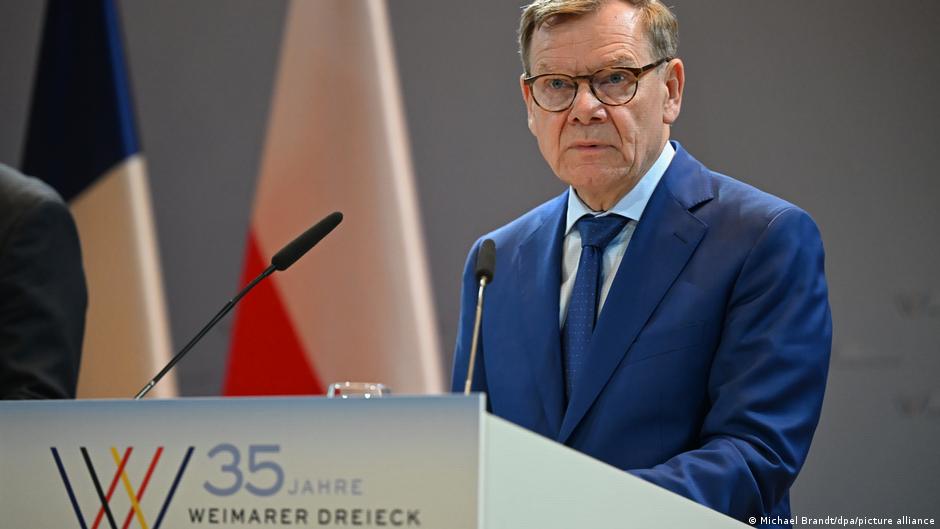
Germany’s foreign minister has urged Ukraine to pay closer attention to Berlin’s interests as Germany continues to provide large-scale financial and military support, framing the issue in terms that will resonate with taxpayers, household budgets and investors watching Europe’s defense economy.
Johann Wadephul, Germany’s foreign minister, criticized Ukrainian President Volodymyr Zelensky and called on Kyiv to give greater consideration to German priorities, according to an interview with Bild published on Tuesday, September 8. His central argument was that Germany’s defense industry should benefit from the country’s support for Ukraine, at least by being included in procurement processes linked to that support.
“At the moment, we are Ukraine’s strongest supporter in terms of financial and military assistance,” Wadephul said, adding that “naturally, the German defense industry must benefit from this.”
For German households, the comments point to a political reality behind foreign aid: large commitments abroad must be explained at home. Wadephul said he raised the issue directly with Zelensky during a recent visit to Kyiv, telling the Ukrainian side that Berlin remains supportive but that German taxpayers also need a clear rationale for the spending.
“We are on your side, we support you. But I must explain this to German taxpayers as well, and at a minimum it is necessary that German defense industry participate in all procurement,” Wadephul said, recounting his appeal to Zelensky.
Why the taxpayer argument matters
The foreign minister’s remarks turn an international security issue into a domestic finance question. Germany’s support for Ukraine is paid for through public resources, meaning it competes indirectly with other budget demands that affect ordinary people, from infrastructure and energy costs to social spending and taxes. By arguing that German companies should take part in procurement, Wadephul is presenting defense aid as something that can also support domestic employment, industrial capacity and tax receipts.
That message may matter more as European governments face pressure to sustain support for Ukraine while managing stretched public finances. For consumers, the question is not only whether aid continues, but whether governments can show that money sent abroad has a return at home. In Wadephul’s formulation, that return would come through contracts for German defense companies and a stronger role for domestic manufacturers in supplying Ukraine.
The remarks also touch a sensitive point for everyday investors. Defense stocks across Europe have become a more visible part of market discussions since Russia’s full-scale invasion of Ukraine, and any signal that government procurement may favor domestic firms can influence expectations for order books and revenue. Wadephul did not name companies or contracts, and he did not announce a specific procurement mandate. But his statement that German industry should participate in all purchases is a clear political signal about how Berlin wants its support to be structured.
New aid and NATO funding
Wadephul visited Kyiv on August 22. At a joint press conference with Ukrainian Foreign Minister Andrii Sybiha, he announced additional assistance for Ukraine worth 60 million euros. The funds add to Germany’s broader financial and military backing at a time when Ukraine continues to seek support for defense, energy resilience and protection against aerial attacks.
Germany will also transfer another 10 million euros to a NATO fund. Money from that fund is used, among other purposes, for supplies of energy carriers, medical equipment and systems for protection against drones. For household budgets in Ukraine, those categories are not abstract. Energy supplies and medical equipment affect everyday resilience, while drone-defense systems are part of the infrastructure needed to protect civilians and public services.
From a currency and savings perspective, the euro-denominated figures show how the war continues to shape European fiscal priorities. Commitments of 60 million euros in additional aid and 10 million euros for the NATO fund are not large enough on their own to move currency markets, but they sit within a broader pattern of European defense and reconstruction spending. Savers and retail investors in Germany and across the euro area may read such announcements as part of a longer-term shift toward higher security spending and more government-backed demand for defense-related production.
Wadephul also announced further talks with partners from various countries on supplying Ukraine with additional air-defense systems. No further figures were provided in the source material, and the minister did not identify specific systems or timelines. Still, air defense remains one of Ukraine’s central requests from Western partners, and procurement decisions in that area can carry significant budget implications because advanced systems and related ammunition are costly and often require multinational coordination.
The foreign minister’s intervention therefore has two audiences. In Kyiv, it is a request that Ukraine include German industry in procurement tied to German support. In Germany, it is an explanation to voters and taxpayers that aid for Ukraine should also serve national economic interests. For investors, the statement adds to evidence that European defense spending is becoming more closely linked to industrial policy, not merely emergency assistance.
Wadephul’s comments do not suggest a withdrawal of German support. On the contrary, he emphasized that Germany is on Ukraine’s side and continues to back the country. But his message narrows the political terms of that support: as Berlin sends more money and military aid, it wants a visible role for German manufacturers and a clearer answer for the citizens financing those commitments.