Russian Strikes on Sumy and Mykolaiv Add Civilian Toll and Economic Strain
Attacks on a shopping center parking area, port facilities, warehouses and a post office underline the household costs of the war.
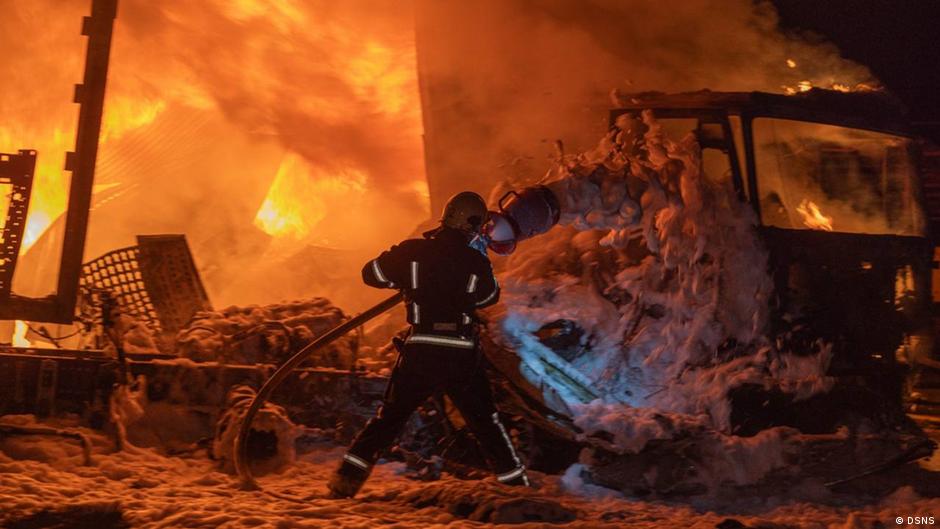
Russian attacks on the Ukrainian cities of Sumy and Mykolaiv have killed civilians, injured dozens and damaged commercial, port and logistics infrastructure, adding another layer of pressure on households already navigating wartime disruption.
In Sumy, Russian forces struck a parking area near the Manufaktura shopping center on the evening of Wednesday, September 9. According to Oleg Grigorov, head of the local regional military administration, two 21-year-olds, a young man and a young woman, were killed. Preliminary information indicated that around 20 other people were injured.
Officials said two men and one woman were in serious condition, while another Sumy resident was in extremely serious condition. Teenagers were among those hurt. Emergency workers and municipal crews operated at the site after the strike, while regional authorities warned that the threat of repeated attacks remained.
Regional officials said two 21-year-olds were killed in the Sumy strike, with around 20 people injured according to preliminary information.
For residents, the immediate impact is measured in casualties, medical care and fear of further attacks. But the location of the strike also matters for everyday finances. A parking area beside a shopping center is part of the ordinary consumer economy: a place where families buy food, clothes, household goods and services. When such spaces become targets or are forced to close, local spending, employment and access to basic retail services can all be disrupted.
Damage to ports, warehouses and delivery networks
Mykolaiv also remained under attack. Russian forces continued striking the city through the day on September 9, according to regional authorities. The attacks damaged port infrastructure, killed two people and injured at least 12 others. Among the injured was a one-year-old child, said Georgiy Reshetilov, head of the Mykolaiv regional military administration.
Ukraine's State Emergency Service reported that some Russian strikes hit warehouse premises where vegetables were stored, as well as a post office branch. Those details are significant beyond the immediate physical destruction. Warehouses, food storage sites and postal facilities sit inside the daily supply chain that connects farmers, retailers, households and small businesses. Damage to them can complicate delivery routes, reduce storage capacity and make routine transactions more expensive or less predictable.
The source report did not provide estimates of financial losses, repair costs or broader price effects. Still, the kinds of sites hit are central to household budgets. Vegetables stored in warehouses are part of the food basket. Postal branches are used for deliveries, payments, documents and small-business orders. Port infrastructure supports wider trade and regional employment. Each damaged facility can create practical costs for families, even when those costs are not immediately captured in official figures.
Mykolaiv had already faced a major attack overnight into September 9. Authorities said drones and ballistic missiles damaged port and civilian infrastructure, as well as residential buildings. Earlier reports from officials cited one woman killed and four people injured in those strikes.
How civilian infrastructure losses reach household budgets
For Money Desk readers, the consumer angle is not abstract. War damage to civilian and commercial infrastructure can show up in family finances through lost wages, delayed deliveries, emergency repairs, medical expenses and reduced access to services. A damaged shopping area can affect shop employees and small vendors. A damaged post office can slow deliveries and complicate payments. A damaged warehouse can disrupt supply for retailers and food sellers.
In Sumy, the casualties included young adults and teenagers among the wounded, according to the regional account. In Mykolaiv, a one-year-old child was among those injured. Such details point to the burden placed on families: medical treatment, transport, time away from work, caregiving and the uncertainty that follows when repeated attacks remain possible.
The regional administration in Sumy specifically warned that the threat of further attacks persisted. That warning can also affect economic behavior at the household level. Families may avoid shopping centers, postpone purchases, limit travel or keep more cash and essentials at home. Businesses may shorten hours or suspend operations. None of those choices requires a formal evacuation order to weigh on local income and spending.
In Mykolaiv, the repeated nature of the strikes compounds the pressure. Attacks during the night damaged port, civilian and residential infrastructure; further attacks during the day hit port facilities and other sites, with additional deaths and injuries. For residents, that means daily financial planning can be overtaken by security risks: whether to go to work, whether stores are open, whether goods can be delivered and whether homes remain habitable.
The report did not cite currency movements, insurance data or market reactions, and those should not be inferred from the available facts. What can be said is narrower but material: strikes on consumer, logistics, food-storage and residential sites can transfer the costs of war directly to household balance sheets. The damage is not confined to government budgets or military accounts; it reaches families through disrupted routines and damaged local infrastructure.
Emergency services and municipal workers responded at the Sumy strike site, while Ukrainian authorities continued documenting casualties and damage in Mykolaiv. As of the reported information, the combined attacks described in Sumy and Mykolaiv had left multiple civilians dead and dozens wounded, including children and teenagers, while hitting sites tied to retail, food storage, postal services, port activity and housing.