Declining Support for Germany's CDU/CSU Signals Economic Uncertainty for Households
Falling backing for Germany’s ruling conservative bloc impacts consumer confidence and financial planning amid upcoming elections.
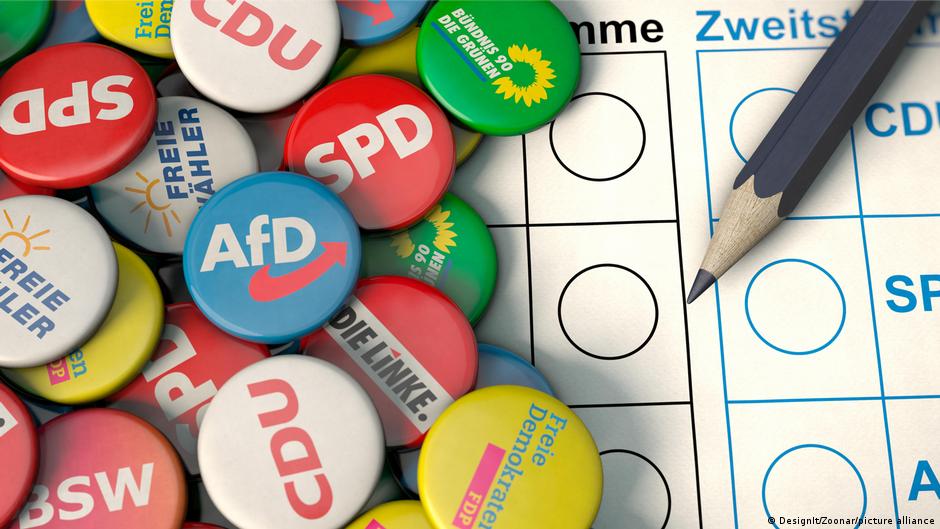
Support for Germany’s conservative Christian Democratic Union and Christian Social Union (CDU/CSU) coalition has dropped to 20%, its lowest level in five years, according to recent opinion polls by the INSA institute. This unprecedented dip in popularity may have far-reaching consequences not only for political stability but also for household budgets, consumer confidence, and everyday investors in Germany.
Implications for Personal Finance and Economic Outlook
As the CDU/CSU traditionally represents fiscal conservatism and economic stability, their declining support could unsettle German consumers who rely on steady economic policies. The reduced confidence in the ruling coalition comes alongside the rise of the far-right Alternative for Germany (AfD), which now leads the polls at 28%. The Greens hold steady at 13%, while the Social Democratic Party and the Left Party each garner 12% support.
Consumer sentiment tends to influence spending and saving behaviors. When political uncertainty rises, households often respond by tightening budgets, delaying large purchases, or shifting investments towards safer assets. Moreover, fluctuations in party support signal possible changes in policies on taxation, social welfare, and currency regulation, all of which directly affect household finances.
"Political shifts and election outcomes are closely watched by everyday investors who adjust their portfolios based on anticipated economic policies and market stability," said a personal finance analyst.
For everyday investors, the ongoing changes in voter preferences emphasize the need for vigilance. Uncertainty regarding future government policies can introduce volatility into financial markets, affecting currency stability and the value of savings. The euro's performance, for example, could be influenced by the election outcomes in September, when three federal states—Saxony-Anhalt, Mecklenburg-Vorpommern, and Berlin—head to the polls.
Additionally, the drop in CDU/CSU support might impact social security contributions and public spending priorities, which in turn shape disposable income levels for German households. The shifting political landscape also highlights the potential challenges for medium- and long-term financial planning, as policy reversals or reforms could alter the economic environment significantly.
Another notable development is the Free Democratic Party (FDP) barely crossing the 5% threshold to enter parliament, while the left-populist "Sarah Wagenknecht’s Alliance" remains below the barrier at 3%. This fragmentation indicates a more volatile political environment, which can translate into cautious behavior among consumers and investors.
Experts caution that pre-election polls should be interpreted carefully. According to the German Press Agency (dpa), voter loyalty has weakened, and many Germans decide their vote at the last moment. Therefore, while polls capture current moods, they are not definitive forecasts of election results or subsequent economic policies.
In summary, the decline of CDU/CSU support represents more than a political challenge; it signals potential economic uncertainty for German households. Consumers and investors alike should prepare for possible shifts in fiscal and monetary policies that could affect budgets, savings, and currency stability in the coming months.