AfD Victory in Saxony-Anhalt Raises New Risks for European Households
Poland, France and the Czech Republic reacted sharply after the far-right AfD won a preliminary 44 percent in Saxony-Anhalt.
Political shockwaves from eastern Germany are rippling across Europe after the far-right Alternative for Germany, known as AfD, scored a decisive success in the state parliament election in Saxony-Anhalt. For households and everyday investors, the result matters beyond party politics: it adds another layer of uncertainty to Europe’s economic outlook, currency expectations and consumer confidence at a time when many families are already watching prices, mortgage costs and savings returns closely.
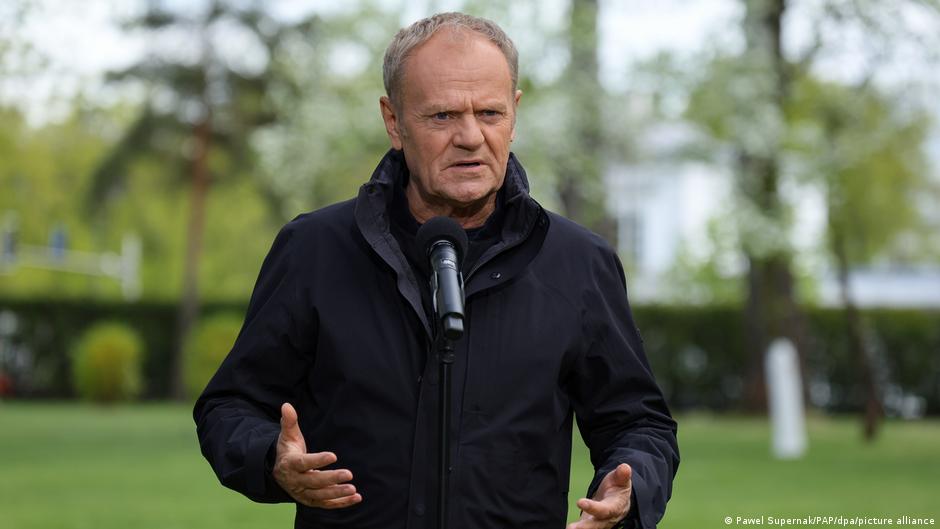
Polish Prime Minister Donald Tusk reacted with alarm after preliminary results showed AfD far ahead in the eastern German state. Writing on X on the evening of Sunday, September 6, Tusk said: “In Poland, only idiots or traitors can rejoice at the triumph of the AfD party in Germany.” He added that such people had “accumulated somewhat” in the Polish opposition parties Confederation and Law and Justice, known as PiS.
The unusually blunt reaction from Warsaw underlines how closely Germany’s neighbors are watching the political direction of Europe’s largest economy. Germany is a central trading partner for countries across the region, and political instability there can quickly feed into expectations for investment, employment and cross-border business. For consumers, that can show up indirectly in job security, prices for imported goods, and the value of savings held in euros or local currencies linked closely to eurozone conditions.
Why a State Election Can Matter for Household Finances
On paper, the vote was a regional contest in Saxony-Anhalt, not a national election. But the scale of AfD’s lead gives it wider significance. According to preliminary results cited in the source report, Alternative for Germany was winning convincingly with 44 percent of the vote. The party’s candidate for state premier is Ulrich Siegmund.
The Christian Democratic Union, the party of incumbent state premier Sven Schulze, was provisionally on 17.4 percent. The Left Party was at 8.6 percent, Alliance 90/The Greens at 8.9 percent, the Social Democratic Party of Germany at 9.2 percent, and the Sahra Wagenknecht Alliance at 5.1 percent. The Free Democratic Party and other parties failed to clear the 5 percent threshold, according to the preliminary results.
Based on those results, the 83 seats in Saxony-Anhalt’s state parliament could be divided as follows: AfD would receive 39 mandates, the CDU 15, the Left Party, Greens and Social Democrats eight seats each, and the Sahra Wagenknecht Alliance five. Preliminary election outcomes were expected to become known during the night into September 7.
For markets, regional election results usually matter only when they appear to signal a broader shift. This result may be read that way because it strengthens a far-right party in Germany and raises questions about coalition-building, policy stability and Germany’s future political center of gravity. Investors tend to dislike uncertainty, particularly when it affects major economies whose fiscal policy, industrial strategy and European Union stance influence the wider continent.
“We must listen to the anger, anxieties and fears and respond to them. But nationalism and xenophobia will never be the solution.”
That warning came from French Minister for European Affairs Benjamin Haddad, who wrote on X that this was a “difficult moment for Europe.” Haddad said Europe must not forget its history, pointing to the meaning of decisions taken by France and Germany. His response placed the vote in a broader European frame, where political fragmentation can complicate joint action on energy, defense, migration and public spending.
Currency, Savings and Investor Sentiment
For households, the most immediate financial effect of a political result like this is not a sudden change in bills. Electricity prices, rent payments, groceries and bank deposits do not reset overnight because of one state election. The risk is more gradual: political stress can influence business confidence, public budgets and market sentiment, which in turn may affect borrowing costs, pension portfolios and exchange rates.
Everyday investors with exposure to European stocks, German industrial companies or euro-denominated assets may see the result as one more factor to monitor. Germany’s economic performance matters for export supply chains, automotive production, manufacturing jobs and investor confidence across Central and Eastern Europe. If political uncertainty grows, companies may delay investment decisions, and markets may demand more clarity before pricing future growth optimistically.
Currency watchers may also pay attention. The euro is shaped by inflation, interest-rate expectations and the European Central Bank, but politics still matters when it changes confidence in the region’s policy direction. For Polish households earning or saving in zloty, or Czech households holding koruna deposits, developments in Germany can affect sentiment toward regional currencies because trade links are deep. The same applies to consumers who travel, shop cross-border, pay tuition abroad or hold savings in multiple currencies.
The reaction in the neighboring Czech Republic showed a different political response. Tomio Okamura, speaker of the Chamber of Deputies in the Czech parliament and founder of the right-wing Freedom and Direct Democracy party, congratulated the German far-right party during an appearance on public broadcaster CT. “I hope, above all, that it will enter the new government coalition in Saxony-Anhalt,” said Okamura, a politician of Japanese-Korean origin.
The source report notes that since the end of 2025 the Czech Republic has been governed by a coalition made up of billionaire Andrej Babis’s right-populist ANO party, Okamura’s SPD, and the Motorists party. That context matters for consumers because regional political alignments can influence tax policy, social spending, energy decisions and attitudes toward EU-level economic coordination.
For families managing budgets, the key takeaway is not to treat a single election result as a reason for rushed financial decisions. It is a signal to watch the broader European policy environment. Savers should pay attention to interest rates and inflation, investors should check whether their portfolios are overly concentrated in one region or sector, and households with foreign-currency exposure should understand how exchange-rate swings could affect their expenses.
The Saxony-Anhalt result is first and foremost a political development. But in Europe, politics and household finances often meet through confidence, currencies, investment and public policy. The strong reactions from Poland and France show that Germany’s neighbors see the AfD’s advance not as a local story alone, but as a development with consequences for Europe’s economic and social direction.