Kyiv Strikes Raise Fresh Budget Risks for Ukrainian Households
Russian drone and ballistic missile attacks on Kyiv damaged homes, vehicles, garages and businesses, adding new financial pressure on residents.
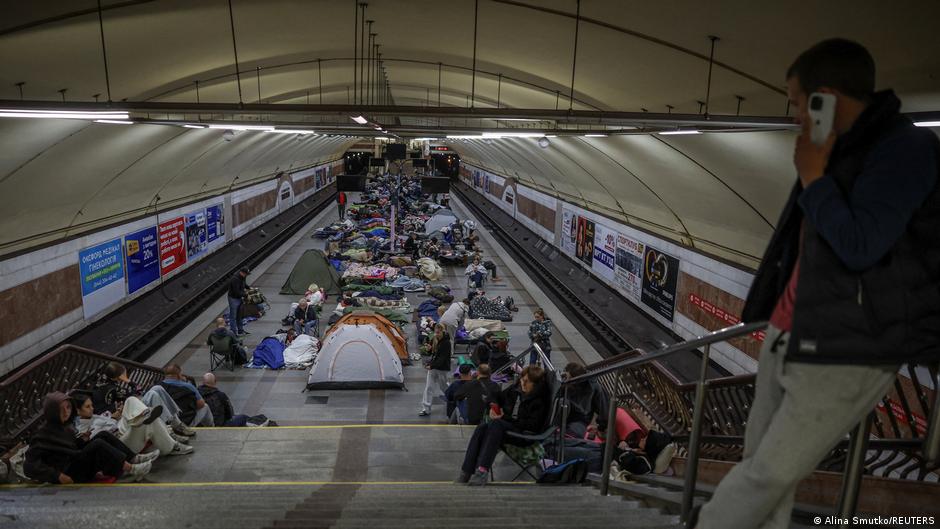
Russian forces struck Kyiv overnight on September 8 using drones and ballistic missiles, according to the Kyiv City Military Administration, adding another layer of financial strain for households already living with the direct and indirect costs of war. The attack damaged residential buildings, vehicles, garages, non-residential areas and industrial sites in the wider Kyiv region, while officials reported injuries and emergency responses across several districts.
Kyiv Mayor Vitali Klitschko said a fire broke out on the grounds of an educational institution in the Holosiivskyi district after the Russian strike. In the Solomianskyi district, debris fell on a five-story residential building, while another three-story residential building was damaged elsewhere. A fire also broke out in a warehouse facility, according to local authorities.
For families in affected neighborhoods, the immediate cost of the attack is likely to extend beyond physical danger. Damage to apartments, cars, garages and local infrastructure can quickly become a household budget problem, especially when residents must pay for temporary accommodation, repairs, replacement transport, medicines or lost work time. In wartime conditions, even partial damage to a home or vehicle can drain emergency savings and force families to delay other spending.
Preliminary information indicated that six people were injured in the shelling, Klitschko said, adding that a medical team had been sent to the Solomianskyi district.
Homes, Cars and Savings Under Pressure
The Kyiv City Military Administration said debris damaged a car in the Darnytskyi district. Klitschko also reported fires in non-residential zones in the Podilskyi and Darnytskyi districts. The city administration specified that garages and cars were burning. In the Holosiivskyi district, according to the mayor, a fire occurred on the grounds of an educational institution, and preliminary data indicated that people were trapped in a residential building.
For ordinary residents, the destruction of a vehicle can affect far more than mobility. A car may be essential for getting to work, transporting relatives, evacuating during alerts or moving goods for small business activity. Garage damage can also affect stored tools, spare parts, household equipment and work-related property. These are often assets that families accumulate over years, and replacing them during wartime can be expensive and difficult.
Residential damage also carries a direct personal finance impact. A damaged apartment block can create urgent expenses for repairs, boarding up windows, replacing doors, securing belongings or relocating temporarily. In multi-unit buildings, residents may face shared costs even when their own apartment is not the worst hit. The source did not provide estimates for property losses, insurance coverage or compensation, but the pattern of damage described by officials points to costs that often land quickly on households and local communities.
The attacks also matter for consumer confidence. Repeated strikes on the capital can prompt families to hold more cash, postpone major purchases and prioritize foreign-currency savings or essential goods. For everyday investors and savers, the damage reinforces the broader risk environment around Ukraine, where security developments can influence currency expectations, energy costs, business operations and inflation pressures.
Regional Business Damage Adds to Consumer Costs
Late on September 7, Russian forces also carried out drone strikes on the Boryspil and Fastiv districts of Kyiv region, Ukraine's State Emergency Service reported on Telegram. In the Boryspil district, fires broke out at industrial enterprises. At one site, fire destroyed seven trucks. The emergency service also said the building of one logistics complex was attacked twice. Rescuers arrived quickly and extinguished the fires.
Damage to industrial enterprises and logistics facilities can have effects that reach consumers even when residential areas are not directly hit. Trucks and logistics buildings are part of the system that moves food, consumer goods, equipment and business supplies. When transport assets are destroyed or warehouses are hit, companies may face higher replacement, repair and operating costs. Those costs can feed into prices, delivery delays or lower availability of goods, depending on the role of the affected businesses.
The reported destruction of seven trucks at one enterprise is also a reminder that the financial impact of a strike can be concentrated and sudden. For firms, transport losses may mean interrupted contracts, higher leasing costs, insurance claims or reduced capacity. For workers, disruption at industrial and logistics sites can threaten wages, shifts and job security. For households, any hit to local employment can quickly become a savings and debt issue.
The wider economic backdrop remains tied to diplomacy. Special representatives of U.S. President Donald Trump, Steve Witkoff and Jared Kushner, left Kyiv during the night of September 7. Following their meeting, Ukrainian President Volodymyr Zelensky said he was ready for trilateral talks in a Ukraine-U.S.-Russia format. Moscow also did not rule out the possibility of resuming a trilateral format, though Kremlin spokesman Dmitry Peskov said it was still premature to speak about the place and timing.
For markets and household finances, the combination of strikes and tentative diplomatic signals creates uncertainty rather than clarity. A path toward talks could matter for currencies, reconstruction expectations and investor sentiment. But the fresh damage in Kyiv and the surrounding region shows that consumers, homeowners, small businesses and everyday savers remain exposed to sudden losses while no timetable for negotiations has been set.
In practical terms, the attack underscores why many Ukrainian households must continue budgeting around emergency needs: medical costs, temporary shelter, repair materials, transport replacement and cash reserves. The immediate story is one of missile and drone damage across Kyiv. The personal finance story is the way each damaged apartment, burned car, destroyed truck and disrupted business can ripple through family budgets long after the fires are out.