Zaporizhstal Damage Deemed Critical After Third Russian Missile Strike
The shutdown of one of Ukraine’s largest steel plants threatens jobs, tax revenues and supply pressures that can reach consumers and investors.
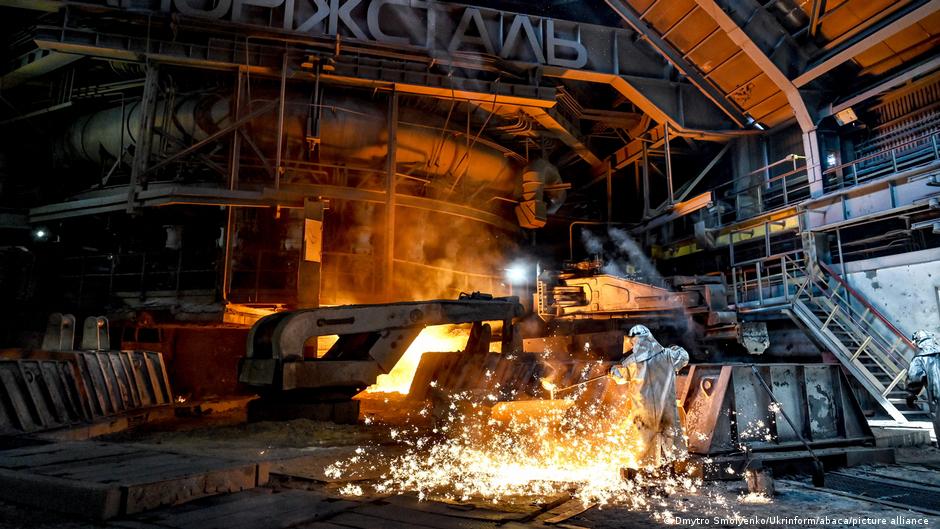
Zaporizhstal, one of Ukraine’s largest steel plants, has sustained what company officials preliminarily described as critical damage after a third Russian missile strike in a month, deepening the economic fallout from attacks on industrial infrastructure and raising fresh concerns for household budgets, regional employment and everyday investors exposed to metals, currencies or Ukraine-related risk.
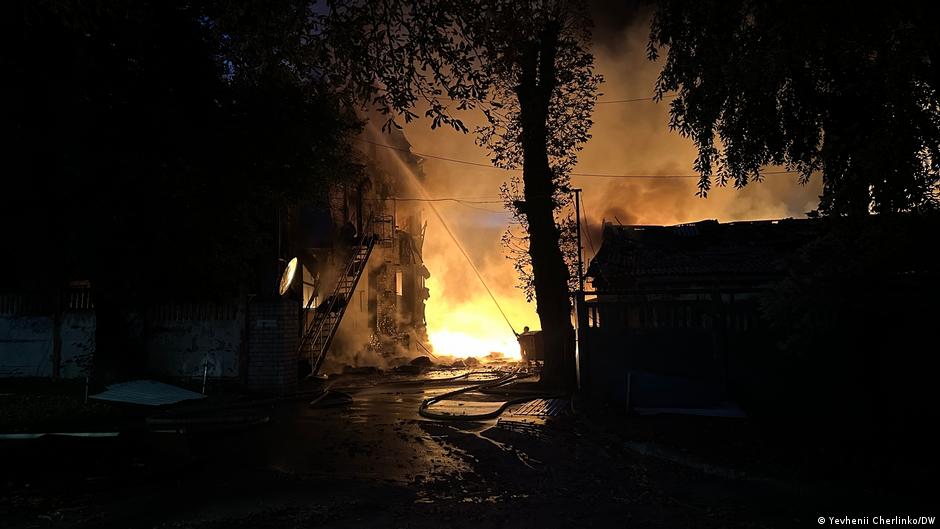
The metallurgical plant, located in the Ukrainian city of Zaporizhzhia, was hit by ballistic missiles overnight on Saturday, Sept. 12. According to a press release published by the company the same day, four missiles struck the production site during the latest attack. The plant had already fully halted operations after previous strikes on Aug. 11 and Aug. 27.
At least four workers were at the site during the September attack and were injured, the company said. Three required hospitalization. Equipment in the blast-furnace and open-hearth shops was damaged, along with the plant’s power system and logistics infrastructure.
“The scale of destruction is increasing with each strike. It is not yet possible to assess it finally, but preliminarily we classify the damage as critical,” said Oleksandr Myronenko, chief operating officer of Metinvest Group, which includes Zaporizhstal.
The company said response work was continuing at the plant, alongside inspections of damaged facilities to determine the precise nature and scale of destruction. For consumers and savers, the immediate story is not only one of industrial damage. A prolonged shutdown at a facility of this size can ripple through wages, public finances, supply chains and prices in ways that affect ordinary households well beyond the factory gate.
A Hit to Jobs, Taxes and Local Spending
Zaporizhstal was named in May 2026 as the largest employer in Zaporizhzhia region, according to the company’s press service, citing an annual ranking by Opendatabot, a service that provides access to Ukrainian state data on individuals and legal entities. At that time, the plant employed more than 8,000 people.
For a region at war, such payrolls matter. A plant shutdown can affect not only direct employees but also households that depend on contractors, transport firms, maintenance providers and local shops serving workers. Even when wages continue temporarily or operations are shifted elsewhere, uncertainty about production, repairs and safety can push families to delay spending, preserve cash and reassess savings.
The fiscal impact is also substantial. In 2025, the plant paid almost 2.7 billion hryvnias, equivalent to 52.34 million euros, in taxes to budgets at all levels. Those revenues help fund public services and, in wartime, add to the broader strain on government finances. When a major taxpayer is forced offline, local and national budgets can face added pressure at the same time that emergency, reconstruction and social-support needs rise.
For households, that can translate into a less visible but familiar squeeze: pressure on public services, uncertainty over regional employment and increased reliance on savings or remittances. In a wartime economy, damage to industrial employers is therefore also a personal-finance event.
Steel Supply and Investor Risk
The first major missile attack on Zaporizhstal occurred overnight on Aug. 11. Eight workers were killed and another 26 were injured. The equipment damage was serious enough for the metallurgical plant to stop operations completely, while other production sites began operating at reduced capacity.
The second major attack took place on Aug. 27. According to Zaporizhstal, five missiles struck the plant. No one was killed or injured in that attack, but the blast-furnace shop, energy and transport infrastructure, and open areas of the site were damaged. Myronenko said at the time that the timetable for restarting production existed only in theory, because another strike came just as debris from the previous hit had been cleared.
The significance of the plant is underscored by production data. According to Zaporizhstal, in 2025 the plant produced almost 3.568 million tons of pig iron and 3.212 million tons of steel. Across Ukraine as a whole that year, industry association Ukrmetallurgprom calculated output at 7.884 million tons of pig iron and 7.409 million tons of steel. That means the Zaporizhzhia plant accounted for more than 45% of all pig iron produced in the country and more than 42% of Ukrainian steel.
For everyday investors, those figures are a reminder that single industrial assets can represent outsized exposure in wartime economies. The direct market implications depend on contracts, export routes, replacement capacity and repair timelines, none of which can be fully assessed while damage inspections are still under way. But a facility responsible for such a large share of national steel and pig iron output can influence expectations around industrial production, company earnings, logistics demand and reconstruction costs.
Metals are also closely watched by investors because they sit at the intersection of construction, infrastructure, manufacturing and trade. Any shock to Ukrainian steel output may feed into regional supply calculations, particularly if other sites are already operating at lower capacity. For retail investors holding commodity-linked funds, emerging-market assets, infrastructure stocks or currencies sensitive to geopolitical risk, the attack is another signal that war-related disruptions can move from the battlefield into portfolios.
Currency and Household Budget Channels
The household-budget implications are indirect but real. A major exporter or industrial taxpayer going offline can weigh on regional incomes and, depending on broader trade effects, contribute to pressure on currency flows. For Ukrainians paid in hryvnias but facing costs tied to imported goods, fuel, equipment or foreign-currency benchmarks, industrial disruption can reinforce concerns about purchasing power.
The article’s reported euro equivalent for the plant’s 2025 tax payments also highlights the way households and businesses often think across currencies during wartime: local wages and taxes may be denominated in hryvnias, while savings decisions, business planning and reconstruction costs are frequently compared with euros or dollars. Damage to a large industrial employer can therefore affect confidence as much as immediate cash flow.
None of the available company statements provides a firm timeline for production to resume. The plant had already fully stopped work after the Aug. 11 and Aug. 27 strikes, and the latest attack damaged production equipment, energy systems and logistics infrastructure. Until inspections are complete, the cost and duration of repairs remain uncertain.
For families in Zaporizhzhia region, the uncertainty is immediate: injuries, lost production, job insecurity and questions over local economic stability. For consumers elsewhere, the impact may appear later through supply chains, prices, taxes or market volatility. And for small investors, the case is a stark reminder that geopolitical risk is not abstract. It can sit inside a steel mill, a payroll, a municipal budget and a household savings plan all at once.