Russia to Join G20 Energy Talks as Fuel Security Concerns Reach Consumers
A Russian representative is expected at next week’s G20 energy ministers’ meeting in Houston as energy security risks remain central for households and investors.
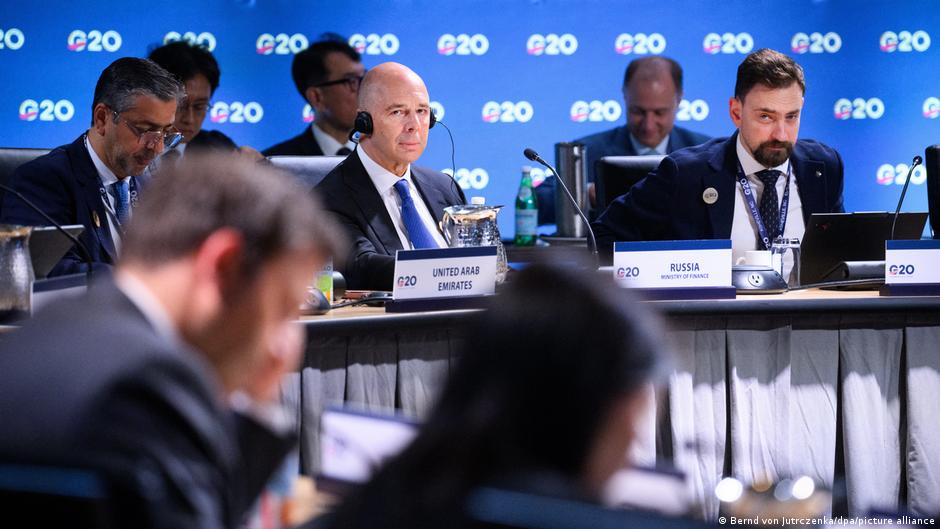
A Russian representative will attend a meeting of G20 energy ministers in Houston next week, a U.S. administration official told Reuters, bringing Moscow back into a high-level energy forum at a moment when fuel security is directly tied to household budgets, inflation expectations and currency markets.
The meeting is scheduled to take place from September 14 to 16 in the U.S. city of Houston. According to the report, it is not yet known who will represent Russia at the gathering. The presence of a Russian official is notable because energy diplomacy remains closely linked to the war in Ukraine, sanctions policy and the supply pressures that can filter quickly into gasoline, heating and electricity costs for consumers.
The stated theme of the event is “energy abundance.” U.S. Energy Secretary Chris Wright and Interior Secretary Doug Burgum are expected to attend, along with Jarrod Eigen, a representative of President Donald Trump’s administration. Representatives of the energy sector from Europe and Asia are also expected to participate.
Why Energy Diplomacy Matters for Household Budgets
For consumers, the significance of the Houston meeting is less about protocol than about prices. Energy costs are embedded across everyday expenses: fuel for commuting, utility bills, air travel, food distribution and the operating costs of businesses. Even when families do not buy oil or gas directly, volatility in energy markets can show up through higher transport costs, service prices and inflation pressure.
The backdrop to the G20 meeting is unusually tense. Many countries remain worried about energy security because of Russia’s war in Ukraine, as well as the conflict involving the United States and Iran. Those concerns have been compounded by developments in Yemen, where Iran-backed Houthis seized the port city of Mokha on the country’s western coast on September 10 and strengthened their positions near the Bab el-Mandeb Strait, the southern entrance to the Red Sea.
That location matters to global commerce. The Bab el-Mandeb Strait is a key maritime chokepoint connecting the Red Sea with routes toward the Suez Canal and beyond. Disruption near such corridors can increase shipping risk, affect insurance costs and add uncertainty to energy flows. For households, these pressures can eventually translate into more expensive imported goods or firmer fuel prices, depending on the scale and duration of disruptions.
Energy security concerns are no longer abstract diplomatic language for consumers; they are part of the chain that can affect fuel bills, grocery prices and inflation expectations.
The meeting’s focus on abundance also arrives at a time when governments are trying to reassure markets that supply is adequate, even as geopolitical risks remain elevated. For everyday investors, that tension can influence energy stocks, exchange-traded funds tied to commodities, currencies of energy-exporting nations and broader equity markets sensitive to inflation and interest-rate expectations.
Russia’s Return to G20 Economic Forums Draws Scrutiny
The Houston energy meeting follows another high-level G20 event in the United States where Russia’s presence drew attention. Russian Finance Minister Anton Siluanov took part in the meeting of G20 finance ministers and central bank governors held on August 31 and September 1 in Asheville. It was the first such participation by Russia’s finance minister since the start of the war in Ukraine. Previously, Russia had been represented at those meetings by secretaries.
According to U.S. media reports cited in the source article, Siluanov discussed with U.S. Treasury Secretary Scott Bessent Donald Trump’s peace plan, which had been proposed in November 2025, as well as the impossibility of easing sanctions before the end of the war.
Siluanov’s appearance prompted criticism from European officials. German Finance Minister and Vice Chancellor Lars Klingbeil described the very fact of receiving Siluanov at the event as an “alarming signal.” In conversations with colleagues from other European countries, Klingbeil threatened to boycott the traditional group photograph of summit participants if Siluanov was included. According to Klingbeil, representatives of other European countries joined his position, and the photo was ultimately taken without the Russian minister.
That dispute illustrates the political sensitivity around Russia’s participation in international financial and energy meetings. For markets, the issue is not only diplomatic symbolism. Sanctions, peace negotiations and energy access all interact with expectations for inflation, government borrowing costs and the outlook for currencies.
Households and savers may feel those dynamics indirectly. If energy prices rise, central banks may face renewed pressure to keep monetary policy tighter for longer. That can affect mortgage rates, credit card costs and returns on savings products. If energy prices fall or supply concerns ease, consumers could see some relief in fuel and utility costs, although the impact is rarely immediate or evenly distributed.
Currency markets are also part of the consumer story. Energy-importing economies can come under pressure when oil and gas prices climb, while energy exporters may benefit from stronger revenues. For international travelers, retirees with cross-border income, and investors holding foreign assets, exchange-rate movements can alter purchasing power and portfolio values.
The Houston meeting is therefore likely to be watched beyond diplomatic circles. While the source article does not identify the Russian representative or specify any concrete policy outcome expected from the talks, the decision to include Russia in a G20 energy setting comes at a time when geopolitical risk remains a major variable for consumer inflation and investment decisions.
For families managing budgets, the practical takeaway is that energy policy remains closely connected to personal finance. Gasoline prices, heating bills, grocery costs and market volatility can all move when supply routes, sanctions policy or major producer relations shift. The G20 meeting in Houston will not by itself determine those costs, but it is part of the broader negotiation over the energy landscape that consumers ultimately pay for.