Georgia Detains Ex-Defense Chief Baramidze in Treason and Sabotage Case
The arrest of a senior opposition figure adds political risk for households, savers and investors watching Georgia’s stability.
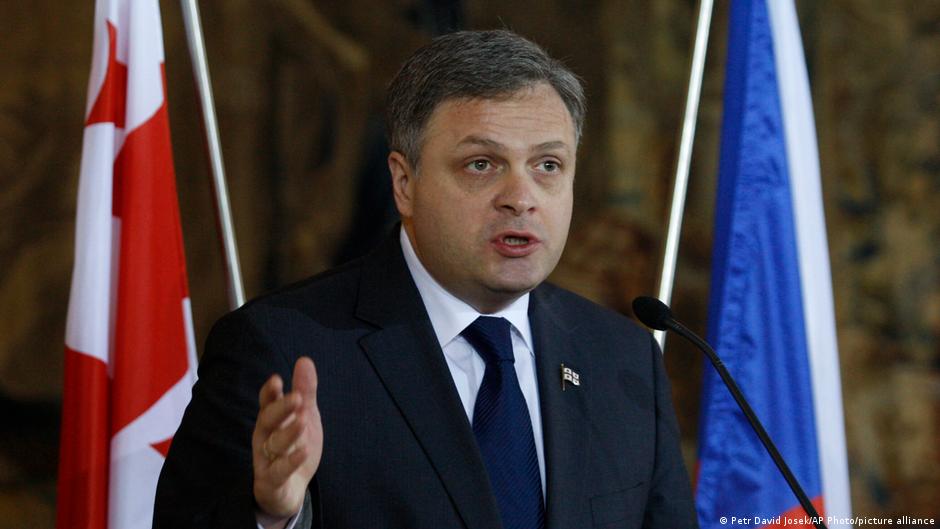
Georgia has detained Giorgi Baramidze, a former acting prime minister, defense minister and interior minister, on accusations of “treason, namely sabotage,” in a case that turns on his public comments about the 1992-1993 war in Abkhazia.
Baramidze, 58, is one of the leaders of the United National Movement, the party associated with former President Mikheil Saakashvili. Georgia’s deputy prosecutor general, Amiran Guluashvili, said Baramidze would be charged with “treason against the motherland, namely sabotage.” The decision, prosecutors said, was made on the basis of a court ruling. Georgia’s Prosecutor General’s Office published a press release on Friday, Sept. 11.
For consumers and everyday investors, the case is not simply another courtroom battle in Tbilisi. Political stability is one of the quiet assumptions behind household financial planning: the value of savings, the cost of imported goods, confidence in banks and the appetite of foreign investors all depend in part on whether institutions appear predictable. A high-profile treason case against a former defense chief therefore becomes part of the wider risk picture for families, small businesses and people holding assets in Georgian markets or currencies exposed to regional uncertainty.
A Political Case With Economic Ripples
The investigation was opened after Baramidze appeared on the program “The Birth of Georgia,” broadcast on July 18 on the YouTube channel of the same name hosted by Iago Khvichia, leader of the opposition libertarian party New Political Center - Girchi. According to prosecutors, Baramidze said in the interview that at the beginning of the Abkhazia war of 1992-1993, Georgian soldiers did not take prisoners but shot them on the spot, and that this left the Georgian side, unlike the Abkhaz side, without an exchange fund.
Law enforcement agencies began investigating the statement on Aug. 7 after a complaint from the state service for veterans’ affairs. The Prosecutor General’s Office later said it had found no facts confirming that the Georgian army had executed prisoners. Prosecutors described Baramidze’s statement as “baseless and fabricated,” saying it had an intentional ideological and propaganda character and contributed to undermining Georgia’s state and national interests, external security, defense capability and state institutions.
Prosecutors said the investigation is continuing and that the public will be informed about its progress and results.
The office also argued that Baramidze’s words damaged Georgia’s image, harmed the reputation of the country’s Defense Forces, affected the honor and dignity of veterans of the Abkhazia war and fallen service members, and threatened the process of reconciliation and confidence-building among people affected by the conflict. Prosecutors said the comments undermined Georgia’s peace and de-occupation policy and complicated the normal work of state agencies.
Prosecutors now plan to ask a court to place Baramidze in custody. For markets, the procedural next steps matter because prolonged legal confrontation around opposition figures can feed perceptions of political risk. Those perceptions can show up in practical ways: weaker investor confidence, more cautious lending, and greater attention to currency moves by households that receive income in one currency but pay for imports, rent, travel or education in another.
Why Households May Pay Attention
Georgia’s economy is closely watched by residents, expatriates, regional businesses and investors because political signals can influence borrowing costs and confidence. The article does not report any market reaction, currency move or change in economic indicators linked to Baramidze’s detention. But the consumer finance relevance lies in the channel through which political events can matter: if uncertainty rises, families may become more cautious about large purchases, businesses may delay investment, and savers may reassess how much money to hold in local currency versus foreign currency.
Everyday investors often look beyond headline growth and interest rates. They also consider whether courts, prosecutors and elected institutions appear stable and predictable. A treason and sabotage case against a former senior official, especially one tied to wartime memory and an opposition party, is the type of event that can enter political-risk calculations even before it affects prices directly.
The case also comes against a broader backdrop of prosecutions involving former Georgian defense ministers. Baramidze is the fifth former defense minister in Georgia to face a criminal case. In July, Saakashvili ally Bacho Akhalaia was sentenced to two and a half years in prison after being found guilty of public calls to overthrow the government following remarks he made at a court hearing.
In November 2025, Irakli Okruashvili, a former interior and defense minister who supported Saakashvili until 2007, was sentenced to seven years in prison in connection with the high-profile killing of 19-year-old Amiran Robakidze during a police check in 2003.
Former members of the government of the ruling Georgian Dream party are also in custody. Juansher Burchuladze, who led the Defense Ministry until February 2024, and Irakli Garibashvili are both imprisoned. Garibashvili served as defense minister from 2019 to 2021, prime minister from 2021 to 2024, and chairman of Georgian Dream from 2024 until April 2025. Burchuladze is accused, among other things, of taking bribes, while Garibashvili is accused of money laundering.
For households, the immediate lesson is not to treat a single legal case as a direct financial forecast. The source article provides no evidence of a direct impact on wages, prices, bank deposits or exchange rates. But political developments of this scale are relevant to personal finance because they shape the background against which people make decisions about savings buffers, currency exposure, debt and investment risk.
For investors with exposure to Georgia or the wider South Caucasus, the detention is another data point in assessing governance and institutional risk. For families inside Georgia, it is a reminder that legal and political tensions can eventually affect confidence, and confidence is often what determines whether households spend freely, save defensively or keep more flexibility in their budgets.