Georgia Opposition Launches New Protest Wave as Political Risk Rises
Renewed demonstrations and a planned November 28 rally add political uncertainty for Georgian households, savers and everyday investors.
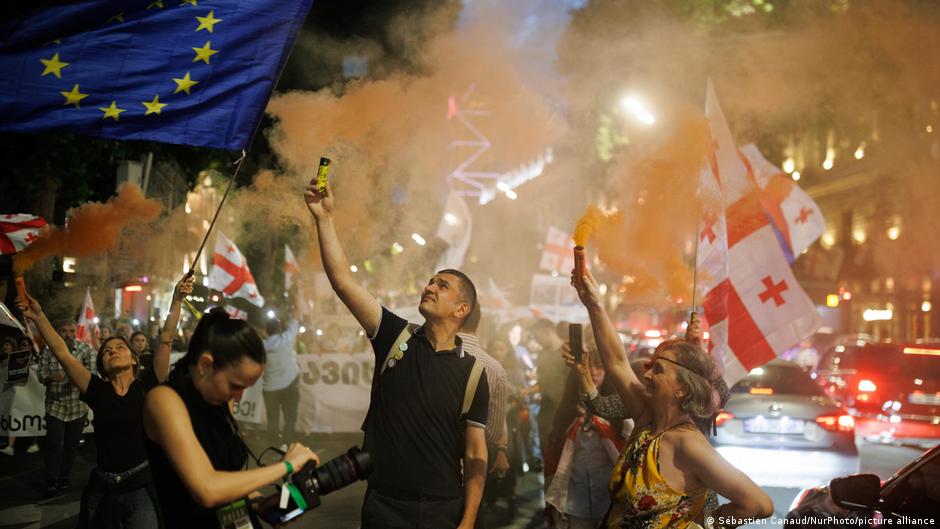
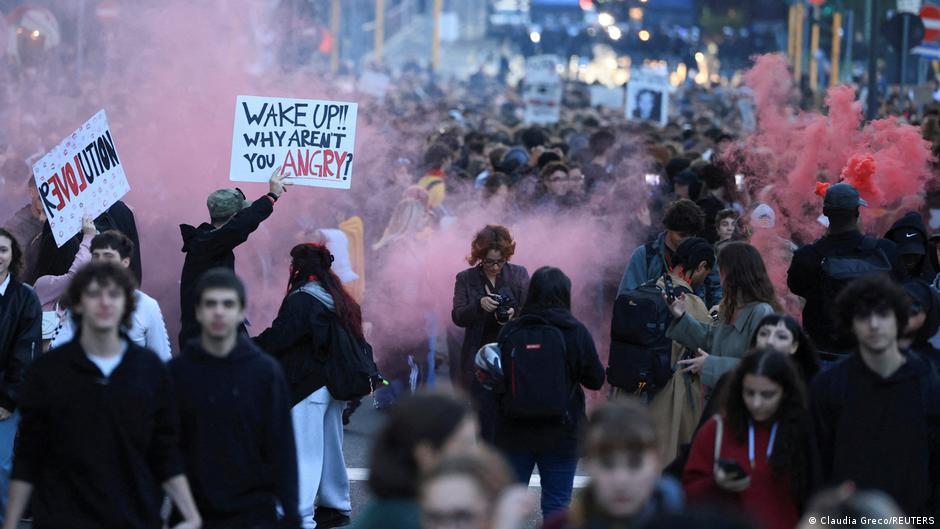
Thousands of people marched through Tbilisi on Sunday, October 25, as Georgia’s opposition announced a new wave of protests against the policies of the ruling Georgian Dream party. The demonstrations are unfolding while the country’s Constitutional Court considers a lawsuit seeking to ban opposition parties.
For Georgian households, savers and small investors, the renewed political confrontation introduces another layer of uncertainty after more than two years of protests and disputes over the country’s democratic direction and European integration. Although the march itself produced no specific economic policy announcement, prolonged instability can influence consumer confidence, business decisions and perceptions of risk surrounding the Georgian economy and its currency.
The protest, organized by opposition representatives and civil society groups under the slogan “Georgia without Ivanishvili,” began near Tbilisi State University and proceeded toward Rustaveli Avenue. Thousands participated, according to Kavkazsky Uzel, carrying the flags of Georgia, Ukraine and the European Union. A large number of security personnel were also reported at the event.
November 28 Rally Becomes the Next Major Test
Nika Gvaramia, leader of the Coalition for Change, described Sunday’s march as the beginning of a new protest wave. Opposition groups are now directing attention toward a large demonstration planned for November 28, the second anniversary of the start of mass protests in Georgia.
“We are starting today, and we definitely need a culmination, whether it is November 28 or in the following days. It is important that there are very many of us on the 28th, so that the wind cannot extinguish the fire,” Gvaramia said, as quoted by Kavkazsky Uzel.
The size of that rally, the government’s response and any possible confrontation with police will be closely watched. For consumers, recurring large demonstrations can have immediate practical effects even when they do not directly change taxes, wages or interest rates. Disruption in central Tbilisi may affect commuting, retail activity and services, while broader uncertainty can prompt households to delay major purchases or keep more of their savings readily available.
Gigi Tsereteli, leader of European Georgia, also attended the march and said the November 28 demonstration would be both large and important. He argued that Georgia had moved from being a leading candidate on the path toward European integration to becoming an outsider.
“What is happening in Georgia today in terms of the destruction of democracy and disruption is truly unimaginable,” Tsereteli said, according to Georgia Online. He added that parties were being banned, political life was being restricted and political prisoners represented another important challenge.
Why Political Risk Matters to Personal Finances
The immediate financial consequences for any individual household will depend on how long the protest movement lasts and whether tensions intensify. Political uncertainty can affect expectations around the Georgian lari, especially for families whose expenses, savings, debts or income involve foreign currencies. Households exposed to the euro or US dollar may therefore pay closer attention to exchange-rate movements, while domestic savers may review how concentrated their money is in a single currency.
Everyday investors may also need to distinguish between short-term market reactions and changes to Georgia’s longer-term economic outlook. The central issues raised by the protesters concern democratic institutions, opposition activity and the country’s relationship with the European Union. Those questions can shape investor sentiment and business confidence, but the source reports no new sanctions, fiscal measures, banking restrictions or changes to Georgia’s EU timetable arising directly from Sunday’s march.
The latest demonstration follows a protest cycle that began in spring 2024 over Georgia’s law on “foreign agents.” The movement intensified after Georgian Dream won the parliamentary election. In November 2024, the dispute developed into a wider crisis after the authorities decided to postpone negotiations on joining the European Union until 2028.
Previous protests were accompanied by clashes with police, including the dispersal of demonstrators using tear gas and water cannons. That history raises the stakes surrounding the planned November 28 event, both for public safety and for confidence among consumers and businesses.
For households, the most practical response is to monitor confirmed developments rather than react solely to political rhetoric. Savers with currency exposure may want to understand how exchange-rate changes would affect their budgets, while investors should consider whether their portfolios are overly dependent on Georgian political stability. The opposition’s next major rally is likely to provide a clearer indication of whether the renewed campaign remains a series of demonstrations or develops into another prolonged national crisis.