Brazil Election Dispute Raises New Risks for Household Budgets and Savings
Lula’s narrow re-election and a challenge from Flávio Bolsonaro could prolong uncertainty over inflation, the currency and investments.
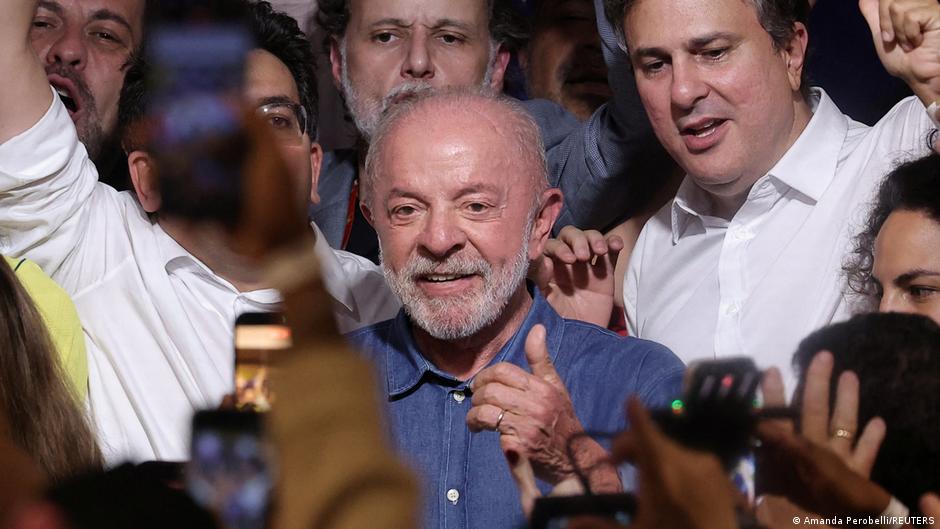
Brazilian President Luiz Inácio Lula da Silva has won a fourth, nonconsecutive term after a closely contested runoff, but a demand to annul the result threatens to extend political uncertainty for households, savers and everyday investors.
Official results from the presidential election held on Sunday, Oct. 25, gave the 80-year-old incumbent 51.8% of the vote. His opponent, right-wing populist Senator Flávio Bolsonaro, received 48.2%. Bolsonaro is the son of Brazil’s former far-right president, Jair Bolsonaro.
The result marked the first time in Brazilian history that a presidential candidate who finished second in the initial round went on to win the runoff. The narrow margin also leaves the country politically divided at a time when many Brazilians are already concerned about the cost of living, rising crime and economic instability.
For consumers, the immediate significance lies less in the final vote tally than in whether the transition proceeds without a prolonged institutional confrontation. Political uncertainty can affect confidence in Brazil’s economy and currency, with potential consequences for the prices households pay for imported goods, fuel and other products exposed to exchange-rate movements. The source report did not provide any post-election market data or describe specific policy proposals.
Election challenge adds uncertainty for savers
Flávio Bolsonaro refused to concede and called for the results to be annulled, citing the extension of voting hours, according to the Associated Press. Both Lula and Bolsonaro had previously requested longer opening hours at polling stations because of public transport problems and adverse weather conditions in parts of Brazil.
Supreme Court Justice Cristiano Zanin ultimately ordered voting to continue for another two hours. The decision came just three minutes before polling stations had been scheduled to close.
The dispute centers on the last-minute extension of voting, which both candidates had earlier requested amid transport and weather disruptions.
For families deciding whether to hold cash, reduce debt or add to investments, the challenge introduces an additional layer of uncertainty. A drawn-out dispute could make near-term financial planning more difficult, particularly for people whose savings or expenses are sensitive to changes in the Brazilian real. Currency weakness can raise the local cost of imported products, while volatility may affect funds and retirement accounts invested in Brazilian shares or government debt.
That does not mean households should assume a particular market outcome. The election report contained no evidence of a specific move in the real, stock prices, bond yields or consumer borrowing costs. The practical issue for personal finances is the possibility of greater volatility while the legal and political process develops.
Cost of living remains central
Lula’s campaign for re-election was difficult in part because voters were worried about living costs and crime. The contest also unfolded against a backdrop of corruption scandals, economic instability and allegations of interference by the United States.
Those pressures will shape the financial expectations facing Lula as he prepares to take office for the fourth time, with his terms not served consecutively. For households, the central questions will include whether the government can ease cost pressures, preserve purchasing power and provide a stable environment for jobs, credit and savings.
Investors will also be watching for clearer signals about the administration’s economic direction. Changes in expectations about public spending, inflation or growth can influence interest rates, the currency and the value of locally held investments. However, no detailed economic program or new fiscal measures were included in the election account, limiting what can be concluded about the likely effect on household finances.
Celebrations contrast with contested result
Supporters celebrated after the results were announced. Fireworks and vuvuzelas were heard in Rio de Janeiro, while thousands of people wearing red, the color of Lula’s Workers’ Party, gathered in the streets of São Paulo, according to AFP.
The public celebrations contrasted with Bolsonaro’s refusal to accept defeat. That split leaves consumers and markets facing two competing signals: an official result returning the incumbent to office, and a losing candidate seeking to overturn the vote.
For everyday investors, the key consideration is exposure rather than political prediction. People holding Brazilian stocks, bonds or currency-linked assets may face fluctuations as the challenge proceeds. Households with planned purchases of imported goods or foreign-currency expenses may likewise be more exposed to exchange-rate changes than families whose income and spending are entirely domestic.
The official count gives Lula a clear victory, but Bolsonaro’s annulment demand means the political aftermath is not yet settled. Until the dispute is resolved and the next administration’s economic priorities become clearer, Brazilian households may have to navigate continued uncertainty around prices, savings and investment values.