Lukashenko Orders Belarus Army Checks as War Risks Cloud Household Finances
The Belarusian leader said inspections could extend to mobilization, a signal that may add pressure on consumers, savers and investors.
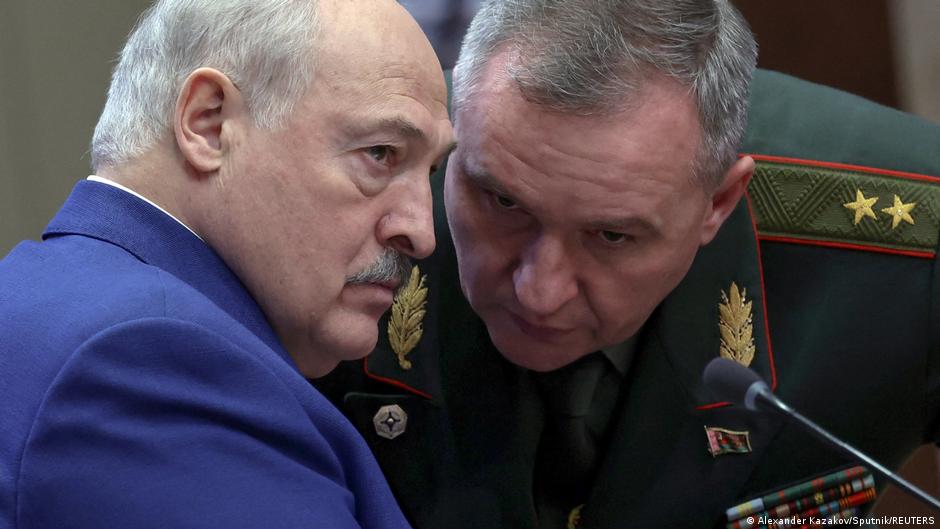
Belarusian leader Alexander Lukashenko has announced that inspections of the country’s armed forces will continue and may extend “up to mobilization,” a message that carries implications beyond the military sphere for households, savers and everyday investors watching regional risk.
Speaking to journalists on Friday, September 11, at the Obuz-Lesnovsky combined-arms training ground in the Brest region, Lukashenko said the time had come to “shake up” the entire Belarusian army. His remarks were reported by the state news agency BelTA.
“I have already said it in plain language: the army needs to be shaken up, the time has come. The whole army. We will check everyone. Up to mobilization,” Lukashenko said.
According to Lukashenko, checks have already taken place in tank and motorized rifle units, while inspections are now under way in an artillery brigade. He said all of Belarus’s armed forces would be reviewed, using the language of combat readiness to explain the scale of the exercise.
“We are preparing for war so that there is none,” he said, adding that “everything must be as in battle.” Lukashenko linked the approach to what he called the lessons of the “special military operation,” the term used by Russian authorities for the war in Ukraine.
Why Military Readiness Matters for Household Budgets
For Belarusian families, the immediate statement is military in nature, but the financial consequences of heightened readiness can reach into daily life. Mobilization checks can raise uncertainty about employment, income stability and household planning, particularly for families with relatives who may be subject to service obligations or readiness procedures.
When governments signal broader military preparedness, consumers often become more cautious. Families may delay major purchases, build cash buffers or shift savings into currencies perceived as safer. In countries exposed to geopolitical risk, ordinary savers tend to focus less on long-term return and more on liquidity: whether money can be accessed quickly, whether wages will keep up with prices, and whether savings retain value if pressure rises on the local currency.
Lukashenko’s remarks did not include any new economic measures, mobilization order or budget figures. Still, the phrase “up to mobilization” is likely to draw attention from households already used to living with the financial aftershocks of Russia’s war in Ukraine, sanctions pressure and regional security tensions.
For everyday investors, the key issue is not only whether military activity increases, but whether political risk changes expectations for currencies, inflation and cross-border commerce. Belarus is closely tied to Russia economically and politically, while its border regions remain strategically sensitive because of the war in Ukraine. Any increase in perceived military risk can affect how investors price exposure to Belarus-linked assets, neighboring markets and currencies in the region.
Lukashenko Says His Son Is Serving
Lukashenko also said that his youngest son, 22-year-old Nikolai, is serving in the army. Nikolai received a diploma this summer through a joint Biotechnology program run by Peking University and Belarusian State University.
“Nobody even knew,” Lukashenko said, referring to the service. He said Defense Minister Viktor Khrenin had conscripted him and that Nikolai was serving “as required, like everyone else.” Lukashenko described him as a lieutenant and said he would not disclose where he is serving, only that it was “in the most difficult unit.”
According to Lukashenko, Nikolai continues to study biotechnology in his free time while serving. The comments appear intended to underline that the military readiness drive applies broadly, including within the leader’s own family circle.
For households, such statements may reinforce the perception that the state is placing renewed emphasis on military duty. That can influence decisions around education, work, migration and savings, especially among younger adults and parents who are weighing future income prospects against potential service obligations.
Ukraine Has Warned About Belarus Border Activity
The latest comments also come against the backdrop of earlier warnings from Ukraine. In spring 2025, Ukrainian President Volodymyr Zelensky said Belarus had begun building roads and preparing artillery positions near the border with Ukraine.
Zelensky said at the time that Ukraine believed Russia would again try to draw Belarus into its war. He linked Belarus’s actions to a regrouping of Russian troops, which he said the Russian military command was carrying out to compensate for a shortage of personnel.
At the beginning of the summer, Zelensky also said Lukashenko had one week to remove drone relay equipment from two Belarusian regions bordering Ukraine. According to Zelensky, the relays were being used to help guide Russian drone strikes against Ukraine.
“If he does not do it, we will,” Zelensky said at the time. A few days later, the Ukrainian president said the relays were no longer functioning.
Those claims add to the financial uncertainty surrounding Belarus and the broader region. For consumers, the concern is practical: conflict risk can feed into transport costs, insurance costs, supply chains and currency pressure. For savers, it can shape demand for foreign currency, hard assets or deposits outside the local system. For small investors, it can complicate decisions about regional funds, emerging-market exposure and companies dependent on Eastern European logistics.
Lukashenko did not announce a mobilization, and the inspections described remain framed as checks of readiness. But his insistence that all armed forces will be reviewed “as in battle” raises the political temperature around Belarus at a moment when military signals are closely watched by households as well as governments.
For Money Desk readers, the financial takeaway is that security headlines can become household finance events quickly. Even without an immediate policy change, talk of mobilization readiness can affect confidence, spending behavior, savings choices and the way local and regional investors assess risk.