US Sends $100 Million Humanitarian Aid to Cuba Amid Economic Sanctions and Tensions
The new US aid package provides food and hygiene supplies directly to Cuban families despite escalating sanctions impacting the island's economy.
In a complex geopolitical move, the United States has dispatched the first plane carrying humanitarian aid to Cuba as part of a newly announced $100 million assistance package. This initiative comes amid intensified economic sanctions against Cuban state companies and discussions of potential military actions, raising questions about the impact on Cuban households and broader economic stability.
Humanitarian Aid Amid Economic Pressure
The US State Department confirmed the delivery on July 21, marking the beginning of a distribution effort aimed at providing essential goods—including food and hygiene kits—to approximately 700 Cuban families. The aid is being channeled through the Catholic Relief Services, a humanitarian organization with prior experience delivering $9 million worth of assistance to Cuba following Hurricane Melissa.
"This humanitarian mission aims to help the residents of the Caribbean island while the US government continues to apply financial sanctions and restrict oil supplies," a US official explained.
This development reflects a dual strategy by Washington: applying economic pressure on Cuba's government while offering direct relief to ordinary citizens. The Cuban government initially expressed skepticism, alleging that US policies were causing power outages and artificial shortages. Nevertheless, after negotiations with US administration representatives, Havana accepted the aid.
Economic Sanctions and Their Financial Implications
Alongside the humanitarian aid, the US has imposed new sanctions targeting five Cuban companies, three related to the conglomerate Grupo de Administración Empresarial S.A. (GAESA), which controls an estimated 40% of Cuba’s GDP and holds $14.5 billion in liquid assets as of 2024. These sanctions also affect the family of Alejandro Castro, head of Cuba's National Security Council and son of former leader Raúl Castro.
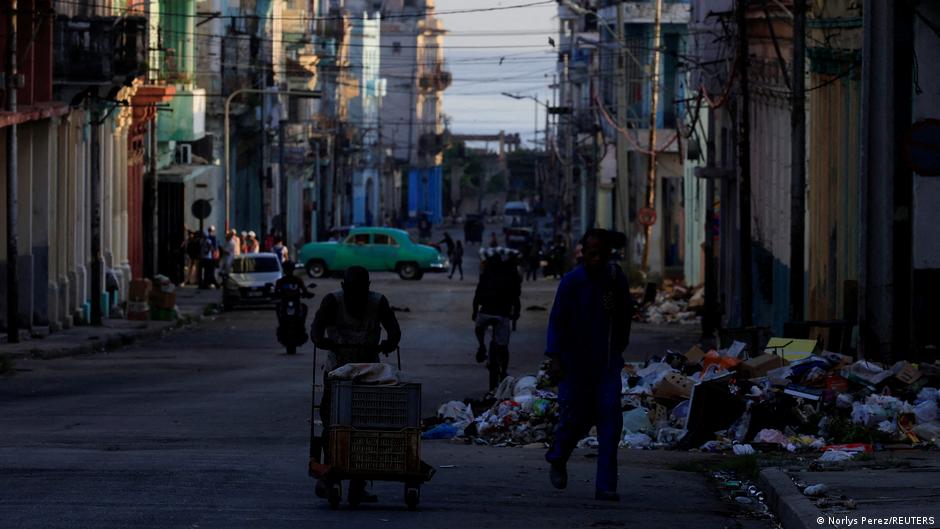
For Cuban households, these measures exacerbate challenges in accessing basic goods and services due to restricted imports and disrupted supply chains. The blocking of oil deliveries, in particular, threatens to raise energy costs and fuel shortages, which ripple through transportation, food production, and everyday consumer prices.
Everyday investors and savers within Cuba face increased currency volatility and inflationary pressures resulting from the sanctions. Reduced foreign exchange inflows and economic uncertainty undermine confidence in the Cuban peso, complicating personal financial planning and savings preservation.
Military Considerations and Political Context
Meanwhile, US military plans reportedly include scenarios involving thousands of troops stationed on the island, though such operations are deemed unlikely in the near term due to ongoing US involvement in the Middle East and a preference for economic and diplomatic pressure. Nonetheless, intelligence reports suggesting Cuba’s acquisition of over 300 unmanned aerial vehicles capable of targeting US bases and territories add to the tension.
These geopolitical developments contribute to market uncertainty and could impact foreign investment flows and remittances—critical sources of income for many Cuban families.
Overall, the US aid effort highlights a nuanced approach, balancing humanitarian concerns against a backdrop of sanctions that tighten economic conditions for Cuban households. For consumers and investors on the island, the economic fallout from sanctions and restricted trade poses a significant challenge to financial stability and everyday living costs.