US Army secretary exits after Pentagon clash, raising spending questions
Daniel Driscoll’s departure after months of conflict with Defense Secretary Pete Hegseth adds uncertainty for defense priorities with potential ripple effects for taxpayers and investors.
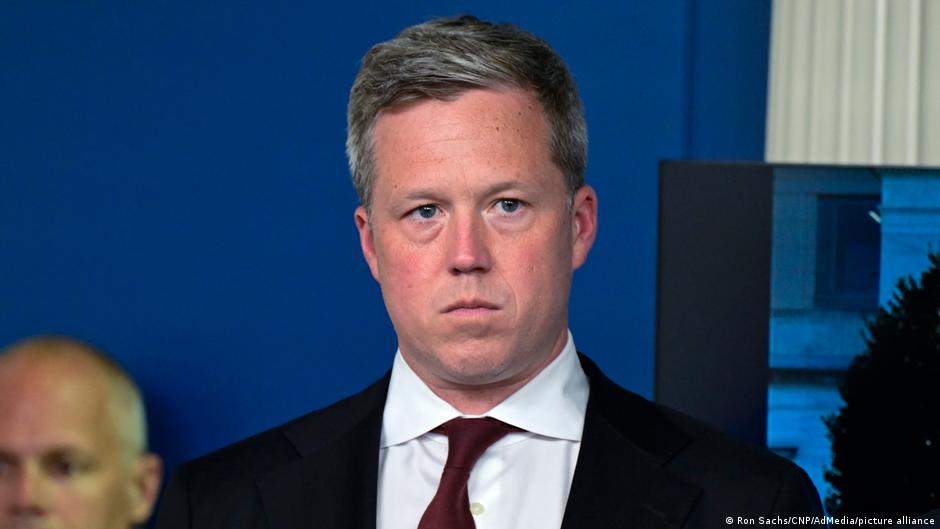
U.S. Army Secretary Daniel Driscoll has asked President Donald Trump to accept his resignation after months of disagreements with Defense Secretary Pete Hegseth over the direction of the U.S. armed forces and the dismissal of a number of officers, according to The Wall Street Journal and other media reports.
Later, Reuters and AP circulated the same information, while NBC News, citing sources, reported that the White House had accepted Driscoll’s resignation. Driscoll is expected to leave the Pentagon in the coming days, according to the Journal.
For households, savers and everyday investors, the resignation matters less as a political drama than as another sign of instability around one of Washington’s biggest spending centers. Leadership turnover at the Pentagon can affect expectations for procurement, military priorities and the balance between costly weapons programs and cheaper alternatives. Those questions do not only shape defense contractors’ outlooks; they also matter to taxpayers who ultimately finance U.S. military policy.
“Secretary Driscoll effectively advanced President Trump’s ‘Make America Strong Again’ agenda in the Department of the Army, showing outstanding leadership during historic military operations and restoring priority to readiness and the striking power of weapons, facilitating negotiations between Russia and Ukraine, and in many other areas,” White House principal deputy press secretary Anna Kelly said, according to statements quoted by the Journal and AP.
Why markets and households may watch this change
Driscoll’s exit comes after an extended clash with Hegseth over the development course of the U.S. military. Reuters had previously reported on August 21 that Driscoll was planning to resign at the end of the year because of the conflict with the defense secretary. At the time, Reuters said Driscoll’s departure would leave the Army without a Senate-confirmed leader while the United States was seeking to end the war against Iran that it began alongside Israel nearly six months earlier.
That timing gives the resignation a wider financial context. When national security policy is in flux, investors often look for clues about which programs will be protected, which may be delayed and whether a shift in leadership will favor larger traditional contractors or cheaper systems. Driscoll had been associated with a more cost-conscious approach inside the Army. Reuters noted that in the job he argued for a “flexible approach,” supported the purchase of cheaper weapons for the Army and criticized major manufacturers.
That stance is especially relevant for readers focused on consumer finances and personal portfolios. Even without immediate changes in policy, the departure of an official who publicly backed less expensive procurement can reshape assumptions around future Pentagon buying. For investors holding defense shares through retirement accounts, index funds or brokerage portfolios, changes at the top can influence sentiment about which companies stand to benefit from the next phase of military spending.
For taxpayers and households tracking federal priorities, the story also lands at a moment when defense leadership has been undergoing rapid change during Trump’s second presidential term. Reuters said Driscoll’s resignation would be another step in a broader reshuffling of leadership at all levels of the Pentagon. In that context, the agency recalled the April dismissal of Army Chief of Staff Randy George and several other senior military officials.
Frequent turnover can complicate planning in any large institution, and the Pentagon is no exception. When top officials are replaced, priorities can change quickly, sometimes affecting how money is allocated across readiness, weapons procurement and overseas operations. While the article does not specify any immediate budget decisions tied to Driscoll’s departure, the resignation adds to uncertainty over who will shape those calls next.
A politically connected figure with a Ukraine role
Driscoll is a friend and former classmate of Vice President JD Vance, a detail that underscores his standing inside the administration even as he exits the Army post. In November 2025, he was appointed President Trump’s new special envoy for Ukraine, replacing Keith Kellogg in that role.
He had served as Army secretary since February 2025. His tenure therefore spanned a period of major military and political strain, including internal disputes over force development, personnel changes and broader debates about how the United States should structure and equip its military.
That record makes the resignation more than a routine personnel change. It removes an official who had been identified with an effort to push for cheaper weapons purchases and more flexibility, an approach that can appeal to fiscal conservatives and to consumers worried about how government spending filters through to deficits, inflation risks and the long-term health of public finances.
At the same time, the White House statement cast Driscoll as an effective executor of Trump’s agenda, highlighting his role in military operations, combat readiness, weapons capability and efforts related to Russia-Ukraine negotiations. That framing suggests the administration wants the departure seen as a transition rather than a repudiation, even though the reporting points to a sustained conflict with Hegseth.
What comes next will matter for more than Pentagon insiders. For households, the practical question is whether the next leadership team continues to favor lower-cost procurement or moves more decisively toward established large-scale defense programs. For investors, the same question feeds into how they assess risk and opportunity in a sector heavily shaped by politics. For now, the clearest takeaway is that another senior U.S. defense official is leaving during a period of unusually active leadership change, and that uncertainty alone is enough to keep budget watchers paying close attention.