Putin Sees Openings for Peace Talks as Kyiv Awaits U.S. Envoys
Fresh statements from Moscow and Kyiv have revived attention on diplomacy, with potential implications for household finances, currencies and investor sentiment.
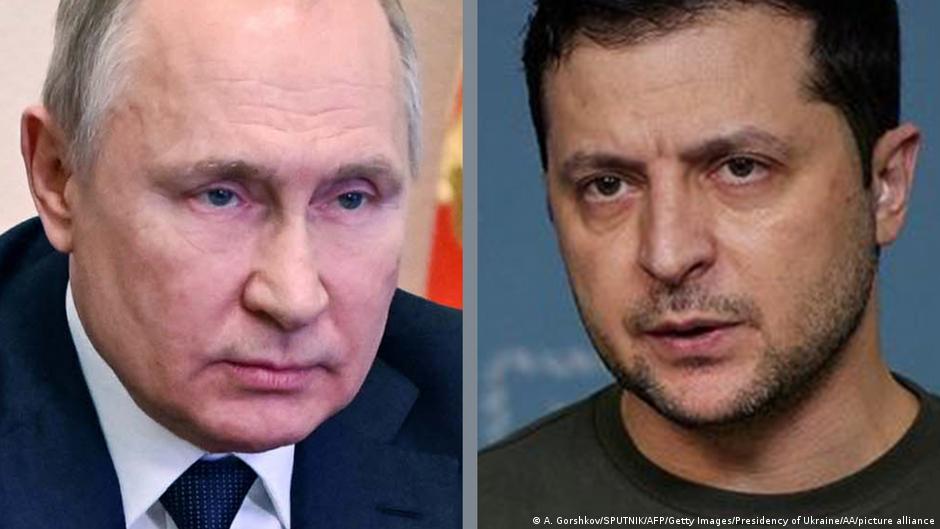
Russian President Vladimir Putin said he believes there are chances to achieve peace in Ukraine through diplomacy, while insisting that Russia and Ukraine themselves must reach any agreement to end the war. Ukrainian President Volodymyr Zelenskyy, for his part, said Kyiv is expecting representatives of U.S. President Donald Trump for talks, with meetings also planned in Moscow as discussions over a possible peace settlement continue.
Putin made the remarks on Thursday, September 3, on the sidelines of the Eastern Economic Forum. He said that any resolution should be negotiated directly by the two sides at war, while other countries should support the process rather than lead it.
“First and foremost, Russia and Ukraine themselves must come to an agreement. And all other countries are ready to support and help. This is the right approach. But we are grateful to everyone who is trying to contribute to resolving this issue. Are there chances? In my view, yes, there are.”
For households and markets alike, the renewed discussion matters because even tentative signs of diplomacy can affect expectations around inflation, exchange rates, energy prices and the broader cost of living. While no agreement is in place, public signals from leaders in Moscow, Kyiv and Washington are likely to be watched closely by consumers, businesses and investors trying to judge whether geopolitical risks may ease or intensify.
Why diplomacy matters for consumers and savers
The war has been a major driver of uncertainty for families across Europe and beyond, influencing everything from fuel and transport costs to food prices and savings behavior. Any credible movement toward negotiations can alter how markets price risk, particularly in currencies and assets sensitive to geopolitical stress. For everyday investors, the headlines may shape sentiment around European equities, commodity-linked companies and safe-haven assets.
Putin also said Moscow and Kyiv have maintained contacts through their intelligence services, though he said he could not assess how much that might contribute to peace efforts. At the same time, he pointed to Ukrainian attacks on transport vessels in the Black Sea and statements from Kyiv about the insecurity of Russian airspace, saying such factors complicate the possibility of bilateral peace talks.
Those comments underscore the gap between rhetorical openness to diplomacy and the continuing military and security tensions that could still unsettle consumers and financial markets. For households managing budgets, that means the practical economic relief associated with peace remains uncertain, even as diplomatic language becomes more prominent.
Later the same day, Zelenskyy also spoke about the prospects for renewed talks with Russia. In his nightly video address, he said U.S. representatives would soon visit both Kyiv and Moscow and that a possible peace agreement would be discussed during those meetings.
“There are preliminary dates. We expect that representatives of the U.S. president will come here, to Kyiv. We already have confirmation from them: there will be a meeting in Moscow and in Kyiv.”
Zelenskyy said Ukraine remains in constant contact with the American team. A few days earlier, he reported a phone call with Trump’s special envoys, Steven Witkoff and Jared Kushner, during which he told the U.S. representatives that Russia’s battlefield gains were “insignificant.”
For personal finance readers, the involvement of U.S. envoys matters because Washington’s approach can influence market assumptions about sanctions, military support, diplomatic pressure and the timing of any broader de-escalation. Those assumptions, in turn, can affect currencies, bond markets and the willingness of investors to take on risk.
U.S. role back in focus
Discussion of possible Russia-Ukraine peace talks regained momentum shortly after an unannounced visit to Moscow in late August by CIA Director John Ratcliffe. According to Axios, a representative of the Trump administration floated the idea of a trilateral meeting involving the presidents of the United States, Russia and Ukraine to discuss ending the war through diplomacy.
Trump later rejected the idea of holding such a three-way summit in the near term. Speaking to reporters, the U.S. president said Putin would agree to such a meeting if Trump wanted it, and that Washington could organize a summit “immediately.” But Trump added that he wanted to hold a meeting only when the parties were ready to conclude a peace agreement.
That distinction is important for businesses and households looking for clear signals. A summit headline alone may not change economic conditions, but credible progress toward an actual agreement could have more tangible consequences for confidence, spending and financial planning.
Trump also said that “Putin and Zelenskyy should stop this stupid war,” again assigning blame for the ongoing fighting to both Moscow and Kyiv. In Trump’s view, a personal hostility between Zelenskyy and Putin is one of the obstacles to peace in Ukraine. He said that the conflict, which he had promised to “end in a day,” turned out to be more difficult than the “eight wars” he says he has stopped in less than two years in office.
For consumers, none of these statements provide certainty on timing or outcome. There is no announced peace deal, and both Russian and Ukrainian leaders continue to frame the path forward in sharply different ways. Still, the public acknowledgment from Putin that chances for diplomacy exist, combined with Zelenskyy’s statement that U.S. delegates are expected in both capitals, has put negotiations back at the center of attention.
That may not immediately lower grocery bills, mortgage costs or transport expenses. But in a conflict that has repeatedly spilled into energy, shipping and investor confidence, even a modest revival of diplomacy can influence expectations that eventually shape household budgets and savings decisions. For now, the economic takeaway is one of cautious watchfulness: the rhetoric around peace is returning, but the risks that have weighed on families and markets remain firmly in place.