Poland’s Constitutional Crisis Raises Fresh Risks for Household Finances
A confrontation over Poland’s top court is deepening political uncertainty, with potential consequences for the zloty, savings and investments.
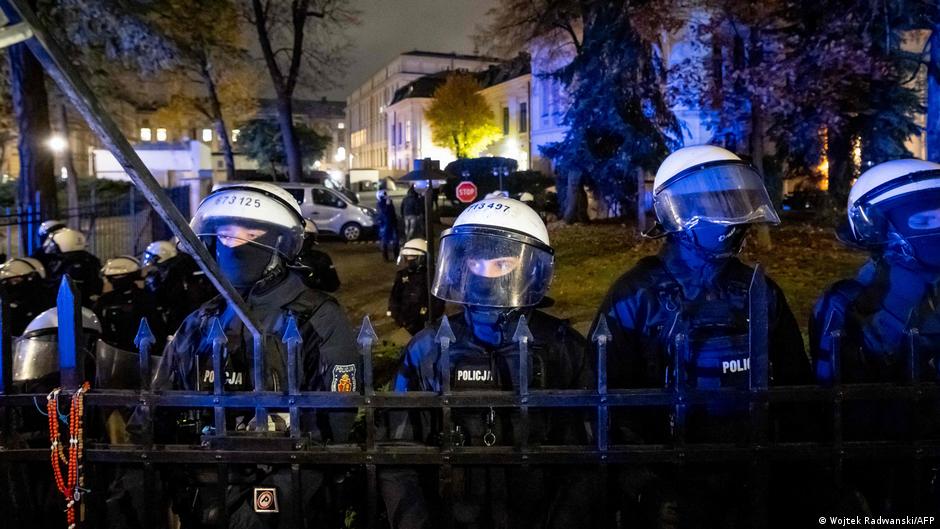
Poland’s escalating constitutional crisis has moved from a legal dispute into a confrontation involving police, protesters and the country’s president, creating a new source of uncertainty for households, savers and retail investors.
Police cordoned off the Constitutional Tribunal building in Warsaw after Anna Korwin-Piotrowska, one of the tribunal’s 15 judges, announced the one-month suspension of its president, Bogdan Święczkowski, and vice-president, Bartłomiej Sochański. Her decision was published on the tribunal’s website on the evening of Friday, October 30.
Korwin-Piotrowska said the two officials had, among other things, obstructed judges appointed by the Sejm in 2026 and sworn into office from participating in cases. She based her authority on a 2016 law governing the tribunal, which allows the longest-serving judge to take such action. She also called a general meeting of tribunal judges for November 3.
Conflicting messages immediately exposed the depth of the institutional breakdown. A post on an X account bearing the tribunal’s name alleged an “illegal takeover” of its website and insisted that Święczkowski and Sochański remained in their positions. It also claimed Korwin-Piotrowska was not a tribunal judge and described those involved as committing the crime of a coup. The tribunal’s website, in turn, said the X account had no connection to the institution.
“I have no idea what this is about. Ms Anna Korwin-Piotrowska called me and said that she now runs the tribunal. I know nothing more,” Sochański told Rzeczpospolita.
Sochański called the situation unprecedented, said he had never heard of complaints against him and argued that no legal provision permitted such interference with the independence of the tribunal or an individual judge. He also characterized the events as a coup.
Why consumers and investors should pay attention
The immediate dispute is institutional, but prolonged political instability can affect everyday financial decisions. Currency markets generally react to uncertainty over governance and the rule of law, making the zloty a central point of concern for Polish households. Any sharp currency movement could change the cost of imported goods, foreign travel and payments on financial obligations denominated in other currencies.
For savers and everyday investors, the practical issue is not a confirmed market loss but increased uncertainty. Households holding foreign-currency savings may see their value in zloty terms fluctuate, while investors in Polish shares, bonds or pension products could face greater volatility if the confrontation persists. Borrowing costs and confidence in Polish assets may also become more sensitive to political developments. The source article did not report specific movements in the zloty, interest rates, stocks or bond yields.
Prime Minister Donald Tusk, whose government and parliamentary majority oppose President Karol Nawrocki, backed the temporary removal of the tribunal’s leadership. Tusk said restoring the rule of law was the government’s duty after years of illegality under the Law and Justice party, or PiS, and described the process as difficult, painful and requiring decisive action.
Nawrocki was travelling to Senegal on October 30 but said he turned his aircraft around because of the tribunal crisis. After returning to Poland, he met Święczkowski and Supreme Court First President Zbigniew Kapiński. Nawrocki and Kapiński then entered the tribunal building, according to presidential chief of staff Paweł Szefernaker.
Korwin-Piotrowska had offered to meet the president only at the Presidential Palace. Maciej Berek, a tribunal judge elected by the Sejm but not permitted by Nawrocki to take the oath, said the president had chosen “the path of physical confrontation” by seeking to enter the building. He alleged that people identifying themselves as presidential staff attempted to obtain keys to tribunal premises.
Police cordon follows protests and security warnings
Warsaw police said Prosecutor General and Justice Minister Waldemar Żurek had asked officers to pay particular attention to security at the tribunal during demonstrations outside. Police also received a letter from one tribunal judge warning of a potential threat to life and health.
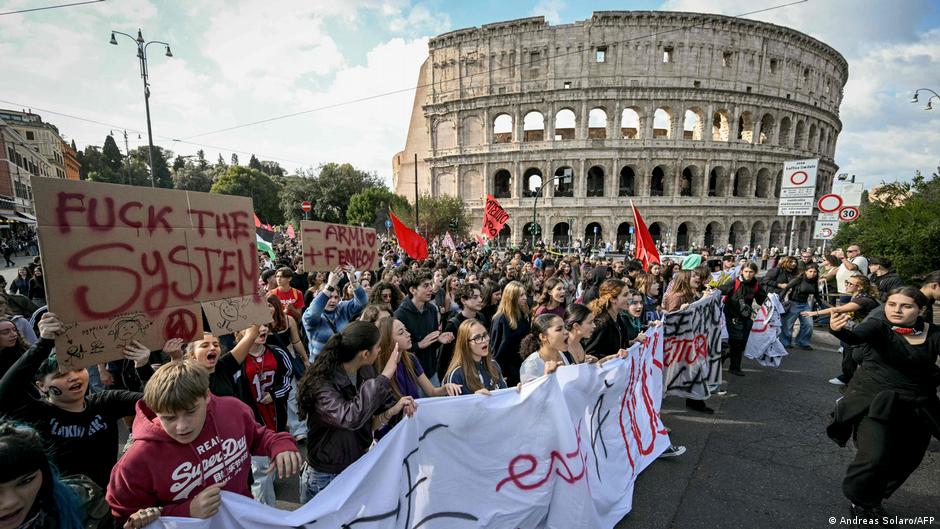
Officers consequently cordoned off the building but said police were not stationed inside. According to the police account, protesters threw dangerous objects at officers. Three demonstrators were detained after climbing over a barrier and entering the tribunal grounds.
The conflict has been developing for several months and stems from the struggle between Tusk’s government and Nawrocki’s Law and Justice party. It began when the president refused to swear in new judges selected by the new parliament. Święczkowski also declined to recognize their authority or allow them to hear cases.
The government considers the tribunal illegitimate because judges elected under the previous authorities remain among its members. The governing coalition and judges supporting its position say Nawrocki has unlawfully obstructed the institution’s work.
Adding to the pressure, Żurek said on October 30 that he had submitted five applications to the Constitutional Tribunal seeking the lifting of immunity. He said the requests included cases concerning Święczkowski and Sochański. For consumers and investors, the key question is whether the November 3 meeting begins resolving the leadership dispute or extends a standoff that could keep political risk elevated.