Italy Cost-of-Living Protests Put Household Finances in Focus
Demonstrators across more than 60 cities protested rising rents and fuel prices as unions staged a nationwide 24-hour strike.
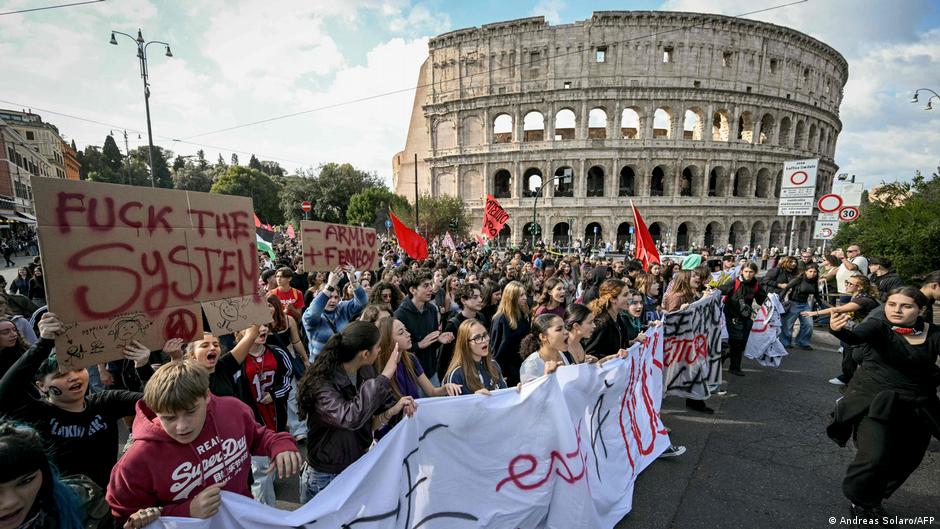
Hundreds of thousands of people took to the streets across Italy on October 30 to protest the rising cost of living, putting pressure on the government over expenses that directly affect household budgets, particularly rent and fuel.
Demonstrations were held in more than 60 Italian cities on Friday, according to national news agency ANSA. The Unione Sindacale di Base, or USB, which organized the rallies, estimated that between 1 million and 1.5 million people participated. Italy’s Interior Ministry reported a substantially lower figure of 255,000.
The protests coincided with a nationwide 24-hour general strike called by USB. Together, the demonstrations and work stoppage highlighted public frustration over the strain that higher everyday expenses are placing on consumers, workers and families.
Rent and fuel costs drive household concerns
Protesters specifically objected to increases in apartment rents and fuel prices. Both expenses can take a significant share of monthly income: housing costs are difficult to reduce quickly, while fuel prices affect commuting and other routine travel.
For households, persistent increases in essential bills can leave less money available for savings and discretionary purchases. They can also make it harder to build an emergency fund or maintain regular investment contributions. The demonstrations therefore reflected not only political opposition to government priorities but also immediate concern about personal financial resilience.
“We need more housing, not more bombs.”
The slogan captured another central demand of the rallies: opposition to increased military spending. Demonstrators contrasted defense expenditure with calls for more housing, framing the issue as a choice over how public money should be allocated while consumers face pressure from rising living costs.
For everyday investors and savers, the protests do not in themselves determine the direction of markets or the euro. They do, however, underscore the political sensitivity of inflation and public spending decisions. Extended strikes or wider unrest can also affect transport, retail activity and other services, creating additional inconvenience or costs for consumers.
Mostly peaceful rallies, with clashes in two cities
ANSA reported that the protests were largely peaceful across Italy, with the exception of Rome and Turin. In those cities, some demonstrators began setting fire to rubbish bins and throwing objects at police toward the evening. Law enforcement officers responded with tear gas and water cannon.
Interior Minister Matteo Piantedosi said the authorities’ response had protected the right to demonstrate while containing attempts to provoke disorder.
“The measures adopted were balanced and effective: this is precisely what made it possible to protect one of citizens’ fundamental rights — the right to peaceful demonstration — despite attempts by certain individuals to provoke disorder and violence,” Piantedosi wrote on X.
The events in Rome and Turin added a public-safety dimension to a day otherwise dominated by economic grievances. For residents, local disruption from strikes, demonstrations and police operations can complicate commuting and access to services, even when rallies remain peaceful.
Cost pressures fuel protests elsewhere in Europe
Italy’s October 30 demonstrations were part of a wave of protests that has spread to other European countries in recent weeks. France has also seen rallies in multiple cities, some of which escalated into rioting and clashes with police. Demonstrations have taken place in Belgium as well.
The cross-border nature of the protests points to broader consumer unease about the cost of essential goods and services. While household circumstances and government policies differ between countries, rent, transport and public spending priorities are increasingly prominent political issues.
Similar protests are scheduled for October 31 in more than 30 German cities. The Gen-Z regelt movement, whose name translates as “Generation Z decides,” has called for the demonstrations. Tens of thousands of participants are expected, predominantly young people.
German protesters are expected to express dissatisfaction with the rising cost of living and the potential return of military conscription. They will also call for greater spending on education. Experts expect the German demonstrations to proceed largely without disorder.
For younger consumers, the combination of living costs, education funding and possible conscription brings together several issues with direct consequences for near-term finances and long-term economic prospects. More broadly, the rallies across Europe show how pressure on household budgets can quickly become a major source of political mobilization when consumers believe their incomes and public resources are not keeping pace with their needs.