Memorial Events Across 101 Cities Highlight the Cost of State Repression
The global Return of the Names campaign commemorated victims of Stalinist repression as private memorials re-emerged in Russia.
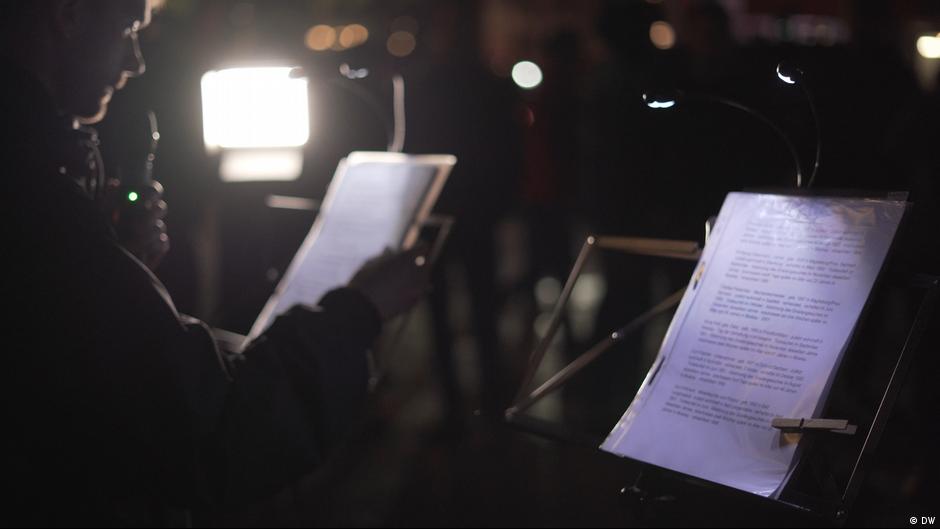
The annual Return of the Names campaign commemorating victims of Stalinist political repression took place across several countries on Thursday, October 29, ahead of Russia’s Day of Remembrance of Victims of Political Repression.
The campaign’s website listed 101 cities where commemorations were held this year, either on October 29 or earlier. The geographical reach shows how a remembrance initiative founded in Moscow has continued internationally even as public events in Russia have faced restrictions.
For households and individual investors, the campaign is not a conventional financial event. It does not directly change interest rates, currencies, taxes or savings returns. Its economic relevance is broader: political institutions, civil liberties and the treatment of independent organizations form part of the country risk that businesses and investors consider when deciding where to hold assets, commit capital or build long-term plans.
Commemorations spread across Europe
Germany hosted events in 15 cities, according to the campaign’s published list. Participating locations included Berlin, Munich, Hamburg, Cologne, Bonn, Düsseldorf, Bremen and Bielefeld, among others.
In Paris, the ceremony was organized by Memorial France and held beside a monument to Parisians killed in the First World War on Boulevard de Ménilmontant. The choice of a prominent public memorial connected the reading of names from the Soviet period with Europe’s wider culture of commemorating victims of war and state violence.
Return of the Names combines in-person readings with remote participation, and organizers also provide an online broadcast. That format has allowed people in different countries—and those unable to attend public gatherings—to take part by reading the names of people executed or persecuted by the Soviet state.
“The campaign did not disappear: it continued in other countries, while people in Russia still find ways to honor those who died.”
Public approval for the campaign has not been granted in Russia since 2020, initially under the stated rationale of combating the coronavirus pandemic. Pressure on independent initiatives dedicated to preserving historical memory intensified after the liquidation of the international Memorial society in 2021.
Private memorials return inside Russia
This year, independent memorial actions were held in Russia for the first time since Memorial was banned, according to The Insider. Events took place in the Irkutsk region, Kirov and Veliky Novgorod. Similar commemorations were scheduled for October 30 in St. Petersburg, Kopeysk in the Chelyabinsk region and Tolyatti in the Samara region.
In Moscow, diplomats from Sweden, the Czech Republic, the Netherlands, Poland and other countries visited the Solovetsky Stone on Lubyanka Square. RusNews reported that no representative of the US Embassy attended this year.
The international Memorial society first organized Return of the Names in 2007. On October 29 of that year, participants gathered at the Solovetsky Stone and read aloud the names of people shot or otherwise subjected to repression by the Soviet state.
The campaign has since become an annual act of public remembrance. Its latest footprint of 101 cities compares with 150 cities in 2025, according to the campaign’s website. The source does not provide an explanation for the difference, and the figures alone do not establish a trend in participation.
Why institutional memory matters to money
Historical commemorations can appear distant from daily household finances, but the institutional environment surrounding them can influence economic confidence over time. Restrictions on civic organizations may be considered alongside other governance indicators when international companies and investors assess political and regulatory risk.
Those assessments can affect willingness to invest, although the source provides no evidence linking this particular campaign to movements in the ruble, consumer prices or household savings. Everyday investors should therefore avoid treating the event as a short-term trading signal.
Its relevance is instead a reminder that financial security depends on more than market performance. Stable rules, credible institutions and confidence that civic activity can operate predictably are among the conditions supporting long-term investment and household planning. Return of the Names documents the human consequences of an era in which state power destroyed lives and disrupted families, communities and livelihoods. The annual readings keep those individual experiences visible while the campaign’s international expansion sustains a tradition that has become harder to conduct publicly in Russia.