UK, Dutch Ukraine Aid Packages Put Billions in Public Funds to Work
The commitments combine loans, export guarantees and military support, with longer-term funding aimed at energy and reconstruction.
Britain and the Netherlands have announced substantial new assistance for Ukraine, committing public resources that could ultimately matter to household budgets, government borrowing and business investment in both countries.
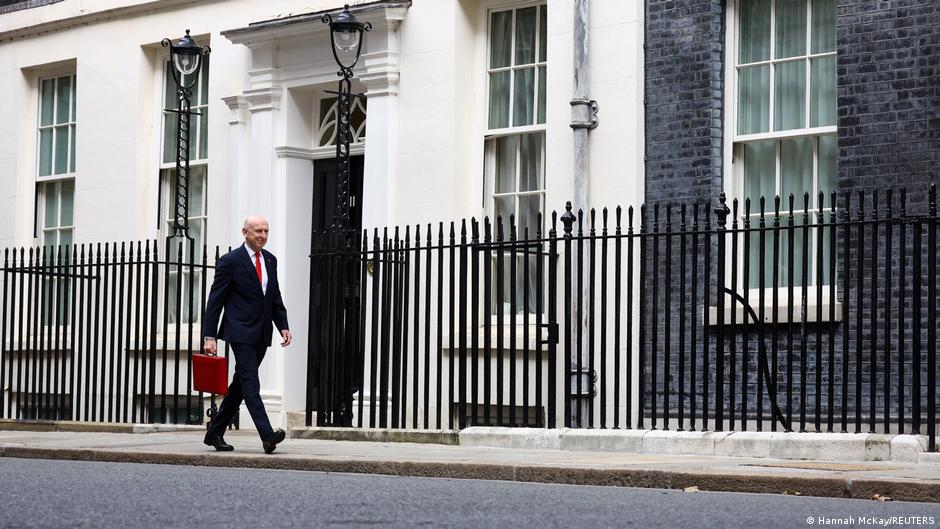
London will provide an additional £10 billion, equivalent to about €12 billion, to Ukraine as it defends itself against Russian aggression, British Finance Minister John Healey told the House of Commons. The package includes loans, export-finance guarantees and £500 million in emergency military assistance for the coming winter.
For consumers and everyday investors, the composition of the package is important. Loans and export guarantees are not the same as an immediate £10 billion cash grant: they can support financing and trade while creating contingent risks for the government if guarantees are called. The eventual effect on taxpayers depends on the terms, repayment performance and how much of the guaranteed financing is used.
Winter support and public-finance exposure
A British government spokesperson quoted by Reuters said the £500 million emergency allocation should address gaps in Ukraine’s air defenses that require urgent attention. That component represents direct near-term military support as Ukraine prepares for winter.
Healey said he and British Prime Minister Andy Burnham had spoken with Ukrainian President Volodymyr Zelensky before the parliamentary announcement. According to Healey, Zelensky responded to news of the additional £10 billion by saying:
“You made my day.”
Zelensky separately described the new British financial and military assistance on Telegram as a “truly powerful and timely step.” He said Moscow must see and feel that Ukraine would not be left alone with problems that Russia was seeking to expand. Every measure that strengthens Ukraine, he added, brings Russia closer to understanding that it must end the war.
Sanctions policy was another subject of Zelensky’s discussion with Burnham. The Ukrainian president said Britain would continue to maintain a principled position on the issue and called that stance an important example for the rest of the world.
The announcement also comes amid continuing tensions between London and Moscow. On October 27, the Russian Foreign Ministry said Russia was adding seven representatives of British defense factories to its entry-ban list in response to what it called London’s hostile anti-Russian course.
For British households, any budget impact will depend on how the government finances the support and classifies the loans and guarantees. Higher public borrowing can influence gilt markets and government interest costs, while defense and overseas commitments compete with domestic priorities. However, the announcement alone does not establish any specific change to taxes, benefits or public services.
Dutch funding links defense with reconstruction
In the Netherlands, Prime Minister Rob Jetten announced €500 million in military assistance for Ukraine for the coming winter after meeting Zelensky in The Hague on October 28. Reuters reported that the money is intended for drones and other materials needed to strengthen Ukraine’s defenses.
The Dutch government will also allocate €1.2 billion in nonmilitary assistance over the next three years. Of that total, €380 million is planned for reconstruction in 2027, followed by €410 million in each of 2028 and 2029.
Part of the funding is intended for programs that help Dutch companies invest in Ukraine’s reconstruction. Other money will support urgent repairs to Ukrainian energy infrastructure and purchases of machine tools for industry. That structure could create opportunities for Dutch defense, energy, engineering and industrial suppliers, although the article does not identify individual beneficiaries.
For Dutch savers and retail investors, the package may therefore be relevant in two ways. It represents a multiyear public-spending commitment, but it may also channel demand toward companies involved in reconstruction and equipment supply. Investors should distinguish between announced government programs and confirmed corporate orders; no contracts, revenue estimates or listed-company awards were specified.
Zelensky also said on X on October 28 that he and Jetten had met Ukrainian and Dutch companies working in defense, energy and software. Following the meeting, their teams were instructed to develop a special air-defense project called Bliksem.
What households and currency holders should watch
Neither announcement provides a direct forecast for sterling, the euro, inflation or household taxes. The packages are also structured across different instruments and time periods, so their headline values should not be treated as immediate spending in a single budget year.
Key points for consumers include whether the commitments lead to additional borrowing, how export guarantees are accounted for and whether reconstruction programs generate business activity at home. Currency effects would depend on the broader fiscal outlook, interest-rate expectations and geopolitical developments rather than these announcements alone.
The immediate takeaway is that Britain is combining urgent winter military support with much larger financing commitments, while the Netherlands is pairing near-term defense assistance with a three-year reconstruction program. For households, savers and everyday investors, the longer-term cost and potential economic return will depend on implementation, repayment and the contracts ultimately awarded.