Leipzig sabotage probe raises new travel, sanctions risks for consumers
Germany’s response to the alleged drone attack could tighten border checks, disrupt trade channels and add uncertainty for households and investors watching Europe’s sanctions regime.
Latvia says a man suspected in the sabotage investigation at Leipzig airport had been living in Russia on a permanent basis in recent years, adding a new detail to a case that is already prompting tougher German measures with possible consequences for cross-border travel, trade and market sentiment.
According to Latvia’s State Security Service, the suspect is a Latvian citizen of Russian origin who, despite holding a Latvian passport, had not been living in Latvia in recent years. The statement, reported on Thursday, September 3, by Latvian news agency Leta, came as Riga confirmed it is cooperating with German investigators and providing the necessary support. The Latvian service declined to comment further, citing the ongoing investigation. Germany’s federal prosecutor has not yet issued an official public comment on the case.
German investigators had earlier identified two suspects in the attempted sabotage case, according to reporting cited from Süddeutsche Zeitung and broadcasters NDR and WDR. Those reports said the suspected plot against a Ukrainian transport aircraft involved a Russian-born man with Latvian citizenship and a Belarusian man with Russian citizenship.
For consumers and investors, the case matters less because of immediate market pricing and more because of what governments do next. Berlin has already tied the incident to Russia and announced retaliatory steps that could affect mobility, sanctions enforcement and the broader business climate for anyone exposed to European trade routes or Russia-related restrictions.
Border checks, sanctions and household spillovers
Germany has decided to close Russia’s consulate general in Bonn and terminate the agreement governing the activities of the Russian House in Berlin. It also said it will tighten checks on Russian nationals entering the country and strengthen measures against Russia’s so-called shadow fleet, which Moscow uses to circumvent European Union sanctions linked to the war against Ukraine.
Those moves are primarily diplomatic and security measures, but they also carry a consumer-finance angle. Tighter entry controls can mean more scrutiny, delays and uncertainty for travelers. Expanded enforcement against sanction-avoidance networks can affect shipping, insurance and compliance costs, all areas that investors and households often feel indirectly through prices, corporate earnings pressure or currency volatility.
“The investigation will be carried out. However, all this confirms that there are attempts by a number of countries ... to take action against the EU, including by using people with no criminal record and who do not arouse suspicion,” Italian Foreign Minister Antonio Tajani said, according to Euractiv.
Tajani added that such methods were familiar and that Europe must remain vigilant. His remarks came after it emerged that the second suspect had entered the Schengen area on an Italian tourist visa issued in late April by Italy’s diplomatic mission in Minsk. Rome said it would review the circumstances in which that visa had been granted.
That element of the case may draw added attention from ordinary travelers and financial planners alike, because visa issuance and border control practices can quickly become more restrictive after high-profile security incidents. Even when measures are targeted, they can increase compliance burdens for airlines, logistics operators and institutions handling cross-border movement.
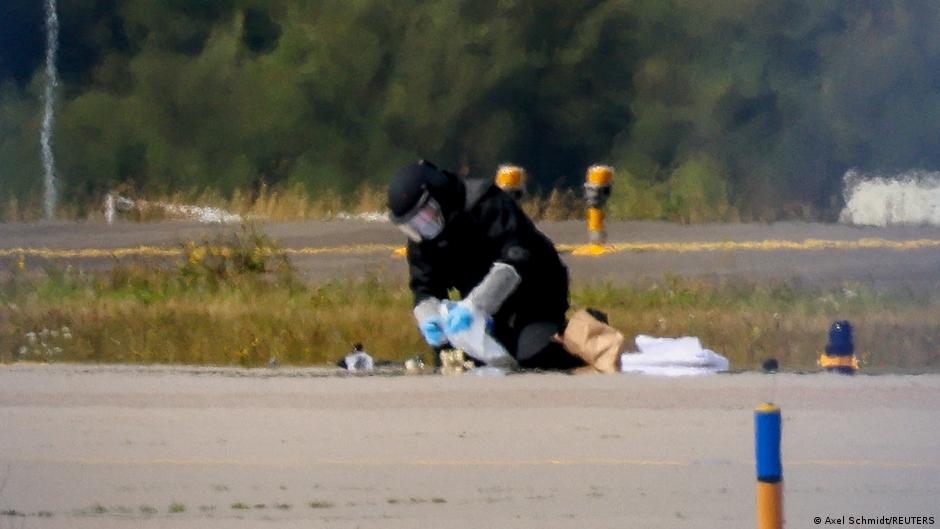
The alleged attempted sabotage took place on August 4 and involved at least three drones, according to investigators. One drone equipped with explosives was found near several Ukrainian cargo aircraft. A second likely crashed into a DHL cargo plane just minutes after the first device was discovered. A third drone was found 10 days later, on August 14, in a field west of the airport. Investigators found about 50 grams of a substance nearby that was initially assessed as hexogen.
The operational details matter because Leipzig is a major freight hub. Any attack or attempted attack near cargo aircraft raises questions not only about aviation security but also about the resilience of supply chains. While authorities have not outlined any direct commercial fallout from this incident, investors typically monitor such events for signs of tougher regulation, added security costs or transport disruption that could filter through to delivery times and business expenses.
Berlin has placed responsibility for the incident on Russia. Moscow rejects the allegations of organizing sabotage in Leipzig. In response to Germany’s decision to shut the Russian House in Berlin, Russian authorities said they would close branches of the Goethe-Institut in Russia, located in Moscow, St. Petersburg and Novosibirsk.
The exchange underscores how security incidents can escalate into broader diplomatic retaliation, a pattern households may recognize from previous sanction disputes. Such moves do not automatically translate into immediate changes in grocery bills, savings returns or exchange rates. But they do contribute to the wider risk environment in which European energy costs, logistics pricing, travel availability and investor confidence are formed.
For everyday readers, the clearest near-term takeaway is that the investigation is still active and many official findings remain limited. Latvia is cooperating but withholding details. Germany’s federal prosecutor has not provided a formal public update. Italy is reviewing the visa angle. Russia denies involvement. Yet the policy response is already underway, and that response is what households and small investors may end up noticing first: stricter screening, a harder sanctions perimeter and another reminder that geopolitical risk can move from the security sphere into the personal-finance landscape with little warning.
In that sense, the Leipzig case is not only a counterintelligence story. It is also a signal that governments across Europe are willing to tighten enforcement tools that influence travel, commercial routes and sanctions compliance. For consumers, that can mean a more uncertain operating environment. For investors, it is another data point in assessing how geopolitical tensions continue to shape European assets, transport-linked businesses and the broader cost outlook.