Impact of Recent Russian Missile Strikes on Ukrainian Cities Raises Concerns for Household Budgets
Russian missile and drone attacks in Kyiv and Kharkiv have caused damage and injuries, potentially affecting local economies and consumer confidence.
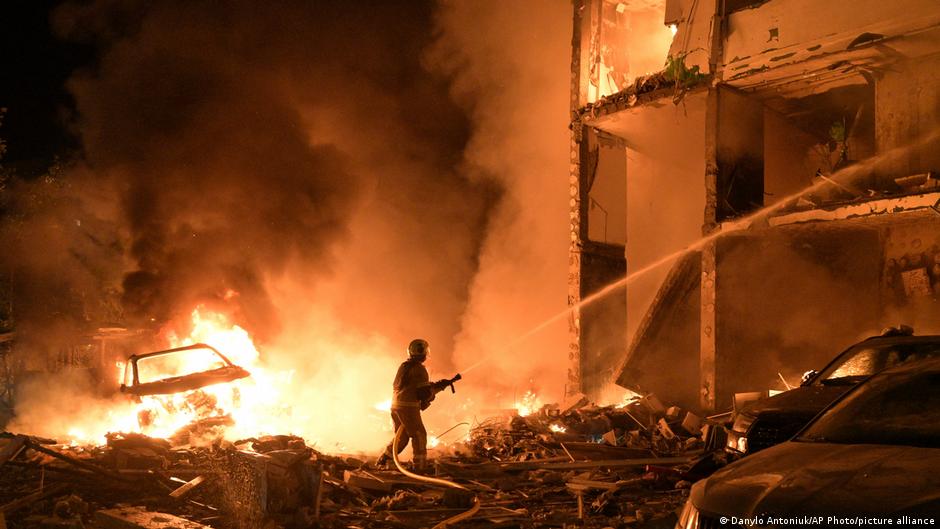
In the early hours of July 8, Russian forces launched a series of missile and drone attacks targeting multiple Ukrainian regions, including the capital Kyiv and the city of Kharkiv. Explosions shook these urban centers, sparking fires and causing injuries among civilians. The events not only further destabilize the security situation but also pose significant risks to household budgets, savings, and consumer confidence in these areas.
Widespread Damage Disrupts Daily Life and Economic Stability
Local authorities reported that the strikes led to damage to more than 20 private homes, as well as public infrastructure such as street lighting and vehicles. In Kyiv, fires broke out in warehouse facilities and non-residential buildings, while in Kharkiv, a missile hit a residential district, causing injuries and property damage. The mayor of Kyiv confirmed two injured persons, with one hospitalized, while Kharkiv's mayor reported two casualties as well.
These attacks have triggered air raid alerts, disrupting daily routines and heightening anxiety among residents. The repeated targeting of urban infrastructure threatens the stability of essential services and local commerce, potentially leading to increased costs for repairs and reduced availability of goods and services.
"More than 20 private homes were damaged along with public utilities, impacting thousands of residents' daily lives and financial security," said Kharkiv's mayor.
For ordinary citizens, these developments may translate into unforeseen expenses such as home repairs, medical bills, and temporary relocation costs. With disruptions to public services and transportation, the cost of living could rise, straining already tight household budgets.
Financial Implications for Savings and Local Currencies
The ongoing conflict and infrastructure damage contribute to economic uncertainty, which can erode the value of local currencies and affect purchasing power. Households relying on savings face increased risk as inflationary pressures mount and market conditions fluctuate unpredictably. For everyday investors, the volatility may result in diminished returns or capital losses, complicating financial planning.
Furthermore, persistent attacks add pressure on Ukraine’s financial system and government spending priorities, potentially diverting funds from social programs to emergency response and reconstruction efforts. This shift may reduce disposable income for many families and heighten economic hardship.
As the conflict continues, experts warn that the effects on consumer confidence and spending habits could have long-lasting consequences, including reduced investment in local businesses and slowed economic recovery.
In summary, the recent missile and drone strikes in Kyiv, Kharkiv, and surrounding regions represent more than immediate physical damage—they pose a substantial threat to household financial stability, savings preservation, and broader economic health in affected communities.