Germany’s Anti-Sabotage Shield Raises New Cost Questions for Households
Berlin’s planned response to alleged Russian drone and cyber sabotage could affect transport security, energy operators and consumer costs.
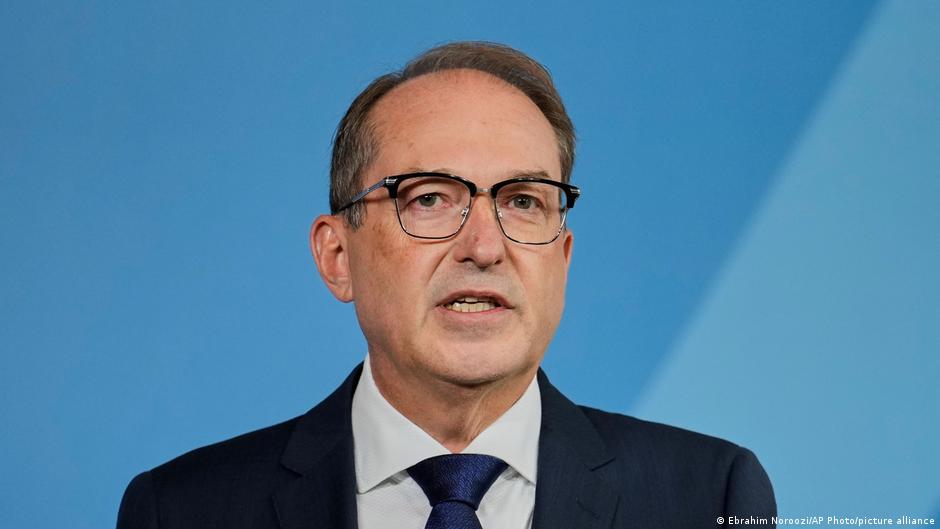
Germany’s Interior Ministry is preparing a broad security shield against further alleged Russian sabotage, including drone attacks and cyber operations, after an incident at Leipzig/Halle Airport sharpened concerns about the vulnerability of transport hubs and critical infrastructure.
For households, savers and everyday investors, the plan is not only a national security story. It points to a new layer of costs and risks that could feed into air travel, logistics, electricity infrastructure, defense spending and the cyber resilience budgets of companies operating in Germany. Those costs may not appear immediately on a household bill, but they often work their way through the economy through higher operating expenses, public spending priorities and investor reassessments of risk.
German Interior Minister Alexander Dobrindt said he intends to take a tougher line against Russian sabotage. In an interview with Bild am Sonntag, published on Sunday, September 6, he described hybrid attacks as a routine threat to German security.
“Russia’s hybrid attacks using drones with explosives on airports, agents in our cities, cyberattacks on our networks and sabotage against our infrastructure are an everyday reality,” Dobrindt said.
He added that such attacks would intensify, while arguing that Germany could resist and protect itself. The minister announced plans for a comprehensive protective shield against further attacks.
Security spending moves closer to the consumer economy
According to Bild am Sonntag, the security plan includes the rapid deployment of special units in strategically important German cities: Berlin, Munich, Hamburg, Stuttgart, Düsseldorf, Frankfurt am Main, Leipzig, Hanover and Cologne. Airspace over key transport hubs, airports, railway stations and Berlin’s government district is to be protected against unmanned aerial vehicles. The measures are expected to cover not only interception, but also the neutralization of explosive devices.
That matters for consumers because transport hubs are deeply embedded in the price of everyday goods. Airports and logistics centers support high-value cargo, express deliveries and industrial supply chains. If operators face higher spending on drone detection, interception systems, specialized personnel and emergency procedures, the costs could eventually influence cargo handling fees, insurance costs and service pricing.
Leipzig/Halle Airport is especially relevant because the August incident involved Ukrainian cargo aircraft and a DHL cargo plane, according to media reports citing German investigative authorities. Any added security burden at such nodes could be watched closely by logistics firms, exporters and investors in transport-linked assets.
The planned shield also reaches into critical infrastructure. In the near future, protection against drone threats is expected to be carried out not only by federal police, but also by critical infrastructure companies, including electricity providers and defense enterprises. Bild am Sonntag reported that these operators would receive legal authority to actively repel drone attacks.
For household budgets, electricity infrastructure is the key channel to watch. Energy companies already face major capital demands tied to grids, renewables, resilience and security. If they are required to add drone defense capabilities, legal compliance systems and specialized response teams, regulators and consumers may eventually confront questions over who pays. Depending on how costs are allocated, they could affect network charges, company margins or government support mechanisms.
Cyberdome plan highlights corporate risk
Germany is also planning a national cyber shield, referred to as a Cyberdome, in response to hundreds of daily cyberattacks on government agencies and companies. The proposed system would use a large network of digital sensors to detect and intercept attempted attacks by hackers at an early stage.
For investors, the Cyberdome proposal underlines a trend already visible across Europe: cybersecurity is becoming a core cost of doing business rather than an optional technology expense. Public agencies, airports, energy suppliers, defense contractors and large corporations may all face higher expectations for prevention, reporting and response.
That can create both pressure and opportunity. Companies exposed to transport and infrastructure risks may face added spending and operational disruption concerns. At the same time, firms supplying cybersecurity, drone detection, airspace monitoring and defense technologies could attract greater attention from investors. The source article does not provide budget figures, so the financial scale of the German plan remains unclear.
The immediate trigger was an attempted sabotage operation at Leipzig/Halle Airport on August 4 against a Ukrainian An-124 cargo aircraft. Media reports, citing German investigators, said several drones may have been involved in the suspected attack. One drone carrying explosives was reportedly found near several Ukrainian cargo aircraft. A second drone is believed to have crashed into a DHL cargo plane minutes after the first was discovered.
On September 1, the German government blamed Russia for the drone sabotage at Leipzig airport. In response, Berlin decided to close Russia’s consulate general in Bonn and the Russian House in Berlin, tighten checks on Russian citizens entering the country and strengthen measures against Russia’s “shadow fleet.”
The European Union, NATO and several European governments expressed support for Germany. Some German opposition politicians criticized Berlin’s countermeasures. Some viewed them as insufficient, while others saw them as a dangerous escalation.
For consumers and savers, the practical takeaway is that geopolitical risk is moving further into the systems that support daily economic life: airports, rail stations, power networks, corporate IT systems and cross-border logistics. Even when there is no immediate change in prices, these risks can affect inflation expectations, public spending debates, currency sentiment and the valuation of companies tied to infrastructure and security.
Germany’s proposed shield is therefore more than a police and intelligence response. It is a sign that the cost of protecting open economies from hybrid threats may increasingly become part of the financial backdrop facing households, taxpayers and everyday investors.