German Political Divide and Its Impact on Household Finances Amid AfD's Rising Popularity
Nearly half of Germans oppose banning the far-right AfD party, which leads polls and influences economic confidence and savings behavior.
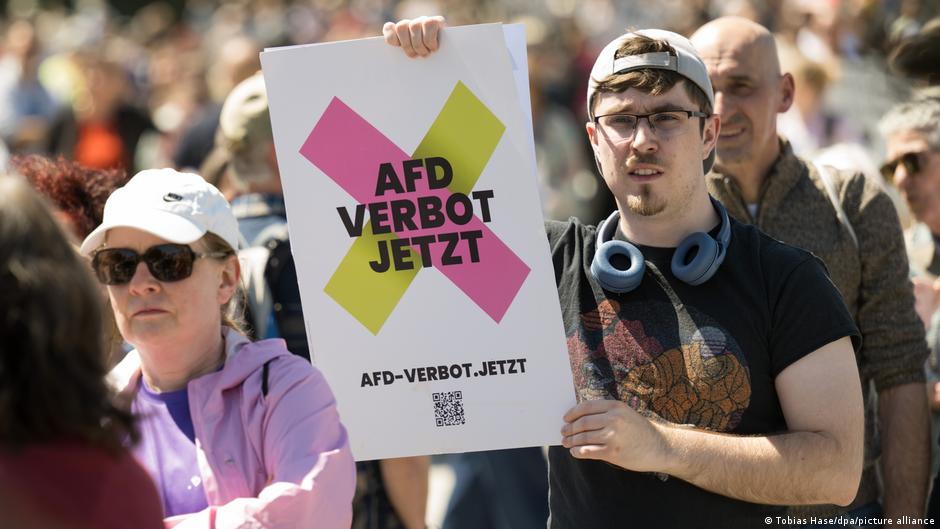
Recent surveys in Germany reveal a sharp divide in public opinion regarding the far-right party Alternative for Germany (AfD), with significant implications for household financial planning and consumer confidence.
Public Opinion and Political Landscape
According to the Insa poll commissioned by Bild am Sonntag, 45% of Germans oppose banning the AfD, while 40% support such a measure, and 15% remain undecided. This polarization extends to the political isolation strategy known as "Brandmauer" (firewall) against the AfD, where 42% support refusing cooperation with the party, 39% reject this approach, and 19% are unsure.
The AfD continues to outpace the conservative CDU/CSU bloc, holding 29% support compared to CDU/CSU’s 21%. This eight-point lead has remained stable since early June. The Social Democratic Party (SPD) and the Greens both enjoy around 13% support, while the Left party holds 10%. These shifts reflect ongoing volatility in Germany’s political preferences.
"We are the new people's party in Germany," said AfD co-chair Alice Weidel, emphasizing the party's ambition to lead nationally.
Economic Confidence and Household Impact
The political uncertainty and the AfD's entrenched position have tangible effects on consumer confidence. A separate ARD Deutschlandtrend survey shows only 13% approval for the federal government’s performance and a similar low rating for Chancellor Friedrich Merz. This political climate may influence household financial decisions, including savings, investment, and currency preferences.
Households often react to political instability with caution, potentially reducing discretionary spending and increasing savings as a buffer against economic uncertainty. With the AfD's controversial standing and ongoing scrutiny by Germany's Federal Office for the Protection of the Constitution over extremism concerns, investors and consumers might perceive heightened risks.
Moreover, the AfD’s rhetoric and policies could impact currency markets and inflation expectations, indirectly affecting everyday financial stability. For instance, political fragmentation can lead to volatile euro exchange rates, complicating cross-border investments and savings denominated in foreign currencies.
For ordinary Germans, these dynamics underscore the importance of diversified portfolios, vigilant monitoring of political developments, and prudent management of household budgets. Financial advisors recommend maintaining liquidity and avoiding speculative investments until clearer political and economic signals emerge.
Looking Ahead
As the AfD asserts itself as a major player, claiming to be the "new people’s party," its influence on German politics will continue to shape economic policies and consumer sentiment. Households and investors alike should stay informed and consider the potential impact of this political polarization on inflation, taxation, and social welfare programs.
In summary, the evolving political landscape marked by the AfD's growing support presents both challenges and considerations for personal finance management among German households, highlighting the intersection between politics and everyday economic decisions.