EU Defense Panel Shelved as Berlin and Rome Resist Kallas Initiative
The last-minute cancellation underscores uncertainty over Europe’s defense plans, with potential implications for taxpayers, currencies and investors.
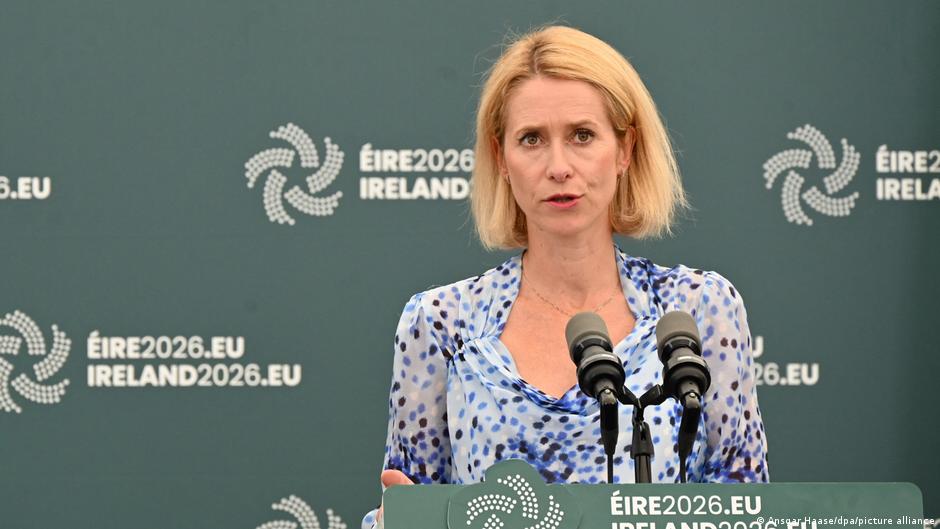
European Union foreign policy chief Kaja Kallas has cancelled, at the last minute, a planned launch of a high-level expert group on defense policy after opposition from several member-state governments, according to information reported by dpa. The move matters beyond Brussels process: for households, savers and everyday investors, Europe’s defense strategy is increasingly tied to public budgets, borrowing needs, currency confidence and the outlook for industrial stocks.
The group had been due to be presented on Monday, September 7, and was intended to develop proposals for strengthening European defense policy. Late on September 6, an EU official in Brussels told dpa that some member states considered the step inappropriate at the current moment. After talks with EU defense ministers, the decision was made not to proceed with this specific initiative.
“Some member states considered that this was not the right step at this time,” an EU official told dpa.
According to the agency, the governments of Germany and Italy were among those that had previously opposed the creation of the expert group. The body, under Kallas’s leadership, was expected to draft proposals on how to close gaps in Europe’s military capabilities more quickly and effectively, and to submit a report containing specific recommendations.
The group was also expected to include senior political and military representatives from several EU countries, as well as the United Kingdom and Ukraine. Those participants were due to be introduced at a launch event on the morning of September 7.
Why Defense Planning Matters for Household Budgets
For consumers, the immediate cancellation does not change tax bills, mortgage rates or grocery prices overnight. But the disagreement highlights a larger issue: Europe’s defense needs are increasingly competing with other priorities inside national budgets. Any plan to accelerate military readiness can eventually affect how governments allocate money among defense, pensions, infrastructure, energy support, debt servicing and social programs.
If governments choose to spend more on defense, the money has to come from somewhere. It may be financed through higher borrowing, reprioritized public spending, new revenue measures or joint European funding tools. Each path has a different household impact. More borrowing can affect bond markets and, over time, interest-rate expectations. Spending shifts can alter the availability of public services. Tax changes would feed directly into disposable income.
The dispute also has a currency angle. Investors watch whether the EU can turn strategic goals into coordinated policy. A Europe seen as fragmented on defense may face questions about political cohesion, especially at a time when security risks and industrial policy are closely connected. That perception can influence sentiment toward the euro, government bonds and European equities, even if the effect is indirect.
For everyday investors with retirement accounts, index funds or exposure to European markets, defense policy has become a real investment theme. European defense contractors, aerospace companies, cybersecurity firms and suppliers tied to military procurement can be sensitive to signs of faster or slower spending. The shelving of a high-level panel does not cancel defense demand, but it may signal that the route to coordinated European action remains politically uneven.
Germany’s Position and NATO Planning
dpa reported that one possible reason for Germany’s rejection of the expert group was Berlin’s critical view of Kallas personally as head of the EU’s foreign policy service. In defense policy, the German government is said to prefer relying on NATO planning processes. Germany is also currently backing the merger of a significant part of the EU External Action Service, overseen by Kallas, with the European Commission.
That institutional debate may sound remote, but it affects how quickly policies can become spending decisions. If governments route defense planning primarily through NATO, the pace and structure of procurement may differ from an EU-led process. For markets, the distinction matters because investors look for clarity on which institutions will set priorities, which projects will receive funding and how quickly money will move into contracts.
For households, the NATO-versus-EU planning question can also shape national budget choices. Defense commitments made through NATO are often reflected in national spending plans. EU-level initiatives, by contrast, can involve shared funding, industrial coordination or cross-border procurement efforts. The balance between those approaches can influence whether taxpayers bear costs mainly through national budgets or through broader European mechanisms.
Despite the cancelled launch, the European foreign policy service still intends to examine new opportunities for cooperation with EU countries on defense policy. The same EU source stressed that the underlying assessment had not changed: Europe needs to move faster on defense.
“The diagnosis remains the same: Europe must move faster in the field of defense,” the source said, according to dpa.
The official added that Europe should not look back in several years and conclude that it had been so focused on where it needed to be in 2035 that it missed the chance to do what was necessary in 2027.
Ukraine’s Role in Europe’s Defense Debate
Kallas had announced on September 1, after an informal meeting of EU defense ministers in Wicklow, Ireland, that Ukraine would be involved in finding solutions to strengthen Europe’s defense capabilities. Kyiv was supposed to join the new high-level group alongside senior politicians and military officials from EU countries and the United Kingdom.
On that day, a DW correspondent asked Kallas who exactly would represent Ukraine in the new group, noting that former Ukrainian defense minister Mykhailo Fedorov had been brought in by Italy as a defense adviser. Kallas did not name the Ukrainian representative or representatives, saying instead that the full composition of the group would be presented on September 7.
Kallas also recalled that most EU countries are members of NATO, while saying that gaps remain in the alliance’s defense capabilities and that European countries need to fill them. She said Europe had still been moving too slowly despite a rising level of threats. Explaining Ukraine’s planned inclusion, she said Kyiv had extensive experience and described Ukraine as a world leader in battlefield innovation.
For consumers and savers, the practical takeaway is that Europe’s defense build-up remains a long-running fiscal and investment issue, not a one-day political story. The cancelled expert group shows that even when leaders agree on the need for stronger defense, they can differ sharply on who should lead the process, how it should connect to NATO and how quickly new structures should be created. Those choices will help determine future pressure on budgets, the path of defense-related investment and the broader confidence investors place in Europe’s ability to fund its security goals.