US Diplomatic Shake-Up in Ukraine Raises Concerns for Stability Amid Ongoing Conflict
Resignation of key US envoy in Ukraine highlights potential risks to aid continuity and impacts on economic and financial stability for households and investors.
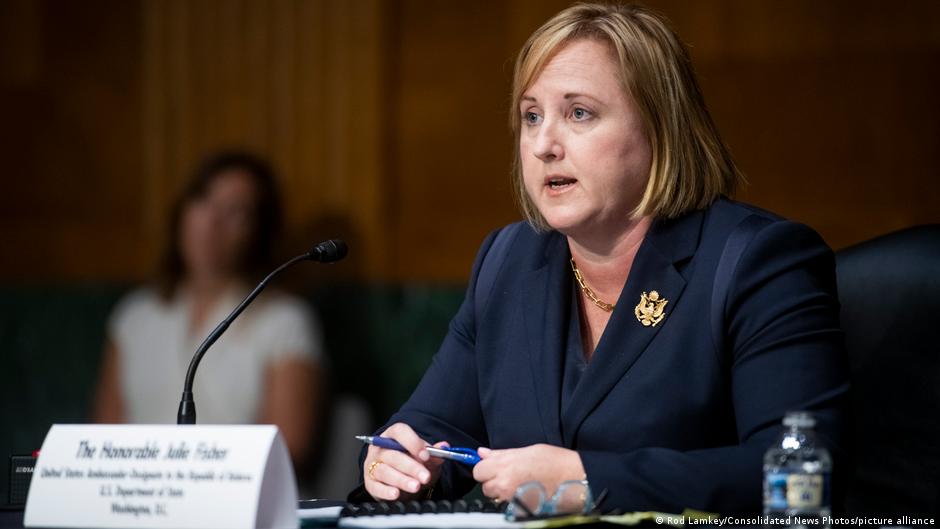
The recent announcement that Julie Davis, the acting US chargé d'affaires in Ukraine, will leave her post in the coming weeks has sparked discussions about the broader financial and economic implications for households and investors closely tied to the ongoing conflict in Ukraine. According to reports, Davis’s resignation is linked to disagreements with President Donald Trump over the United States' level of support for Ukraine.
Diplomatic Changes Amid Uncertain Support
Davis, who has served as the acting US envoy in Kyiv since May 2025, plans to retire after a nearly 30-year diplomatic career. Her departure comes at a critical time, as military conflict continues and peace negotiations have stalled. A vacant senior diplomatic position could signal instability in diplomatic and military collaboration efforts, which are crucial for economic stability in the region.
"Her resignation underscores the challenges in maintaining consistent foreign support during a complex geopolitical crisis," analysts note.
Financial markets and household budgets in countries connected to Ukraine are sensitive to changes in military and diplomatic support. Reduced aid and diplomatic engagement can lead to economic uncertainty, impacting currency stability, inflation rates, and investment risks.
Implications for Household Finances and Investors
For everyday investors and consumers, the US’s shifting diplomatic stance may translate into several financial repercussions:
- Currency Volatility: Ukraine’s hryvnia and regional currencies may experience increased volatility due to political uncertainty and fluctuating foreign aid.
- Inflation Pressures: Interruptions in aid and military support can affect supply chains and commodity prices, potentially driving up inflation in Ukraine and neighboring economies.
- Investment Risks: Reduced confidence in Ukraine’s stability may deter foreign investment, leading to lower returns for investors with exposure to the region.
- Savings Security: Households in affected regions could face greater financial insecurity if economic conditions worsen, emphasizing the need for diversified savings and cautious financial planning.
These factors underscore the interconnectedness of geopolitical developments and personal finance. Shifts in diplomatic leadership and foreign policy decisions can have cascading effects that ultimately influence day-to-day economic realities for individuals and investors alike.
Background on US Diplomatic Relations and Support
Davis’s tenure in Ukraine follows a series of high-profile resignations and diplomatic tensions. Notably, Bridget Brink, the US ambassador appointed during the previous administration, resigned in April 2025, criticizing the current administration’s approach toward Ukraine. Earlier, in 2019, Ambassador Marie Yovanovitch was recalled amid political controversy tied to US domestic politics.
Such diplomatic instability during ongoing conflict raises concerns about the continuity of US military aid and intelligence sharing with Ukraine. These elements are critical not only for the conflict’s resolution but also for regional economic stability, which directly affects household budgets through inflation, employment, and market confidence.
Looking Ahead
As Russia prepares for renewed military efforts and peace talks remain stalled, the departure of a key US diplomat can exacerbate uncertainty. For consumers and investors, the key takeaway is the importance of monitoring geopolitical developments closely, as these can have immediate and long-term effects on financial markets, currency exchange rates, and overall economic health.
Financial advisors recommend maintaining diversified investment portfolios and considering the potential risks posed by geopolitical events when planning personal finances.