Trump Threatens EU Trade Halt as Canada Partnership Raises Cost Risks
The warning adds a fresh layer of uncertainty for households, savers and investors already exposed to tariffs, currency swings and higher import prices.
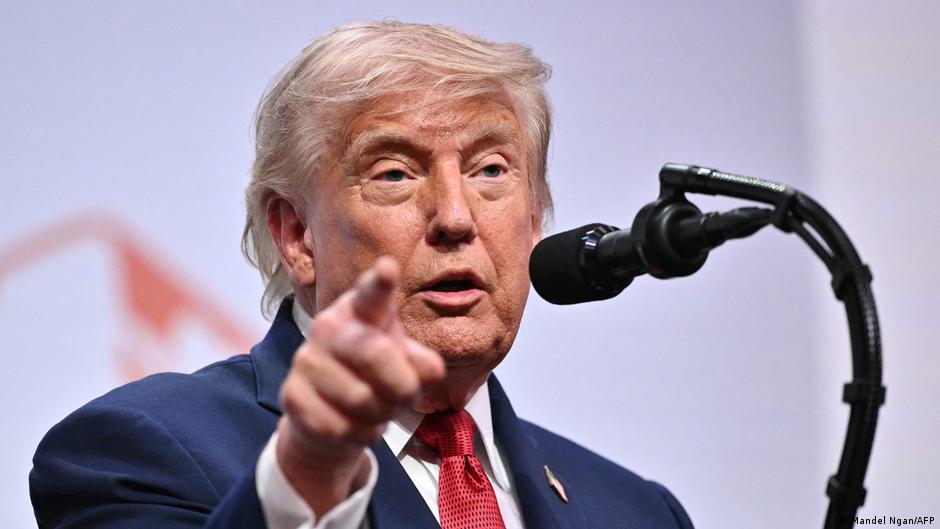
U.S. President Donald Trump has threatened to stop trade with the European Union if Brussels continues to deepen its partnership with Canada, escalating a dispute that could quickly move from diplomatic language into household budgets, consumer prices and investor portfolios.
Speaking on Wednesday, September 16, at a campaign event in North Carolina, Trump called European plans to give Canada “associated membership” in the EU “ridiculous.” He warned that if he judged the move to be even slightly unfriendly toward the United States, he could respond with very high tariffs or an outright halt to trade with Europe.
“If they do that and I consider it even in the slightest degree an unfriendly act, I will impose very high tariffs or stop trade with Europe,” Trump said.
For consumers, the immediate concern is not the legal definition of any EU-Canada arrangement, which remains unclear. It is the risk that another tariff fight could raise prices on imported goods, disrupt supply chains and add uncertainty to exchange rates. Households already facing higher costs on certain Canadian goods could see similar pressure spread if the United States and Europe enter a broader trade confrontation.
Trump added that the outcome would depend on intent. “If the intentions are good, everything is fine. If the intentions are bad, we will impose very high tariffs on Europe; that is one of the possibilities,” he said.
Why This Matters for Consumers and Investors
The warning came after European Commission President Ursula von der Leyen said on September 16, in the European Parliament and in the presence of Canadian Prime Minister Mark Carney, that the EU wants to raise its relationship with Canada to “the highest possible level.” Von der Leyen said she wanted to work with Carney so that Canada would become the EU’s first associated member.
She did not provide details on what such a partnership would include. However, she mentioned cooperation in technology and the defense industry. Von der Leyen also stressed that joint work between Canada and the EU “will not be directed against others,” saying its goal would be to make both sides stronger.
For everyday investors, those sectors matter. Technology and defense companies are often sensitive to government policy, export rules and cross-border procurement. A closer EU-Canada relationship could be seen by markets as a strategic realignment, but Trump’s response makes it harder for investors to price the potential benefits. Shares linked to manufacturing, metals, industrial goods, shipping, defense and consumer imports could be vulnerable to renewed tariff headlines.
Currency markets may also react. Trade uncertainty can affect the U.S. dollar, the euro and the Canadian dollar, especially when policy shifts raise questions about exports, inflation and central bank decisions. For U.S. households, currency moves can influence the price of imported goods, overseas travel and foreign investments held in retirement accounts or brokerage portfolios.
The French news agency AFP noted that Canada, like the EU, has suffered from the unpredictable trade and foreign policy of President Trump. According to the agency, this is why both Canada and the European Union are looking toward new alliances.
Tariffs Already Hitting Canadian Goods
The confrontation is not limited to rhetoric. The White House said Trump signed a memorandum on September 16 barring Canadian goods from participating in federal government procurement. According to a press release, Washington is taking the measures in response to Canada’s actions, which it said “unreasonably introduced new barriers” for American companies seeking access to Canada’s government procurement market.
For businesses that sell into government supply chains, procurement restrictions can be just as important as tariffs. They can shut companies out of contracts, force buyers to seek alternative suppliers and raise costs for goods purchased with public money. Over time, those costs can filter through to taxpayers and to companies that depend on public-sector sales.
Since September 15, the Trump administration has imposed additional 50 percent tariffs on Canadian cheeses, steel, aluminum, paper, furniture, light fixtures and other goods. Administration officials said the move was a direct response to new tariffs introduced by Ottawa.
These categories touch ordinary household spending more directly than many trade disputes do. Furniture and light fixtures affect home improvement budgets. Cheese and other food imports feed into grocery bills and restaurant costs. Steel and aluminum are used across construction, appliances, vehicles and packaging, making them potential drivers of broader price increases if companies pass costs on to consumers.
Canada’s tariffs on about $20 billion in U.S. exports took effect on September 15. Those measures were a response to U.S. tariffs of 50 percent on $20 billion worth of Canadian goods that entered into force on August 22. Canada withdrew from trade negotiations with the United States on August 21.
For savers and investors, the practical takeaway is that trade policy has become a recurring source of inflation risk. Tariffs can act like a tax on imported goods, and the costs may land unevenly across households depending on what they buy, where they live and which industries support their jobs. Consumers planning large purchases may face more price volatility, while investors may need to watch whether companies can absorb tariff costs or pass them on without losing demand.
The EU-Canada proposal remains short on detail, and von der Leyen has framed it as cooperative rather than confrontational. But Trump’s threat shows how quickly a diplomatic initiative can become a financial issue for households. If the dispute widens from Canada to Europe, the impact could be felt not only in trade statistics, but also in grocery aisles, home renovation costs, retirement portfolios and currency exchange rates.



