Spain’s Ceuta Migrant Crisis Raises Concerns Over Household Budgets and Currency Stability
The sudden influx of 60,000 migrants into Spanish enclave Ceuta impacts local economies and highlights broader financial risks for residents and investors.
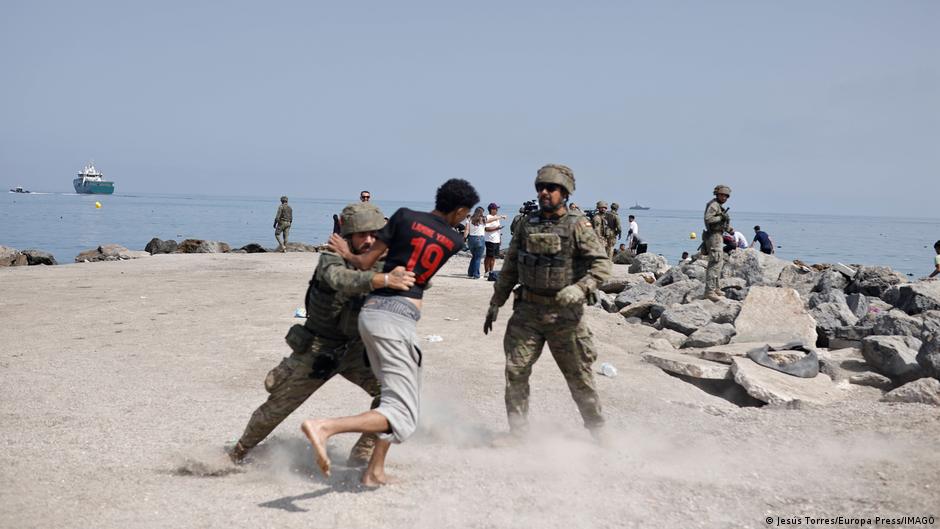
Spain is confronting a significant strain on its local economy in the autonomous city of Ceuta after tens of thousands of migrants crossed into the enclave from neighboring Morocco. This unprecedented movement, described by Prime Minister Pedro Sánchez as an "attack" on Spain’s sovereignty, not only challenges border security but also threatens the financial stability of households and local businesses.
Economic Impact on Households and Local Businesses
The influx of nearly 60,000 migrants—comparable to nearly 70% of Ceuta’s resident population of about 85,000—has led to social unrest and disrupted everyday commerce. Many shops have shuttered temporarily due to fears of looting, and residents report reluctance to leave their homes, which exacerbates economic inactivity.
“Many fear going outside,” a local resident told RTVE, reflecting growing anxieties impacting consumer behavior and spending.
Such disruptions in retail activity directly affect household budgets as income sources are threatened and consumers face limited access to goods and services. The uncertainty around the situation may also drive up prices for everyday essentials, placing further pressure on family finances.
In response, the Spanish government has deployed military forces to restore order, a measure that, while necessary, underscores the severity of the crisis and the potential for prolonged economic disturbance in the region.
Implications for Currency and Investment
The migrant crisis’s ripple effects extend beyond Ceuta’s borders. Market reactions to geopolitical instability often include currency volatility, which can affect the purchasing power of households across Spain and the wider eurozone. Investors may view the crisis as a signal of broader regional instability, potentially leading to cautious investment behavior or capital flight.
On July 31, Italy unilaterally suspended the Schengen Agreement's free-border provisions with Spain, citing security concerns linked to the migrant influx. This move highlights the potential for increased border controls within Europe, which could disrupt trade flows and economic integration, potentially dampening investor confidence.
Spanish Foreign Minister José Manuel Albares announced that most migrants had voluntarily returned to Morocco, indicating a temporary easing of the crisis. Nevertheless, the financial repercussions for households and small businesses may endure as the local economy recovers from the disruption.
What This Means for Everyday Investors and Consumers
For everyday investors, heightened geopolitical tensions and migration crises can translate into increased market volatility. Currency fluctuations may affect savings and investment returns, particularly for those with holdings sensitive to euro stability. Consumers may face inflationary pressures as supply chains and local economies adjust to the crisis's aftershocks.
Financial advisors may recommend diversifying investment portfolios to mitigate risks associated with such geopolitical events. Meanwhile, households in Ceuta and across Spain may need to tighten budgets and prepare for potential short-term price increases in essential goods.
As the situation evolves, close monitoring of policy responses and economic indicators will be essential for consumers and investors aiming to navigate the financial uncertainties stemming from this migrant crisis.