Over 8.4 Million Ukrainians Live Abroad, Impacting Household Finances and Savings
Ukraine faces significant population displacement, with millions abroad affecting currency stability and personal finances at home.
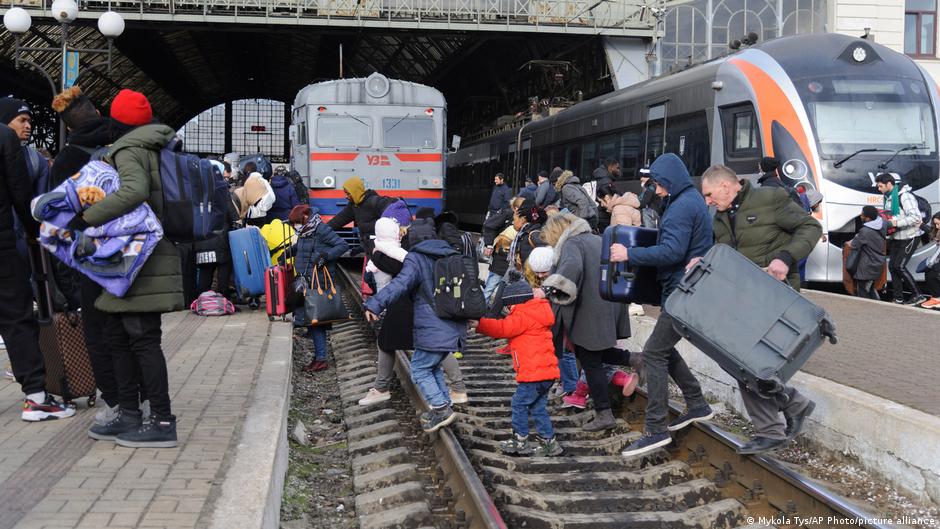
More than 8.4 million Ukrainian citizens currently live outside Ukraine, posing substantial implications for household budgets, savings, and everyday investors within the country. This population displacement, driven largely by ongoing conflict and geopolitical instability, continues to reshape Ukraine’s economic landscape.
Population Outflow and Its Financial Impact
The Ukrainian Ombudsman Dmitry Lubinets reported that over 8.4 million Ukrainians reside abroad as of 2026. This figure, when contrasted with the National Academy of Sciences of Ukraine’s estimate of 27-28 million residents on Kyiv-controlled territory, paints a sharp picture of demographic shifts affecting the nation’s domestic economy.
Lubinets emphasized the government’s responsibility to protect the rights of citizens abroad, though he stopped short of directly linking the outflow to the ongoing Russian aggression. However, the context of war remains prominent, with thousands of Ukrainians held captive and over 20,000 children forcibly relocated to Russia.
"Our duty is to ensure every citizen abroad knows Ukraine remembers them and is ready to defend their rights," Lubinets stated, highlighting the social and economic challenges that extend beyond borders.
Since the start of Russia's occupation and annexation efforts in 2014, an estimated 8.5 million Ukrainians have left the country, according to previous statements by the Ombudsman. The United Nations High Commissioner for Refugees (UNHCR) estimates 5.7 million Ukrainians fled the country following the full-scale invasion in 2022.
Within the European Union, as of July 2026, approximately 4.38 million Ukrainians hold temporary protection status, with significant populations in Germany (1.28 million), Poland (967,500), and Spain (267,400). These widespread migrations impact not only personal finances through lost labor and remittance flows but also influence currency demand and savings behavior across borders.
Economic Consequences for Households and Investors
The exodus of millions strains household budgets on multiple fronts. Families remaining in Ukraine experience reduced income as economically active members relocate, diminishing savings and investment capacity. The drop in population also affects domestic consumption and demand for banking and investment products.
Moreover, the uncertainty in demographic statistics—Ukraine has not published precise population data since the war escalated—complicates economic planning. The State Statistics Service estimates that before the invasion, over 41 million people resided in Ukraine excluding Crimea and occupied regions, but current estimates on government-controlled territory hover around 27-28 million.
Fluctuations in population size and composition contribute to volatility in the Ukrainian hryvnia's value. Currency instability affects everyday expenses, savings erosion, and investment returns for households. Ukrainian families and small investors face challenges in preserving wealth amid inflation and market uncertainty.
This demographic and economic turbulence underscores the importance of informed financial planning for Ukrainians both at home and abroad. Households may need to diversify savings, consider currency risks, and seek stable investment vehicles to navigate the ongoing volatility.
As the conflict persists, the financial ripple effects of mass displacement will continue shaping Ukraine’s economic future, demanding coordinated policy responses to support citizens and stabilize markets.