German Eurofighters in Latvia Put Baltic Security Back on Household Radar
Germany’s temporary fighter deployment underscores how airspace security can shape consumer confidence, public spending priorities and investor risk views.
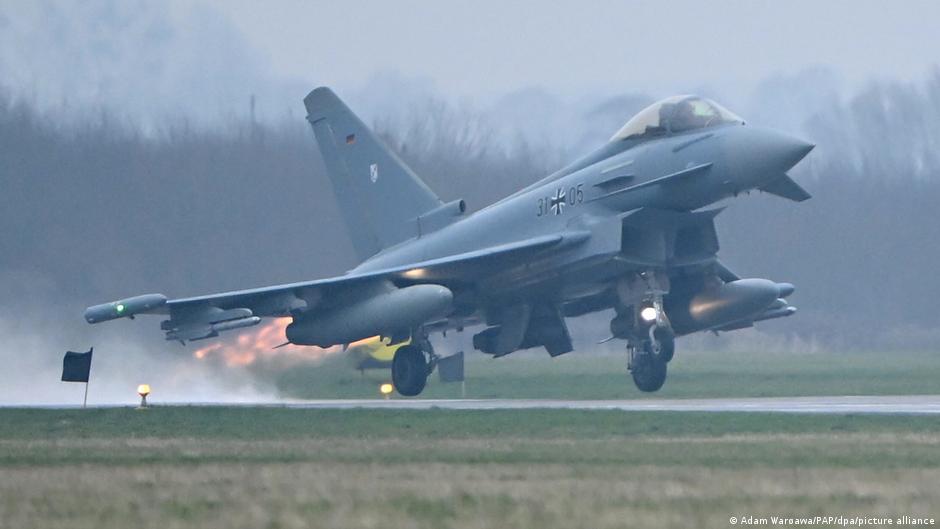
Germany has moved four Eurofighter jets to Latvia for a little more than a week as the country prepares for parliamentary elections on October 3, adding a security dimension to a political event that also matters for households, savers and everyday investors across the Baltic region.
The aircraft, from the Bundeswehr’s 74th Tactical Air Wing based at Neuburg an der Donau, have been transferred to the Lielvarde military airfield in central Latvia. Latvia’s defense ministry in Riga announced the deployment on Thursday, September 24, saying the jets will help secure the country’s airspace during the election period.
The Eurofighters will support NATO’s integrated air and missile defense system while stationed in Latvia. The deployment comes after Riga asked NATO allies for assistance against the backdrop of repeated violations of Baltic airspace, according to the dpa news agency.
For Latvian families, the immediate issue is safety. But for household budgets, the broader question is what sustained security pressure means for public finances, confidence and the cost of living. Airspace defense is not an abstract budget line when it affects government priorities, energy security concerns, insurance assumptions, travel planning and investor views of regional risk.
Security Spending Meets Household Budgets
Latvia, like Estonia and Lithuania, sits on NATO’s north-eastern flank, where the alliance has provided air policing since the three Baltic states joined NATO in 2004. That long-running mission became more visible after Russia’s full-scale war against Ukraine began, with drones repeatedly entering Baltic airspace.
In August, NATO fighter jets shot down a drone that had violated Latvian airspace. The incident reinforced why air defense is now part of the everyday economic backdrop in the region. A secure airspace can support consumer confidence and business continuity, while repeated incursions can add pressure to public budgets and sharpen the risk premium investors attach to a country or region.
Latvian Prime Minister Andris Kulbergs thanked Germany on X for its “readiness to help and close cooperation.” He said the deployment was a concrete sign of NATO solidarity and of the shared commitment to protecting Latvia’s airspace and the security of the Latvian population.
“This is a concrete sign of NATO solidarity and our shared commitment to protecting Latvia’s airspace and the security of the Latvian population,” Kulbergs said.
For consumers, that kind of assurance can matter. Elections often bring uncertainty over taxes, social spending and economic policy. Adding visible NATO support may help reduce one source of anxiety during the vote, even if it does not directly lower grocery bills, mortgage payments or utility costs.
Still, the financial implications are not one-way. Greater reliance on air policing and missile defense support highlights the costs that European governments face as they adapt to a more unstable security environment. Defense outlays compete with other spending priorities, including household support, infrastructure, pensions and health care. Even when allied support eases the operational burden, voters may still see defense and security become more prominent in national budgets.
What It Means for Savers and Investors
For everyday investors, the German deployment is a reminder that geopolitical risk is now a routine factor in European portfolios. Baltic equities, regional bonds, euro-denominated savings and currency exposure can all be influenced by perceptions of security and stability, even when day-to-day market moves are driven by interest rates, inflation or company earnings.
Latvia uses the euro, which shields households from direct exchange-rate volatility against other eurozone countries. But that does not mean consumers are insulated from wider currency and market effects. A more tense security backdrop in Europe can affect the euro through investor sentiment, energy-market expectations and the relative appeal of safe-haven assets. For families with savings, mortgages, pensions or investment funds, those shifts can influence returns and borrowing costs indirectly.
The immediate deployment is temporary, lasting just over a week. But the article’s longer timeline points to a broader NATO pattern. From December 2026, Eurofighters are set to take over NATO airspace surveillance for a longer period from Estonia under the NATO Air Policing mission. Until March 2027, five Eurofighter jets with flight crews are expected to be stationed at Ämari air base in northwestern Estonia.
That planned rotation signals that Baltic air defense is not a one-off response to election security concerns. It is part of a continuing NATO framework that households and investors may increasingly treat as part of the region’s economic landscape.
For Latvian voters, the October 3 parliamentary election will be about domestic choices as well as security policy. For consumers, the practical question is whether those choices help preserve confidence while managing inflation, wages, savings and state spending. The presence of German Eurofighters does not answer those economic questions, but it frames the conditions under which they will be debated.
In personal-finance terms, the lesson is simple: geopolitical developments can reach household balance sheets through confidence, public budgets, interest-rate expectations and investment risk. Latvia’s election security measures may be military in form, but their significance extends into the economic decisions families make every month.



