Fuel Prices in Crimea Nearly Double in One Week, Deepening Household Budget Strain
Gasoline prices in annexed Crimea surged by over 78% in early July, sharply impacting local consumers and regional fuel markets.
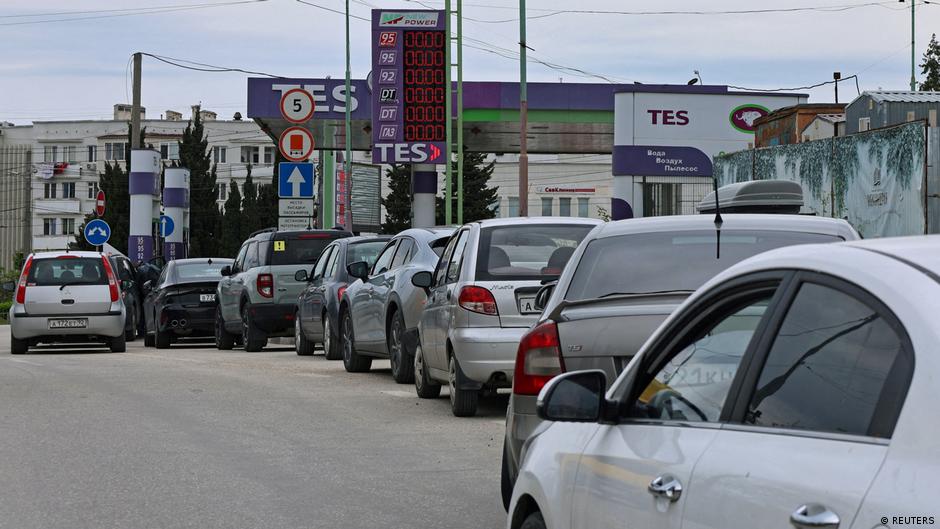
Residents and drivers in Crimea are facing sharply rising fuel costs that threaten to strain household budgets and complicate everyday financial planning. According to the latest official data released by the Russian statistics agency Rosstat, gasoline prices in the annexed peninsula surged by an average of 78.4% during the first week of July. The most popular fuel grade, AI-95 gasoline, rose nearly 92%, from 88.82 rubles per liter to 170.59 rubles.
Implications for Consumers and Regional Markets
This unprecedented price increase marks the steepest spike in fuel costs across Russia and occupied territories tracked by Rosstat, outpacing second-place Ivanovo region’s 19% rise during the same period. The surge is a stark escalation compared to the 1.6% weekly increase observed at the end of June. While typical price growth in Russia is modest, Crimeans now face costs that have nearly doubled in days, dramatically reducing disposable income for many families.
“Fuel prices in Crimea have escalated so rapidly that consumers must reconsider daily expenses and savings strategies to accommodate these new costs,” economic analysts note.
Fuel price inflation is a direct pressure point on household finances, given the reliance on automobiles for commuting, goods transport, and essential travel. Increased fuel expenses ripple through the cost of goods and services, amplifying inflationary pressures on a broad scale. For everyday investors and savers, the sharp rise in fuel costs within Crimea adds further uncertainty to regional economic stability and currency valuations.
Higher fuel prices are not restricted to Crimea. Prices above 100 rubles per liter are common in the Republic of Tuva, while AI-95 costs over 90 rubles in Kalmykia, Dagestan, Kabardino-Balkaria, Chechnya, and Kamchatka. Meanwhile, AI-92 gasoline exceeds 80 rubles per liter in several remote regions, stretching budgets of rural and urban consumers alike.
Broader Economic Context and Government Response
The Russian government attributes these price pressures to a broader fuel supply crisis intensified by multiple factors, including recent attacks on key oil refinery and energy infrastructure in Russia. Since late May, fuel shortages have led to long queues at filling stations and closures of some service points. As of early July, nearly 60 Russian regions, including occupied Ukrainian territories, have implemented rationing or other restrictions on fuel sales.
In response, Russian authorities have imposed a ban on diesel exports from July 8 through 31 to stabilize the domestic market, a move extending earlier export limits that did not previously apply to producers directly. Additionally, the government has authorized the continued use of lower environmental standard fuels (Euro-3) until the end of 2026 to alleviate supply shortages. These fuels have higher sulfur content and are less environmentally friendly but are critical to meeting demand amid production constraints.
To supplement domestic supply, Russia is increasing fuel imports, with shipments of gasoline arriving from India and negotiations underway with Kazakhstan and other countries. Plans are also in motion to procure Japanese aviation fuel through intermediary traders. These import efforts highlight the challenges Russia faces in maintaining a stable fuel supply under current geopolitical and operational pressures.
For households in Crimea and beyond, the confluence of rising prices, fuel scarcity, and regulatory shifts means tighter budgets and difficult choices ahead. Consumers reliant on personal vehicles may find their transportation costs consuming a larger share of income, potentially reducing savings and discretionary spending. Investors monitoring Russia’s energy and currency markets will need to factor in ongoing uncertainty tied to fuel availability and price volatility.