Brazil’s Bolsonaro Son Sentenced to Prison Amid Political Turmoil Impacting Economy
Eduardo Bolsonaro sentenced for lobbying against Brazil’s interests abroad, raising concerns over political stability and economic effects on households and investors.
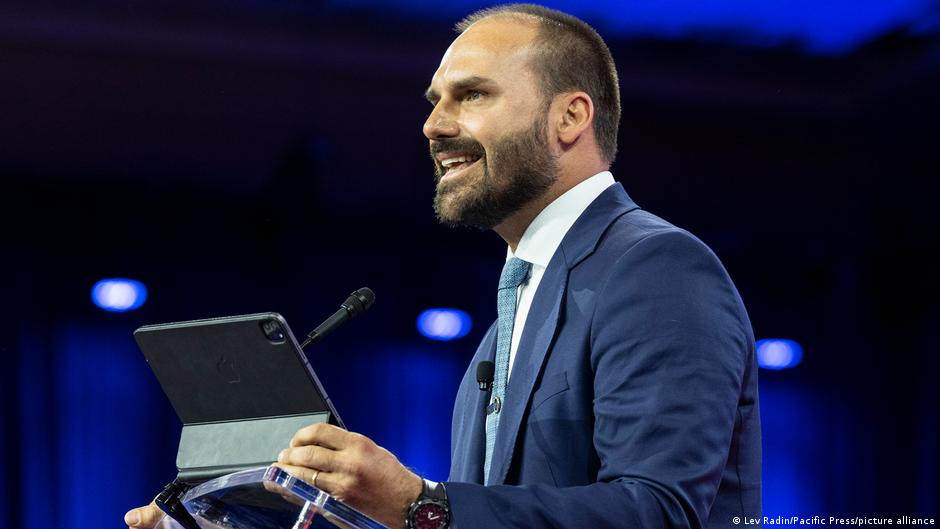
The Supreme Court of Brazil has sentenced Eduardo Bolsonaro, son of former President Jair Bolsonaro, to four years and two months in prison. The sentence was delivered in absentia, as Eduardo currently resides in the United States. This ruling adds a new dimension to the ongoing political upheaval in Brazil, with potential consequences for everyday consumers, investors, and the broader economy.
Political Instability and Its Ripple Effects on Household Budgets
The court found that Eduardo Bolsonaro, a former member of Brazil's lower house of parliament (2015-2025), had lobbied foreign governments to impose sanctions against Brazil in response to legal actions against his father. This was deemed a threat to the nation's judiciary and governance by Supreme Court Justice Alexandre de Moraes, who stated that Eduardo’s actions conflicted with Brazil’s national interests.
Alongside the prison sentence, Eduardo Bolsonaro is barred from holding public office for eight years. Should he return to Brazil, he faces immediate arrest. Meanwhile, his father, Jair Bolsonaro, was convicted in September 2025 for attempting a coup and sentenced to over 27 years in prison.
"Eduardo Bolsonaro's efforts to solicit foreign sanctions represent a serious breach of national sovereignty with implications far beyond politics." – Brazilian Supreme Court Justice Alexandre de Moraes
The persistent political uncertainty has direct and indirect impacts on Brazil’s economic landscape. For households, rising political risk often translates into currency volatility, inflationary pressures, and tighter credit conditions. Brazilian real fluctuations can increase the cost of imported goods and fuel inflation, squeezing household budgets. Consumers may find everyday essentials becoming more expensive as economic confidence wavers.
Moreover, the uncertainty surrounding the Bolsonaro family and the upcoming presidential elections in October 2026—where current President Luiz Inácio Lula da Silva and Bolsonaro’s other son, Flávio Bolsonaro, plan to compete—adds layers of unpredictability to Brazil’s financial markets.
Effects on Savings and Investments
For everyday investors, the political upheaval poses risks to portfolios heavily weighted in Brazilian assets. Stock market volatility and potential credit rating downgrades could erode investment returns. Currency depreciation against the US dollar may also impact returns for those holding savings or investments denominated in local currency.
Brazilian households with savings in real could face purchasing power erosion if inflation accelerates due to political instability. Additionally, foreign investment inflows might slow as global investors weigh the risks associated with Brazil’s contested political environment.
As Brazil approaches the 2026 presidential election, the political and economic trajectory remains uncertain. Consumers and investors alike should monitor developments closely to adjust their financial strategies accordingly.