Trump Signs Graham Sanctions Law Targeting Russian Energy Buyers
The measure gives the White House power to impose steep tariffs that could ripple through energy prices, currencies and investor portfolios.
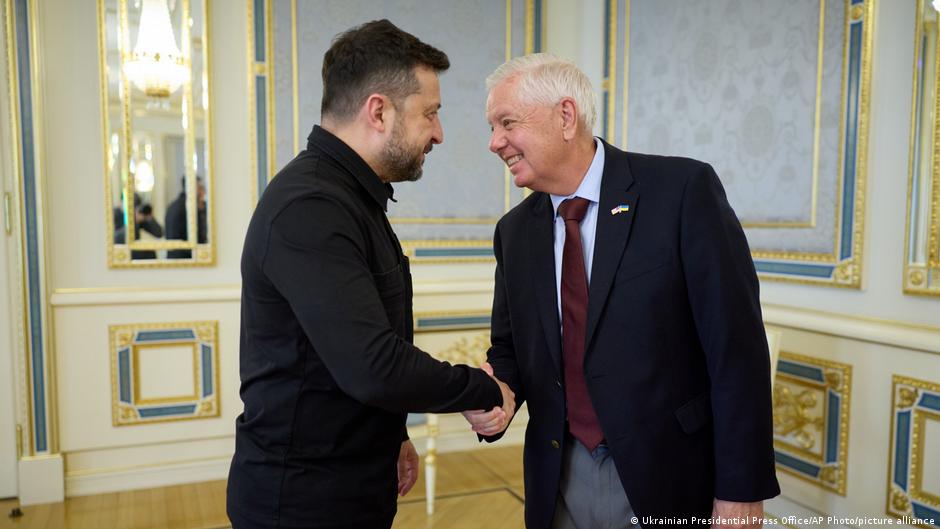
President Donald Trump signed legislation on Friday, September 18, tightening U.S. sanctions on Russia over its continuing war against Ukraine, a measure known publicly as the Lindsey Graham sanctions law after the late Republican senator who helped develop and promote it.
For households, savers and everyday investors, the law matters because it aims directly at the energy trade, one of the most sensitive channels for global inflation. The legislation allows the U.S. president to impose 100 percent tariffs on the five largest buyers of Russian oil and gas, as well as on five countries helping Moscow bypass energy sanctions. Those penalties, if used aggressively, could affect fuel markets, shipping costs, consumer prices and exchange rates far beyond Russia.
The bill also includes exemptions for countries that receive less than 15 percent of the natural gas they consume from Russia and are taking steps to reduce those imports. That carveout is important for consumers because it gives Washington room to avoid penalizing economies that are already trying to diversify energy supplies, limiting the risk of sudden disruptions in allied markets.
Energy Costs and Household Budgets
The personal finance stakes are straightforward: sanctions on oil and gas buyers can change the price of energy, and energy prices feed quickly into household budgets. Gasoline, heating bills, electricity, groceries and airfares are all linked, directly or indirectly, to fuel costs. A 100 percent tariff on major buyers of Russian energy would not automatically mean a doubling of consumer prices, but it could force trade routes to shift, raise financing and insurance costs, and add volatility to global benchmarks.
The legislation also authorizes sanctions against Russian officials, banks, businesspeople and the so-called shadow fleet, the network of vessels used to move sanctioned or restricted oil. For investors, that widens the potential impact from commodities into banking, shipping, insurance and emerging-market assets. The same legislation extends U.S. sanctions on Iran through 2031, adding another layer of geopolitical risk to energy and currency markets.
Ukrainian President Volodymyr Zelensky thanked Trump for signing the measure, saying the law was an important step in increasing pressure on Moscow to end the war. In a post on Telegram, Zelensky thanked Trump and the senators and members of the House of Representatives who supported it.
“Senator Graham never doubted for a moment that America had enough strength to fight dictators and achieve results if it acted correctly,” Zelensky said, according to the source article.
The bill, HR 5334, was introduced in April 2025 by Graham and Democratic Senator Richard Blumenthal. Because Trump was said to prefer communicating with Graham, a fellow Republican, the senator’s name became closely associated with the sanctions package. Media and the public also referred to it as the Lindsey Graham law or Graham bill.
From “Hellish” Tariffs to Presidential Discretion
The original version of the bill contemplated customs duties of up to 500 percent on Russian products while Russia continued its war against Ukraine and refused peace talks. The president was expected to periodically determine whether Moscow was ready for dialogue and, if it was not, impose sanctions. Because of the 500 percent level, the measures became known as “hellish” sanctions.
Those early proposals also would have affected products from countries buying Russian oil. Over time, however, the tariff ceiling for importers of Russian oil was lowered to 100 percent. That lower figure is still severe enough to reshape trade incentives, particularly for countries, companies and refiners exposed to Russian crude and gas.
Trump’s position shifted during debate over the Graham-Blumenthal initiative. At times he supported such measures, and at other times he opposed their adoption. Lobbying for the document continued for about a year and a half. Graham did not live to see the law enacted; the senator died on July 11, 2026.
By the time Trump signed it, the bill had changed in ways that substantially expanded presidential authority. Trump now has the power to decide whether to impose or cancel the measures described in the legislation. That differs from the usual practice in which comparable actions would require coordination with the U.S. Congress. The final version also allows Trump to use provisions of the law in connection with his broader trade war against China.
That concentration of tariff authority drew criticism from House Democratic minority leader Hakeem Jeffries, who framed the issue in pocketbook terms. He argued that life in the United States is already too expensive and questioned why Congress or the House should give the president unlimited authority to impose new tariffs around the world that could have negative economic consequences for Americans.
Supporters counter that the measure sends an important signal of U.S. support for Ukraine at a time when the intensity of fighting is increasing. For investors, that means the law is both a foreign policy tool and a market risk factor. Its immediate effect will depend on how Trump uses the authority: a restrained approach could preserve leverage without sharply disrupting prices, while broader use could create pressure in oil markets, currencies and global equity sectors tied to energy and trade.
For consumers, the practical takeaway is to watch fuel prices, utility bills and inflation expectations. For savers and retirement investors, the law adds another variable to portfolios already exposed to interest rates, commodity prices and geopolitical shocks. The legislation does not guarantee a new wave of price increases, but it gives the White House a powerful tariff mechanism whose use could be felt in everyday budgets.



