Trump Says U.S. Will Drop Tariff on Irish Whiskey Imports
The announced repeal of a 10 percent duty could ease pressure on U.S. buyers of Irish whiskey and signal relief for a closely watched transatlantic trade category.
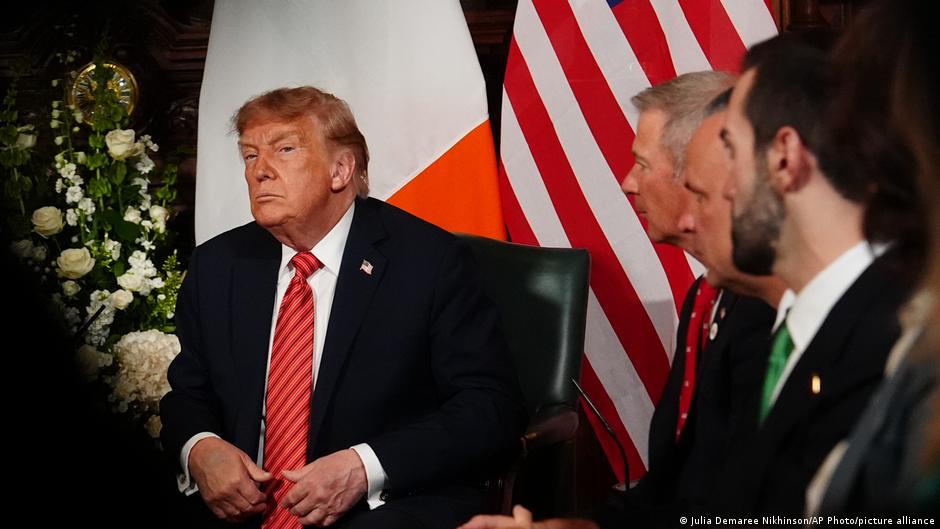
U.S. President Donald Trump has announced that a 10 percent tariff on Irish whiskey will be removed, a decision that could matter not only to distillers and importers but also to American households watching the price of imported spirits on store shelves and restaurant menus.
Trump made the announcement at the end of a visit to Ireland, speaking on Sunday, September 13, before a cheering crowd of Irish golf fans during a tournament at a golf club owned by his family. According to Trump, he acted after receiving numerous requests to cancel the U.S. import duty on Irish whiskey.
The president said those who had urged him to remove the tariff included Irish Prime Minister Micheal Martin and leading Irish golfer Shane Lowry. The announcement immediately drew attention in Ireland, where whiskey is one of the country’s most visible consumer exports and a symbol of its commercial relationship with the United States.
For U.S. consumers, the practical question is whether the policy shift eventually shows up in lower retail prices, smaller menu markups, or slower price increases for imported Irish whiskey. Tariffs are paid by importers, but the cost can move through supply chains and affect wholesalers, retailers, bars, restaurants, and ultimately shoppers. Removing a 10 percent duty does not guarantee an equal price cut at checkout, but it can ease one layer of cost pressure in a category where brand, distribution, taxes, and margins all shape the final price.
Why It Matters for Household Budgets
Alcohol purchases are discretionary for most households, which means consumers tend to notice when the price of a preferred bottle rises. Imported spirits can be particularly sensitive to trade policy because duties add costs before the product reaches the consumer-facing market. A tariff cancellation can therefore be meaningful for shoppers who buy Irish whiskey for personal use, gifts, celebrations, or entertaining.
The change may also be relevant for bars and restaurants, where imported spirits often form part of higher-margin beverage programs. If import costs decline, some businesses may have more flexibility to manage menu pricing, promotions, or inventory decisions. Still, consumers should not assume immediate discounts. Existing stock may have been purchased while the tariff was in place, and retailers may adjust prices gradually depending on competition and demand.
Trump’s announcement also lands in a broader personal finance context: tariffs are a form of trade cost that can indirectly affect consumer prices. When households think about inflation, they often focus on groceries, fuel, rent, and borrowing costs. But smaller categories, including imported wine and spirits, can also reflect policy choices, currency movements, and cross-border trade frictions.
“Nothing characterizes the trade relationship between the U.S. and Ireland better than Irish whiskey,” Irish Whiskey Association director Eoin O’Cathain said in a statement.
The Irish Whiskey Association welcomed Trump’s statement and said it hoped the decision would be fully implemented, according to Reuters. The association’s response underlines the importance of the U.S. market for Irish producers and the symbolic weight of whiskey in trade ties between the two countries.
Currency, Savings, and Everyday Investors
For households and everyday investors, the tariff announcement is also a reminder that consumer prices do not move in isolation. Exchange rates, trade policy, shipping costs, taxation, and retailer strategy all influence what shoppers pay. If the dollar strengthens or weakens against currencies tied to European exports, that can further affect import pricing. The source article does not specify currency movements, but for consumers and investors, foreign exchange remains one of the background forces that can amplify or soften the effect of tariff changes.
Investors who follow consumer goods, hospitality, restaurants, or alcohol distributors may also watch how companies respond to lower import costs. A tariff removal can improve cost conditions for businesses that sell or serve Irish whiskey, though the benefit depends on contracts, inventory timing, market competition, and whether companies choose to pass savings on to customers or retain margin.
The current duty is part of tariffs that apply to all European Union wine and spirits exports to the United States. That broader structure matters because Irish whiskey is not the only category affected by transatlantic trade rules. A targeted announcement on Irish whiskey may be welcomed by producers and consumers of that product, but businesses and households buying other EU wines and spirits will be watching whether any wider changes follow.
For now, the announcement gives Irish whiskey producers a clear political signal and gives U.S. buyers a reason to monitor prices in the coming months. The most immediate impact may be felt by importers and distributors rather than consumers at the register. Over time, however, the removal of a 10 percent tariff could help reduce upward pressure on prices in a category that reaches from liquor stores to restaurants to household gift budgets.
As with any tariff decision, the final consumer impact will depend on implementation. The Irish Whiskey Association said it hoped the decision would be fully carried out. Until that happens through the relevant trade and customs channels, shoppers should treat the announcement as a sign of potential relief rather than a guaranteed price change already reflected on shelves.