Trump Jr. Repaid Russian Boxing Chief for Wedding-Event Costs, Kremlin Says
The reported reimbursement puts renewed attention on family finances, political access and reputational risk for consumers and investors.
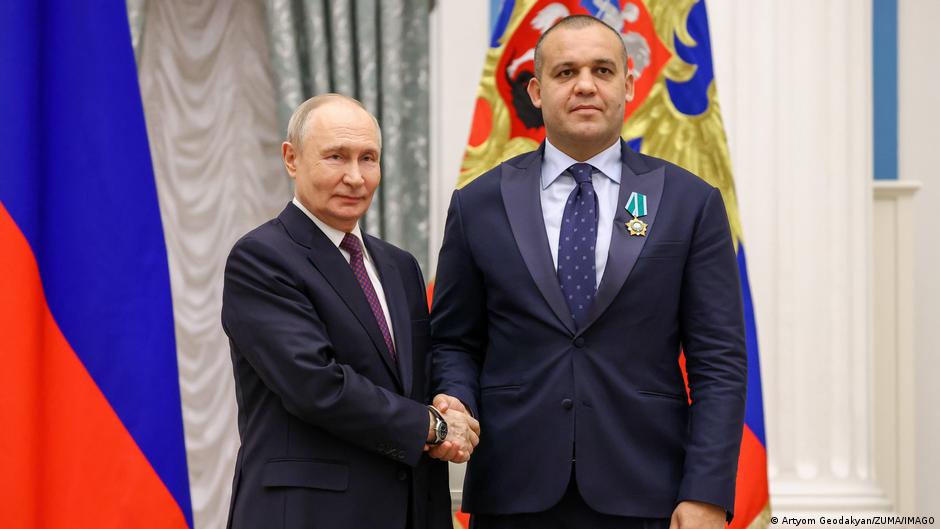
Donald Trump Jr. repaid Russian businessman Umar Kremlev for money spent on organizing part of his wedding-related celebrations, Kremlev said Tuesday, October 6, at a press conference in Istanbul. The statement added another financial detail to a story that has moved beyond society-page intrigue and into questions about influence, disclosure and the costs that can follow politically exposed relationships.
Kremlev, a Russian entrepreneur close to Vladimir Putin and the head of the International Boxing Association, said the president’s son had returned the money connected to the event. The same point had previously been made by the U.S. president, who described the repayment as a debt being settled.
For households, the episode may seem distant from the practical concerns of mortgages, groceries and retirement accounts. But it lands in a political and financial environment where questions about foreign-linked money, ethics investigations and reputational exposure can affect market sentiment, campaign narratives and the way ordinary investors assess risk tied to public figures, companies and currencies.
Repayment Becomes the Central Financial Fact
Kremlev said he had not attended the wedding itself but had been present at a shared event. Asked whether the expenses had been reimbursed, he said they had. He also said he did not understand why the money was returned, describing the gathering as a general event rather than a special gift.
“Yes, he returned it,” Kremlev said, while also expressing confusion about what exactly the reimbursement was for.
Kremlev argued that many people host events and invite guests without later treating the occasion as a billable transaction. He compared the situation to inviting guests to a country house and then sending them an invoice afterward. In his telling, the event was not an unusual favor. He also said he has a friendship with Donald Trump Jr. and that he had never asked him, or anyone else, to help him.
The statement matters because repayment can change how a transaction is viewed, but it does not necessarily end public scrutiny. In personal-finance terms, repayment is often the difference between a gift and a debt. In political-finance terms, however, the timing, purpose, source and documentation of a payment can still matter, particularly when the person covering costs is close to a foreign government and the family involved is close to the presidency.
On September 18, the U.S. president also confirmed that Trump Jr. had returned money to Kremlev. Speaking with journalists, he said that, as he understood it, his son had repaid the debt. He added that he considered it a normal practice for a friend to pay for a wedding celebration and said he saw nothing unacceptable in a Russia-connected businessman helping finance festivities for his son.
Why This Matters Beyond the Event
The issue entered wider public view after ProPublica published an investigation on September 14 stating that Kremlev had paid part of the expenses for Donald Trump Jr.’s wedding celebrations in the Bahamas. The elder Trump later told Axios that he had no idea who Umar was, had never heard of him, and that Kremlev had not paid for Don and Bettina’s wedding, which he said took place in a completely different location and on a different day from the party in question.
According to the account cited in the Russian source, the president described the event as an after-party held in their honor. He said there was nothing wrong with it and that he had not attended the party.
For everyday investors, the immediate financial exposure is not that a private wedding event was paid for or reimbursed. The broader relevance is the pattern such stories can create around political families and the potential for investigations. Markets tend to care about uncertainty, and political controversy can feed uncertainty in sectors affected by regulation, sanctions, trade policy and foreign relations.
Currency markets can also be sensitive to developments that touch U.S.-Russia relations, even when the link is indirect. A story involving a businessman close to Russian power and the family of the U.S. president may not move exchange rates on its own, but it can contribute to a wider climate in which investors watch for sanctions risk, congressional inquiries and shifts in geopolitical messaging.
For households holding diversified retirement accounts, the practical takeaway is not to trade on one political headline. It is to recognize how reputational and governance issues can become part of the risk picture around public officials, private entities and companies operating near sensitive political networks. Investors who own broad index funds may be buffered from any single controversy, while those concentrated in politically exposed businesses may face sharper swings when headlines pile up.
Congressional Scrutiny Could Follow
Axios also reported that a senior Democratic member of the House Oversight Committee could investigate reports that Kremlev paid for Trump Jr.’s celebrations. Representative Robert Garcia of California sent a letter to White House Chief of Staff Susie Wiles saying Democrats on the committee were investigating multiple ways in which the Trump family had tried to enrich itself by using proximity to the head of state.
Axios wrote at the time that if Democrats win control of the House of Representatives in the upcoming November 3 midterm elections, Garcia would likely become Congress’s chief investigator. The outlet also said the investigation gave a clear picture of the direction he would take in that role.
That potential investigation is where the story intersects most clearly with consumer and investor concerns. Congressional inquiries can generate hearings, document requests and media cycles that influence public trust. Public trust, in turn, can affect policymaking capacity, regulatory priorities and the broader environment in which households make financial decisions.
None of the reported statements in the Russian source provide the amount of money involved. Without a figure, it is not possible to assess the scale of the expense, the impact of the reimbursement or whether the payment represented a meaningful financial benefit. What is clear is that both Kremlev and the U.S. president have said the money was returned, while the political debate now centers on why it was paid, why it was reimbursed and whether the arrangement deserves further scrutiny.
For consumers, the core lesson is familiar: financial ties can carry costs beyond the amount on the invoice. In private life, unclear payments can strain relationships. In public life, they can become political liabilities. And when those ties involve foreign-linked figures and powerful families, the effects can ripple through headlines, investigations and the confidence that investors bring to markets.



