Schröder’s Globus Russia Role Draws German Criticism as Retail Risk Rises
The former German chancellor’s new supervisory post at Hyperglobus has stirred criticism in Germany and renewed questions over Russian retail exposure.
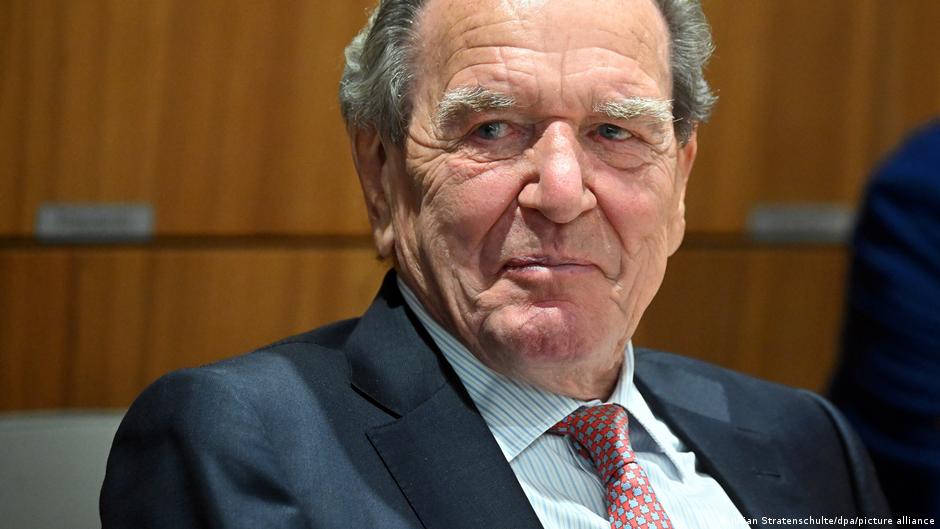
Former German Chancellor Gerhard Schröder has become a member of the supervisory board of Hyperglobus, the former Russian subsidiary of the German hypermarket chain Globus, a move that has drawn sharp criticism from politicians and economists in Germany. For consumers and everyday investors, the appointment highlights a broader issue: how political risk around Russia can still affect retailers, ownership structures, household spending and confidence in cross-border business.
Hyperglobus operates the Globus hypermarket network in Russia. The company confirmed to DW on October 2 that Schröder would join its supervisory board and oversee the retailer’s “strategic development.” Globus Gruppe spokesperson Isabel del Alcazar von Buchwald said that since January 1, 2025, the Russian business of the Globus network has been “legally and organizationally independent.” At the same time, the shareholders of Russia’s Hyperglobus are the same German businesspeople as in the rest of the group.
The distinction between operational independence and shared ownership is central to the controversy. For households, large food and household-goods retailers are not abstract corporate assets. They are part of everyday spending patterns, especially in economies where inflation, currency swings and sanctions-related disruptions can quickly feed into grocery bills. For investors, the case underscores how exposure to Russia can remain financially and reputationally sensitive even after formal restructuring.
German Critics See a Political Signal
On Saturday evening, October 3, Roderich Kiesewetter, a Bundestag member and foreign policy expert from the governing Christian Democratic Union, criticized Schröder’s new position. He called the post a “betrayal of Europe and of his own country.”
“Anyone who publicly and demonstratively shakes Schröder’s hand thereby wants to demonstrate their position,” Kiesewetter wrote on X.
Thomas Jäger, a political science professor at the University of Cologne, also reacted on X. “Schröder has a new lobbying assignment. In Russia. Where else?” he wrote. Jäger asked whether German President Frank-Walter Steinmeier knew about the appointment when he greeted Schröder a few days earlier.
Both Kiesewetter and Jäger appeared to be referring to the ceremony marking the 75th anniversary of Germany’s Federal Constitutional Court, held on September 28 in Karlsruhe. Steinmeier attended the event and, when entering the hall, shook hands with Schröder, who was seated in the front row as an honorary guest.
The reaction shows how Schröder’s Russia-linked business roles continue to carry political weight in Germany. For savers and retail investors, that matters because reputational risk can translate into business risk. Companies tied to politically sensitive jurisdictions may face boycotts, financing constraints, regulatory scrutiny or sudden changes in asset control.
Why Retail Assets in Russia Matter to Household Budgets
Retail chains sit close to the consumer economy. Hypermarkets sell food, household staples and everyday goods, so their operating conditions directly affect shoppers. In Russia, foreign-linked retailers and their local successors operate in an environment shaped by sanctions, currency pressure, import disruptions and state intervention. Any change in ownership oversight or government pressure can influence supply chains, pricing and store strategy.
German economist Jan Schnellenbach, a professor of microeconomics at Brandenburg University of Technology in Cottbus, accused Schröder of “shamelessness.” He wrote on X: “Wasn’t it said that he was too ill to appear before a German court? Do Russian funds have healing powers?”
Janis Kluge, a German economist and head of a research department at the Berlin-based German Institute for International and Security Affairs, argued that bringing Schröder into Hyperglobus management amounts to the company “buying itself lifetime insurance” against suffering the fate of German retailer Metro. Metro’s Russian assets were transferred into temporary management under a decree by Vladimir Putin. “Schröder is once again monetizing his access to Putin,” Kluge wrote on X.
That comparison is especially relevant for investors. The Metro case showed that foreign-linked assets in Russia can face abrupt state action. For any business with stores, inventory, real estate, local employees and supplier contracts, temporary management can change the economic value of an investment overnight. Investors in companies with remaining Russian exposure have to consider not only sales and margins, but also the possibility that political decisions may override ordinary commercial planning.
For households, the same instability can show up less directly but still tangibly. If retailers face uncertainty over asset control, import sourcing or management direction, consumers may encounter narrower product ranges, higher prices or changes in loyalty programs and private-label offerings. Currency movements can also matter: a weaker ruble can make imported goods more expensive, while companies with German owners or suppliers may face additional accounting and repatriation challenges.
Schröder’s Russia Links Remain Under Scrutiny
Many observers in Germany have long regarded Schröder as a lobbyist for Russian enterprises. He previously worked in the management of Rosneft and of the company operating Nord Stream. His new role at Hyperglobus therefore fits into a longer pattern that critics say connects political access with Russian business interests.
The controversy comes at a time when European companies are still navigating the financial consequences of their Russian operations. Some firms have exited. Others have restructured, reduced exposure or attempted to separate Russian units legally and operationally. The Hyperglobus case shows how difficult that separation can be to explain when ownership links remain and prominent political figures become involved.
For everyday investors, the lesson is not confined to one retailer or one former politician. It is a reminder to look past headline revenue and examine where companies earn money, where their assets are located and how vulnerable those assets are to government decisions. For consumers, it is another example of how geopolitics can move from diplomatic disputes into the checkout aisle, shaping the businesses that sell food and household essentials.
Schröder’s appointment may be formally a governance matter at a retailer operating in Russia. But the debate around it is broader: it touches on trust, political influence, corporate risk and the way international tensions can affect household finances long after a company claims its local business is independent.