Russia to close Goethe-Institut branches after Berlin cultural pact ends
Moscow says Germany’s move against the Russian House in Berlin will shut the last formal channel for German cultural operations in Russia.
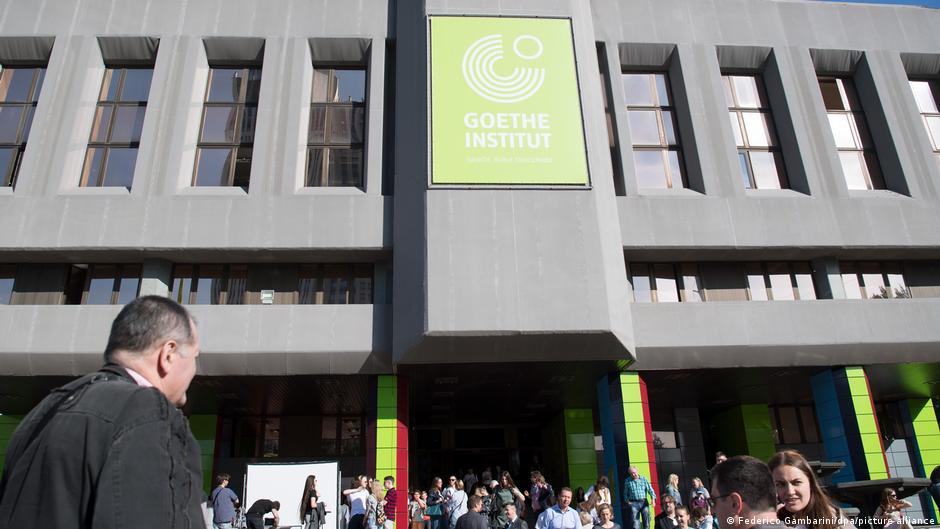
Russia will close all three branches of Germany’s Goethe-Institut in the country after Berlin moved to terminate its agreement with Moscow governing the Russian House in Berlin, Russian Foreign Minister Sergei Lavrov said on Thursday, September 3, at the Eastern Economic Forum in Vladivostok.
For households, students and cross-border professionals, the dispute is another sign that the practical costs of deteriorating ties between Russia and Germany are spreading beyond sanctions and diplomacy into everyday financial decisions. The loss of language and cultural infrastructure can affect spending on education, travel planning and professional qualifications, while adding to the uncertainty already facing Russians dealing with tighter entry checks and a harder operating environment in Europe.
Lavrov linked the closures directly to the German decision, saying Berlin had forced the issue by expelling Russia’s cultural center. The remarks were broadcast on the Russian Foreign Ministry’s YouTube channel.
“Of course, they will be closed, after our cultural center was thrown out from there. Otherwise, we would not respect ourselves,” Lavrov said.
Lavrov said that Germany had Goethe-Institut offices “in Moscow, and in St. Petersburg, and in Yekaterinburg.” However, according to the institute’s own information, its third branch in Russia is in Novosibirsk, not Yekaterinburg.
He also said the German authorities had “consciously” taken a step that “unequivocally means the end of their cultural presence in the Russian Federation,” which he said had remained in place despite what he described as the “Ukrainian vicissitudes” in Russia’s relations with the West.
DW said it had requested comment from the Goethe-Institut leadership.
Consumer and household impact
While the immediate announcement is diplomatic, the economic implications are more personal than they may first appear. Cultural institutions such as the Goethe-Institut often sit at the intersection of education spending, exam preparation, overseas study plans and professional mobility. When those channels narrow, households can face higher search costs, fewer local options and a greater need to rely on private providers or remote services.
For families budgeting for language instruction, international exam pathways or future study in Germany, the closure of physical branches could mean more friction in accessing programs that were previously available inside Russia. That does not automatically translate into a measurable rise in costs from this announcement alone, but it does reinforce a pattern familiar to consumers since the broader breakdown in relations with Europe: fewer formal institutions, more administrative hurdles and less predictability when planning large life expenses.
That matters for savers as well. In times of geopolitical stress, households tend to become more cautious about discretionary spending, foreign education plans and cross-border financial commitments. Any step that makes travel, study or relocation less predictable can influence how families allocate cash, whether they hold larger emergency savings, and how they think about currency exposure tied to euro-area expenses.
Everyday investors are also likely to see the development less as a market-moving event in itself and more as another signal that the policy environment remains unstable. The same package of German measures referenced by Russian officials includes tighter sanctions, stronger scrutiny of Russian nationals entering Germany and tougher action against Russia’s so-called shadow fleet. For investors, that broader backdrop can shape sentiment around transport, trade and foreign-access risks even when no immediate consumer price figure is attached to a single diplomatic step.
Why Berlin acted
Lavrov’s comments came a day after German authorities announced tighter sanctions on Russia, blaming Moscow for a drone incident at Leipzig airport in August. German Interior Minister Alexander Dobrindt said the decision followed an examination of the drone settings and certain components that had been used in other hybrid incidents.
As part of the response, the German government ordered the closure by September 18 of the last Russian consulate general in the country, located in Bonn, and said it would terminate the agreement covering the operation of the Russian House in Berlin. German Foreign Minister Johann Wadephul said that same agreement also regulated the work of the Goethe-Institut in Russia.
Berlin also plans to tighten controls on the entry of Russian citizens into Germany and strengthen measures against Russia’s “shadow fleet.”
For consumers, those steps together paint a clearer picture than the headline about cultural branches alone. Tighter border controls can affect travel planning, document preparation and the time horizon for trips involving family visits, study or business. The closure of the last Russian consulate general in Germany may further complicate administrative processes for those needing consular services. And the end of a bilateral framework that also governed the Goethe-Institut suggests that previously durable institutional arrangements are now vulnerable to rapid political reversal.
In practical terms, this is the kind of diplomatic escalation that tends to filter into household finances slowly rather than all at once. It can reshape the cost of opportunities rather than the price of a single item: a delayed education plan, a more expensive route to certification, a postponed move, or more conservative savings behavior in response to uncertainty.
For Money Desk readers, the key takeaway is that geopolitical disputes increasingly reach consumers through the plumbing of daily life: visas, mobility, educational access, service availability and the confidence required to commit money to future plans. Russia’s planned closure of the Goethe-Institut branches is not just a cultural story. It is another indication that the financial consequences of fractured international ties continue to widen from governments and institutions to households and ordinary investors.