Macron and Trump Push Ukraine Infrastructure Shield as Costs Hit Households
France and the United States are seeking a moratorium on strikes against Ukrainian energy and civilian infrastructure while backing stronger air defenses for Kyiv.
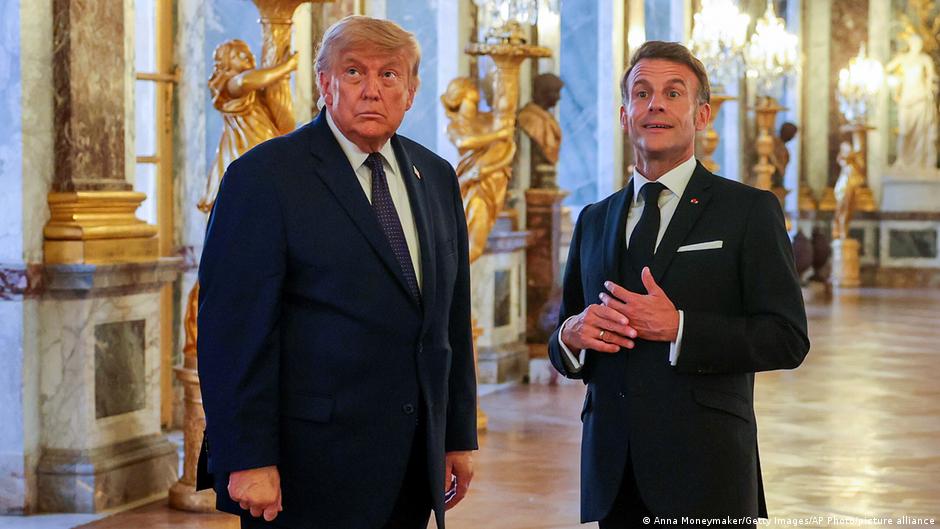
French President Emmanuel Macron said he discussed with U.S. President Donald Trump efforts to secure a moratorium on strikes against Ukraine’s energy facilities and civilian infrastructure, a proposal with direct consequences not only for the war but also for household budgets, currencies and everyday investors watching the conflict’s economic fallout.
Macron wrote on X on Monday, September 21, that France and the United States would work together to advance the initiative during Russia’s war against Ukraine. The French leader said the goal was to protect civilians and move quickly toward serious negotiations on peace terms between Russia and Ukraine.
“We will also combine our efforts to achieve a moratorium on strikes against Ukraine’s energy infrastructure and civilian infrastructure,” Macron said.
For families in Ukraine, attacks on energy infrastructure can quickly become a household finance crisis. Damage to power networks and civilian facilities affects heating, electricity, water access, transport and the ability of businesses to operate. That can push up everyday costs, disrupt wages and make basic budgeting harder for households already living under wartime pressure.
The discussion also matters beyond Ukraine. Energy infrastructure has been one of the most closely watched pressure points of the war because disruptions can feed into wider concerns over energy prices, inflation expectations and currency stability. Even when the immediate damage is local, investors often respond to the risk of escalation, sanctions or renewed pressure on energy supply chains.
Why Air Defense Matters for Household Costs
Speaking to reporters after meeting Trump, Macron said the two leaders agreed on the need to help Ukraine strengthen its defense capabilities. According to Macron, that includes supplying Kyiv with additional interceptor missiles to defend against Russian air attacks.
For consumers, air defense may sound like a battlefield issue, but it has a practical economic side. If Ukraine can better protect power plants, substations and other civilian infrastructure, fewer households and businesses face interruptions that can raise costs and reduce income. More reliable infrastructure can also help limit emergency spending by the state and stabilize the conditions in which firms make payroll, produce goods and provide services.
There is also a savings and investment angle. War-related uncertainty can influence how households think about cash, foreign currency holdings and risk. In countries directly exposed to the conflict, families may prioritize liquidity and hard currency. In other markets, small investors may monitor defense stocks, energy prices, inflation-sensitive assets and exchange rates as political signals emerge from meetings such as Macron’s talks with Trump.
The article did not provide details on the number of interceptor missiles under discussion, the timing of any deliveries or which systems might be involved. But the emphasis from Macron was clear: France and the United States see stronger Ukrainian air defense as linked to protecting civilians and critical infrastructure.
Diplomacy in New York
According to a DW correspondent, a bilateral meeting between Macron and Ukrainian President Volodymyr Zelensky also began in New York on the evening of September 21. That meeting followed Macron’s discussion with Trump and came as world leaders gathered for the United Nations General Assembly.
Before that, Zelensky met with U.S. lawmakers and thanked them for passing the law associated with the late Senator Lindsey Graham on “hellish sanctions” against Russia. “I want the sanctions to start working,” the Ukrainian leader said.
Sanctions are another channel through which the war reaches household balance sheets. For Russia, sanctions are intended to restrict the resources available for the war. For global consumers and investors, sanctions can also affect trade flows, company exposure, commodity markets and currency expectations. The source article did not specify the provisions of the law or when the sanctions would take effect, but Zelensky’s comment underscored his focus on implementation rather than symbolic pressure alone.
The diplomatic calendar adds urgency. From September 22 to 26, New York is hosting the 81st session of the United Nations General Assembly, with nearly 130 world leaders expected to attend. Zelensky is also expected to meet Trump on September 22.
For everyday investors, the sequence of meetings is worth watching because it may shape expectations around military aid, sanctions and the prospects for negotiations. None of those outcomes is certain from the talks described, and the source article does not report any finalized agreement. Still, statements from Macron, Trump and Zelensky can move perceptions of risk, especially in markets sensitive to energy security and geopolitical tension.
At the household level, the stakes are more immediate. A moratorium on strikes against energy and civilian infrastructure, if achieved, could reduce the pressure on Ukrainian families facing power disruptions and damage to essential services. Stronger air defenses could also make attacks less destructive. For consumers outside Ukraine, any step that lowers the risk of escalation or energy disruption may matter indirectly through inflation, fuel prices, currency moves and market confidence.
Macron’s message was therefore both diplomatic and economic. Protecting infrastructure is not only about military resilience. It is about keeping homes supplied, businesses open and public finances from absorbing repeated emergency shocks. Whether the effort can produce a moratorium or faster peace negotiations remains unresolved, but the discussion places civilian infrastructure at the center of both security policy and the financial pressures felt by ordinary people.