Lower Saxony Runoffs Signal Local Budget Priorities as AfD Loses Races
Voters in German municipalities kept incumbents in several major cities, a result with practical stakes for taxes, services and local spending.
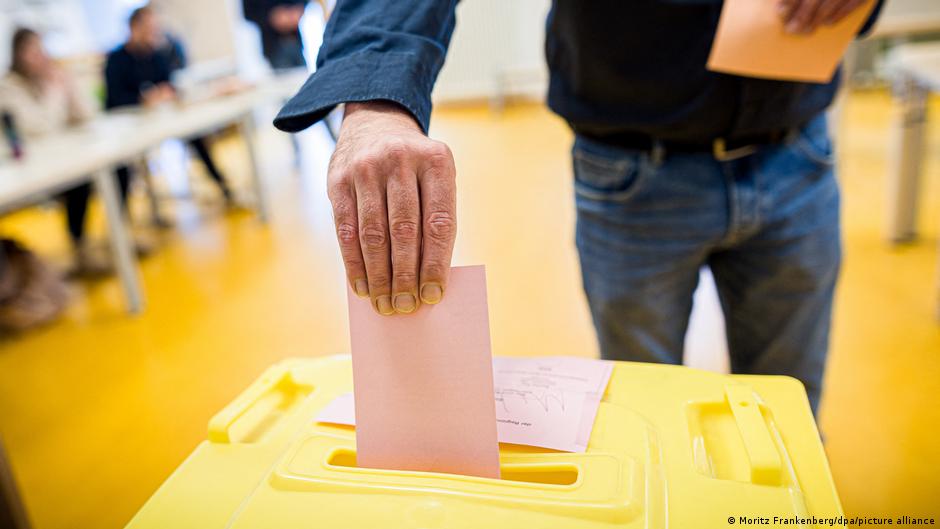
The far-right Alternative for Germany failed to win any of the three mayoral and local executive posts it contested in the second round of municipal elections in Lower Saxony, leaving mainstream and independent candidates in control of the local offices that shape many day-to-day costs for households.
The runoffs took place on Sunday, September 27, across 123 municipalities, where residents voted for mayors and heads of other local authorities. While municipal elections rarely move financial markets directly, they matter for consumers because city leaders influence property-related charges, public transport planning, housing approvals, school and childcare capacity, local energy and climate programs, and the pace of infrastructure investment.
For households in Lower Saxony, the results point to continuity in several of the state’s largest cities and to a stronger local showing for the Greens in key urban centers. For everyday investors, the vote offers another snapshot of Germany’s political landscape at a time when local budgets, inflation pressure, energy costs and public investment remain central concerns.
AfD Falls Short in Three Local Contests
AfD candidates had been seeking three leadership posts: in Salzgitter, a city of about 100,000 people, and in the towns of Munster and Bockenem, with populations of about 15,000 and 9,000 respectively. In all three contests, the AfD candidates lost by wide margins.
In Salzgitter, Frank Klingebiel of the Christian Democratic Union secured a decisive victory with 74.72% of the vote. Klingebiel has served as lord mayor since 2006. AfD candidate Patricia Mair received 25.3%.
In Munster, independent candidate Anna Adamczak won with 80.5% of the vote, while AfD candidate Christoph Weynand received 19.5%. In Bockenem, independent candidate Jens Luer won with 69.6%, defeating AfD candidate Felix Mull, who received 30.4%.
Municipal results can look distant from household finance, but city halls help determine the cost and quality of daily essentials, from transport and housing to local services.
The losses are significant because the AfD had placed candidates into second-round contests at a time when the party has been gaining attention in wider German politics. For consumers and savers, the immediate effect is not a change in currency or interest rates, but the outcomes may influence how local governments approach spending priorities, administrative continuity and public services.
Greens Hold Hanover and Gain Ground in Major Cities
In Hanover, the administrative center and largest city of Lower Saxony, Belit Onay of Alliance 90/The Greens retained the mayor’s office. Onay, who has held the post since 2019, defeated Axel von der Ohe of the Social Democratic Party in the second round.
Hanover’s result is particularly relevant for residents because major city governments oversee policies that affect household expenses, including urban mobility, housing development, environmental measures and service funding. A Green hold in the state capital suggests continued emphasis on local climate and urban policy, areas that can affect both public spending and consumer costs over time.
In Oldenburg, the state’s third-largest city, voters elected a new mayor: Jascha Rohr of the Greens defeated Ulf Prange of the Social Democratic Party. Prange had run for the party instead of Juergen Krogmann, who had served as lord mayor since November 2014.
In Goettingen, the fifth-largest city in Lower Saxony, Onyeka Oshionwu of the Greens won the runoff against Ehsan Kangarani of the Christian Democratic Union. Together with Hanover and Oldenburg, the result gives the Greens notable strength in several urban centers, even though the party finished fourth in the main round of voting across the state.
Continuity in Braunschweig and Osnabrueck
In Braunschweig, the second-largest city in Lower Saxony, Social Democrat Thorsten Kornblum retained the post of lord mayor. Kornblum has led the city since November 2021 and defeated Maximilian Pohler of the Christian Democratic Union in the second round.
In Osnabrueck, the fourth-largest city in the state, Christian Democrat Katharina Poetter also kept her post. She defeated Volker Bajus of the Greens. Poetter, like Kornblum, has led her city since November 2021.
For residents, these victories mean continuity in local fiscal management and policy planning. Local budgets are important to household finances because they can influence fees, infrastructure maintenance, municipal employment, transport routes, social services and the capacity of cities to co-finance projects with state or federal support.
What the First Round Showed
The main stage of Lower Saxony’s municipal elections took place on September 13. According to data available on September 14, the Christian Democratic Union received the most votes statewide, with 27.2%. The CDU is led nationally by German Chancellor Friedrich Merz.
The Social Democrats came second with 24.6%, followed by the AfD with 15.9%. The Greens received 14.1%, and the Left Party received 6%.
According to the election commission’s data as of September 14, turnout was 64.6%. That was 7.6 percentage points higher than in the 2021 state elections, indicating stronger voter participation in a set of contests that directly shape local administration.
Four AfD candidates were denied admission to the elections because of doubts about their commitment to Germany’s constitutional order. The AfD’s state organization is under observation by the domestic intelligence authority as a right-wing extremist grouping. The party is challenging that decision in court.
For markets, the results are unlikely to produce a direct effect on the euro or German government debt. But for households and small investors, the local picture is still worth watching. Municipal leaders help decide how the costs of climate policy, public transport, housing, schools and public administration are distributed. Those decisions can affect disposable income, local property values, and the practical cost of living in ways that are often more immediate than national campaign promises.



