Kyiv Strike Hits Maternity Hospital Area as War Risks Household Finances
Officials reported two deaths and damage near medical, residential and energy infrastructure, underscoring the financial strain on Ukrainian families.
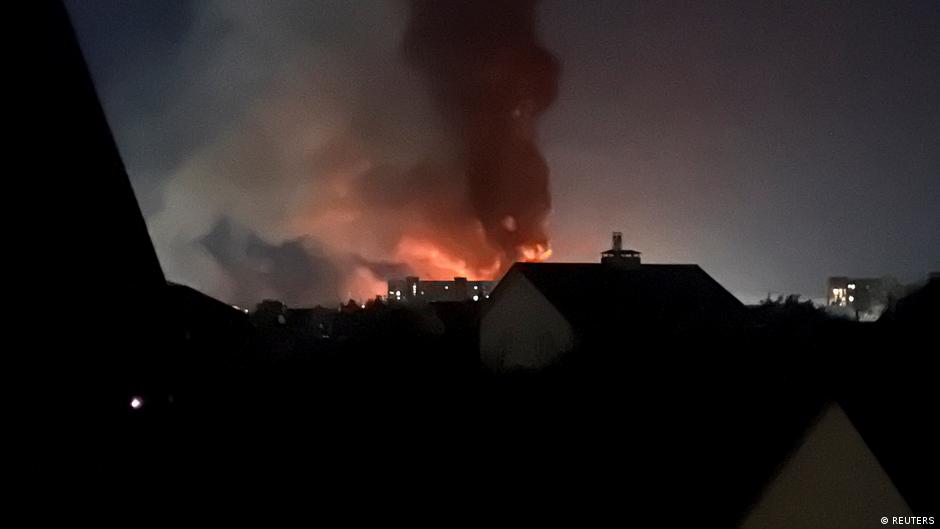
Two people were killed and six were injured after Russian armed forces shelled Kyiv overnight into Thursday, September 24, according to Kyiv Mayor Vitali Klitschko, in an attack that also damaged the area around a maternity hospital and added pressure to household finances already strained by war.
Klitschko said two of the injured were in serious condition. While the immediate human toll was the central concern, the locations affected by falling debris point to the kinds of costs Ukrainian families may now face: damaged homes, burned vehicles, disrupted medical services and possible stress on the capital’s electricity infrastructure.
For residents, these incidents can translate quickly into out-of-pocket expenses, insurance claims, temporary relocation costs and lost working time. Even when public emergency services respond quickly, families often absorb costs related to broken windows, damaged facades, destroyed cars, repairs to private homes and transport disruptions.
In Kyiv’s Podilskyi district, Klitschko said missile debris struck a parking area near a maternity hospital, setting cars on fire. Windows and part of the building’s facade were damaged. Preliminary information indicated there were no casualties inside the medical facility, he said. A nearby clinical diagnostic center was also damaged.
“All relevant services are on site. Operational headquarters are being deployed to provide assistance to people,” Odesa city military administration head Serhiy Lysak wrote after reporting a separate attack on Odesa.
The damage near a maternity hospital highlights an especially acute consumer and household concern: access to health care during wartime. Even when patients and staff avoid injury, damage to windows, facades, parking areas or adjacent diagnostic centers can disrupt appointments, force patients to travel farther, and raise operating costs for medical providers. Those costs may not appear immediately on family budgets, but they can affect availability, waiting times and household spending on transport, private care or medicine.
Infrastructure Damage and the Cost of Daily Life
In the Darnytskyi district, Klitschko said a missile fragment fell on a roadway. In the Solomianskyi and Podilskyi districts, debris landed on non-residential development sites. In the Dniprovskyi district, fragments fell in the courtyard of a 16-storey residential building and private homes, as well as on an administrative building. Private estate areas were affected, and one house sustained destruction.
For homeowners and renters, the financial implications of such damage can be significant even when injuries are avoided. A damaged home may require emergency repairs, replacement windows, temporary accommodation, cleanup and legal documentation for compensation claims. Apartment residents may face collective repair costs for shared areas, while owners of private houses may need to arrange urgent work in a market where construction materials, labor and transport can already be pressured by wartime conditions.
Car owners near the maternity hospital may face another layer of expense. Vehicle fires caused by debris can leave households without transport needed for work, child care, medical visits or evacuation planning. Replacement costs can be difficult to absorb, particularly for families holding savings in a volatile economic environment or facing income interruptions.
The Ukrainian Telegram channel Insider UA reported that about 20 missiles of different types were launched at Kyiv over 35 minutes, and that the main target of the attack was the power sector. That report, if borne out, points to the wider household risk from strikes on energy infrastructure: outages, higher backup power costs, spoiled food, disrupted remote work, and increased spending on batteries, generators, fuel and heating alternatives.
Energy attacks tend to reach beyond the immediate blast zone. For families, unreliable power can affect everything from household appliances and elevators to banking access, card payments, internet connectivity and home-based businesses. Everyday investors also watch such attacks for their potential impact on the hryvnia, inflation expectations and the stability of local financial markets.
Pressure on Savings, Currencies and Everyday Investors
The direct figures reported by officials in Kyiv were two dead and six injured, with two in serious condition. But the broader economic effects of repeated strikes are often measured in smaller, cumulative burdens: emergency spending, delayed wages, higher transport costs and precautionary savings held in cash or foreign currency.
For households, the currency dimension matters. In wartime, families often think carefully about how much money to keep in local currency for daily expenses and how much to preserve in harder currencies for emergencies. Strikes on power, housing and urban infrastructure can reinforce that cautious behavior, especially when people worry about sudden repair bills or disruptions to banking services.
Everyday investors may also respond defensively. Some may prefer liquid savings over long-term commitments, while others may seek assets perceived as more resilient to currency pressure or inflation. None of those choices eliminates risk, and the source report does not provide market data or currency movements. Still, the pattern of damage described by officials is precisely the kind of security shock that can shape consumer confidence and financial decision-making.
The reported attack was not limited to Kyiv. Serhiy Lysak, head of the Odesa city military administration, also reported a Russian armed forces attack on Odesa in a Telegram post. According to him, medical and educational institutions were damaged, as were residential buildings.
Damage to schools, hospitals and homes carries both public and private costs. Municipal services must respond, repair and coordinate assistance, while families may need to reorganize child care, schooling, commutes and medical appointments. Even when aid centers are opened and emergency teams are deployed, households often face immediate expenses before compensation or assistance arrives.
The Kyiv mayor’s account emphasized that no casualties had been reported inside the maternity hospital based on preliminary information, a crucial point for residents and families awaiting care. Yet the damage to the surrounding area underscores a persistent financial reality of the war: civilian infrastructure and household balance sheets are closely linked. When debris hits a road, a home, a parked car or a clinic, the economic consequences move rapidly from national security headlines into family budgets.



