German Right-Wing Politician Expelled Over Hitler-Like Speech: Implications for Public Trust and Market Stability
The expulsion of Alexander Eichwald from Alternative for Germany raises questions about political stability and its impact on household financial confidence and currency markets.
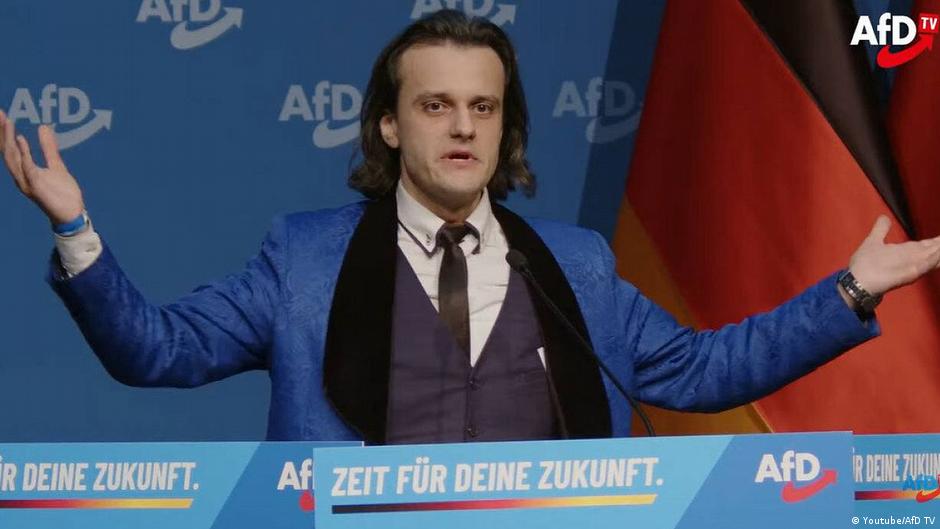
Alexander Eichwald, a 30-year-old Russian-born politician in Germany's right-wing party Alternative for Germany (AfD), was expelled by the party's disciplinary court for delivering a speech mimicking Adolf Hitler's mannerisms and speech patterns. This decision, announced on April 25, 2026, reflects serious concerns about the reputational damage such behavior causes to the party amidst growing scrutiny of extremist influences in politics.
Political Controversy and Economic Uncertainty
Eichwald gained notoriety after his appearance at the AfD youth wing congress in North Rhine-Westphalia in November 2025. His speech featured gesturing and elongated pronunciations, particularly of the letter “r,” reminiscent of Hitler’s oratory style. Eichwald attributed this style to his Russian upbringing and accent, explaining that he learned German from music by the band Rammstein. However, political opponents and the media questioned the intent behind his performance.
"His speech was a planned action to reflect the presence of neo-Nazi elements within the party and to hold a mirror to society," Eichwald said in interviews, distancing himself from accusations of parody or satire.
The controversy sparked widespread criticism and raised concerns not only about the AfD’s political direction but also about the broader implications of far-right extremism on social stability and investor confidence in Germany.
For households and everyday investors, political instability and extremist controversies can undermine trust in the political system and create uncertainty in financial markets. This uncertainty may adversely affect the euro, with potential fluctuations in currency values impacting imported goods prices and inflation. Consumers could face higher costs for everyday products, while savings in euro-denominated assets might experience volatility.
Moreover, the incident highlights the delicate balance between political freedom and safeguarding democratic values, which in turn influences economic policymaking and fiscal stability. For citizens, such events can translate into cautious spending behavior, affecting retail sales and consumer credit markets.
Despite the expulsion, Eichwald retains the right to appeal within the party’s federal arbitration court and has expressed his intention to challenge the decision. His ongoing critique of the party leadership and symbolic references to Germany’s historical political crises underscore persistent tensions within AfD and raise questions about the party’s future trajectory.
In financial terms, periods of political uncertainty often lead central banks and investors to adopt conservative stances, potentially influencing interest rates and investment flows. Households should monitor these developments as they can impact mortgage rates, loan conditions, and investment returns.
As Germany continues to grapple with the rise of populist and extremist political forces, the interplay between politics and economic stability remains critical. Consumers and investors alike must stay informed about how political controversies may ripple through markets and household finances.