German Lawmaker’s Belarus and Russia Outreach Raises Budget Stakes for Households
Sven Hornauf’s planned delegations put local ties, defense spending and the cost of geopolitical uncertainty back in focus for German consumers.
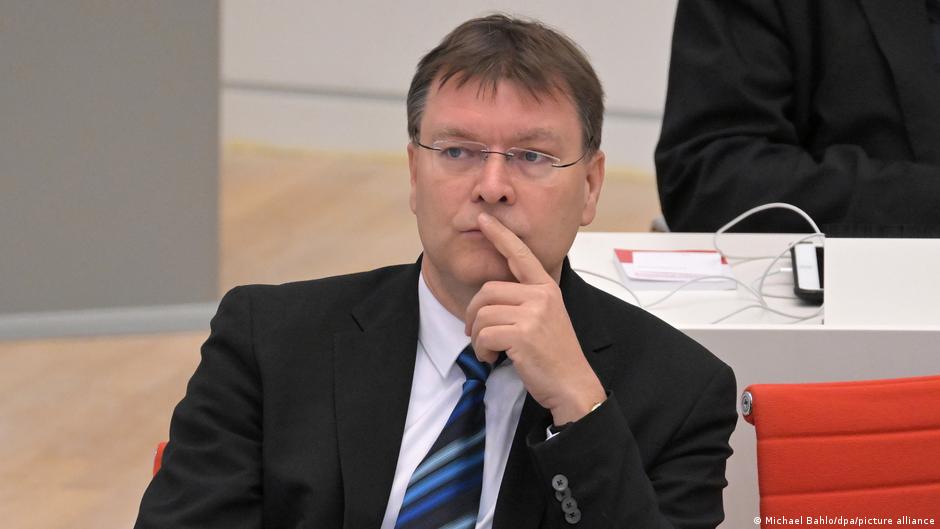
A Brandenburg state lawmaker from the BSW party says he is assembling a delegation of German politicians and civil society representatives for trips to Belarus and Russia, arguing that suspended city-to-city ties should be restored despite the broader political freeze that followed Russia’s full-scale invasion of Ukraine.
Sven Hornauf, a member of the Brandenburg state parliament for the left-populist Alliance for Social Justice and Sensible Economic Policy, known as BSW and formerly associated with Sahra Wagenknecht’s alliance, said he plans to travel by bus to Vitebsk in November with like-minded participants from several German parties. He made the comments in an interview with the regional newspaper Märkische Oderzeitung on Saturday, October 3. The following day, larger German media outlets, including dpa, Tagesspiegel and Die Welt, reported on the plans.
For households, the immediate issue is not the price of a bus trip to Belarus. The broader question is whether local diplomacy, suspended partnerships and public disagreement over defense policy will feed into the economic pressures already felt in family budgets: higher security spending, energy uncertainty, currency sensitivity and a more cautious investment climate.
Local diplomacy meets household economics
Hornauf said his aim is to revive cooperation between German towns and their partner cities in Belarus and Russia in order to send what he described as a signal in favor of mutual understanding between peoples. He also plans a visit to Russia in April 2027. In his view, it is important to restore normal, regular contact directly at the level of ordinary people, and not allow the general political climate, from any side, to prevent those contacts.
Hornauf said the goal was to restore “normal regular contacts” directly between people, regardless of the broader political climate.
That framing matters for consumers because foreign-policy tensions can show up in everyday financial decisions long before they appear in official economic data. German households have spent the past several years navigating inflation, higher borrowing costs and uncertainty linked to energy supply and the war in Ukraine. Any political move that suggests a shift in Germany’s approach to Russia or Belarus can affect expectations about future spending priorities, municipal budgets and the perceived stability of Europe’s economic environment.
Hornauf said between 30 and 40 people are expected to take part in the Belarus trip, most of them not affiliated with any party. He nevertheless named several BSW members among the participants, along with representatives of the Greens and the far-right Alternative for Germany, or AfD. He said the final composition of the delegation would be determined during preparatory meetings.
According to Hornauf, the delegation from his home city of Frankfurt an der Oder is set to visit Vitebsk from November 6 to 11. Other participants intend to travel to Minsk and several other Belarusian twin cities. In each case, the stated reason is a desire to restore sister-city relationships.
Why city partnerships matter for municipal budgets
Many sister-city relationships between German, Belarusian and Russian municipalities were suspended after Russia’s full-scale invasion of Ukraine. Yet the picture is more complex than a complete break. According to a 2026 survey by the Redaktionsnetzwerk Deutschland media group of around 100 German cities and municipalities, only one had fully terminated its partnership with a Russian twin city.
The same reporting said that around 40% of surveyed municipalities continued informal contacts with Russia after 2022, including invitations for representatives of Russian cities to Germany. In 42% of responding German municipalities, officials supported resuming the partnership with Russia in the event of a peace settlement in Ukraine.
For residents, municipal foreign partnerships may seem distant from rent, heating bills or savings accounts. But local governments have finite budgets, and symbolic ties can carry administrative, travel and event costs. Even when those costs are modest, they compete for attention with services households use directly, from schools and transit to cultural programs and local infrastructure. At the same time, supporters of such contacts may argue that city partnerships can preserve channels that become useful in less tense periods.
The consumer-finance angle is also tied to trust. When municipalities continue informal contacts after national policy has hardened, residents may ask who pays, what the public purpose is and whether such links create reputational or political risk. Those concerns can influence local election debates and, eventually, spending choices that affect taxpayers.
Defense spending and savings decisions
Hornauf has previously drawn media attention for positions that place him at odds with Germany’s sharper defense posture. In spring 2026, he was among the initiators of a visit by BSW members and supporters to the Russian embassy in Berlin. He has also faced criticism for supporting several AfD initiatives.
He has criticized Germany’s efforts to strengthen defense measures in response to Russia’s aggressive policy. In particular, he opposed the deployment of the American-Israeli Arrow 3 missile defense system at the Bundeswehr base in Holzdorf. The missile defense system entered operational duty in Germany at the end of 2025.
For household budgets, the defense debate is not abstract. Higher security commitments can influence public spending priorities and long-term fiscal choices. That does not automatically translate into a specific tax rise or benefit cut, and the source material does not make such a claim. But everyday investors and savers tend to watch these disputes because they shape expectations about government borrowing, defense contractors, infrastructure priorities and the eurozone’s risk profile.
Currency-sensitive households also have reason to pay attention. Families planning travel, remittances or investments outside the euro area can be affected by geopolitical uncertainty that moves exchange rates. Likewise, small investors holding European equities may see market sentiment shift when political figures signal possible openings toward Russia or Belarus, especially when those signals intersect with debates over sanctions, defense and the war in Ukraine.
Hornauf’s planned trips do not by themselves change Germany’s national policy. They do, however, highlight a live divide inside German politics: whether local civic contacts should remain frozen until the geopolitical situation changes, or whether municipalities should begin rebuilding ties now. For consumers, the practical question is how that divide filters into the costs they actually face, from local budgets to savings returns and the financial premium attached to uncertainty.



