German Draft Objections Surge, Raising Budget Questions for Families
More than 12,000 people in Germany filed military service objections in eight months, as households weigh uncertainty, careers and state defense plans.
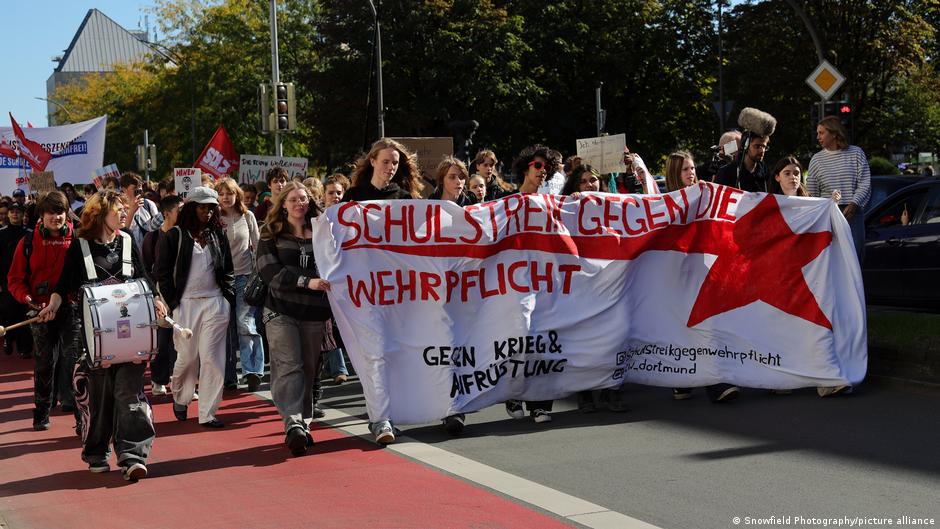
Germany’s debate over military service is moving from parliament and barracks into family budgets, education plans and household financial decisions. From January through the end of August 2026, at least 12,102 people in Germany declared that they did not want to serve in the country’s armed forces, according to figures reported by the Funke media group on Monday, October 5.
The applications were submitted to the Federal Office for Family and Civil Society Affairs, known as BAFzA. The scale of the increase is striking: in all of 2025, German authorities received 3,879 applications from people refusing military service. In just eight months of 2026, the number was more than three times higher than the total for the whole of last year.
For households, the issue is not only political. A potential return of compulsory service, even in a limited form, could affect young people’s entry into the labor market, university timelines, apprenticeships, savings plans and family expectations around income. Parents and young adults are now having to factor defense policy into decisions that previously looked mostly educational or career-related.
Why the Numbers Matter for Household Planning
The sharp rise is partly linked to the German Defense Ministry’s rollout of questionnaires under a reform of Bundeswehr recruitment that took effect on January 1. Starting in 2026, 18-year-old men are required to complete a questionnaire asking about their willingness to join Germany’s armed forces. Young people are allowed to declare in advance that they refuse military service.
That administrative change appears to have made the question more immediate for families. A form arriving from the state can turn an abstract national debate into a practical household discussion: whether a teenager should prepare for vocational training, university, a job, or a possible period of service. Even when no compulsory service is imposed, uncertainty can change how families think about emergency funds, tuition timing and early-career earnings.
BAFzA has cautioned that many applications are not being filed correctly. A spokeswoman for the office said applicants often make mistakes in their submissions, and that the content of some applications “does not meet the requirements for recognizing the refusal as justified.” As a result, she said, such applications “have to be returned without consideration.”
“Does not meet the requirements for recognizing the refusal as justified,” the BAFzA spokeswoman said of some applications, according to media reports.
For consumers, that detail matters because an incomplete or rejected application can prolong uncertainty. Families may need to spend additional time gathering documents, seeking advice or delaying financial choices while they wait for clarity. The process also creates a new layer of bureaucracy for young adults at a stage when many are already dealing with applications for education, training, jobs, housing or student support.
Defense Policy Meets the Labor Market
Germany suspended compulsory military service in 2011. Under the current reform, mandatory service could be partially reintroduced by a decision of the Bundestag. The model under discussion is described as a “military obligation if necessary,” which would be activated if the country cannot reach the required number of volunteers.
The Defense Ministry’s target is ambitious: by 2035, up to 260,000 people are expected to be serving in the Bundeswehr at the same time. That target could have broader economic consequences. If more young people enter military service, voluntarily or otherwise, employers may need to adjust hiring expectations for school leavers and early-career workers. Households may also face changes in the timing of first full-time wages, contributions to savings accounts, rent payments and other financial milestones.
At the same time, the Bundeswehr has been widening its search for recruits. In recent years it has expanded recruitment activity, including setting up a stand at Gamescom, one of the world’s largest video game trade fairs, held in Cologne. That approach places military recruitment alongside consumer culture and youth entertainment, underscoring how the armed forces are competing for attention in the same spaces where young people are making lifestyle, education and career choices.
The policy remains contested. German school students have criticized the possible return of the “military obligation if necessary,” and large protests took place in several German cities in September in connection with the issue. For families, those demonstrations reflect more than ideological resistance; they point to concerns about autonomy, future earnings and the financial consequences of interrupted plans.
Recruitment Is Rising, But So Are Objections
The rise in refusal applications comes at the same time as the Bundeswehr is reporting stronger recruitment figures. At the end of July 2026, the German Defense Ministry said the armed forces had reached their highest personnel level in 13 years, with 186,700 service members. Compared with July 2025, that represented an increase of more than 2%, or 3,700 service members.
The ministry also said that of roughly 378,000 people who had been sent questionnaires since the start of 2026, about 2,630 completed the service fitness assessment process in July alone. That was 35% more than in the previous month.
By that point, around 12,100 volunteers and short-term contract service members were already serving in the Bundeswehr under the new recruitment system. That was about 6% more than a year earlier. The ministry also recorded a substantial increase in applications and acceptances for contract military service. In July 2026, 47,300 people submitted such applications, 26% more than in the same month a year earlier. By the end of July, the number of new recruits stood at 15,400, a 12% increase compared with 2025.
Those figures show two trends moving at once: more people are entering or considering military service, while more are also formally objecting to it. For everyday investors and households watching Germany’s public finances, that dual movement points to a larger question about the cost of expanding defense capacity. Recruitment, training, pay, equipment and administration all require funding, and the long-term plan to grow the Bundeswehr could shape future budget priorities.
For now, the immediate financial impact is most visible at the household level. Young Germans and their families are being asked to think earlier and more concretely about military service, while the state is testing whether voluntary recruitment can meet defense goals. If it cannot, the Bundestag may face pressure to activate a limited form of compulsory service, with consequences that would extend from national security policy to kitchen-table financial planning.



