German and Austrian Raids Highlight Sanctions Risks in Luxury Car Trade
Investigators allege 59 vehicles were routed to Russia through third countries, underscoring financial risks for dealers, banks and consumers.
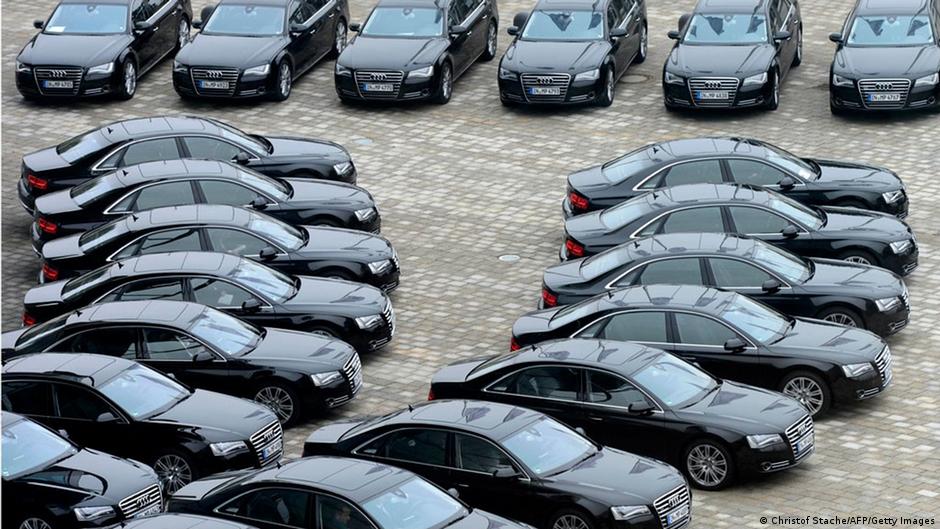
Authorities in Germany and Austria have searched the homes and business premises of two entrepreneurs suspected of sending vehicles to Russia through third countries in violation of European Union sanctions, a case that points to the growing financial exposure around cross-border car sales, payments and compliance.
Prosecutors in Kaiserslautern said on Tuesday, September 29, that the two businessmen are suspected of exporting 53 passenger cars and six semitrailer tractors to Russia between autumn 2022 and the end of 2024. Investigators allege the vehicles were routed through third countries, including Belarus, Kyrgyzstan and Georgia, to conceal the final destination and bypass EU restrictions.
The financial scale of the case is substantial. At prosecutors’ request, the Kaiserslautern district court authorized the seizure of assets worth about 7 million euros, which investigators describe as the suspected proceeds from the illegal exports. For households, savers and everyday investors, the case is a reminder that sanctions enforcement is no longer a remote geopolitical matter: it can affect the value of vehicles, the risk profile of banks and dealerships, and the transparency of payments moving across borders.
Why the Case Matters for Consumers and Investors
The investigation comes at a time when European consumers are already dealing with high vehicle prices, elevated borrowing costs and pressure on household budgets. Luxury cars may seem far removed from everyday spending, but enforcement actions in this market can ripple into insurance, dealer financing, used-car availability and compliance costs that businesses may pass on to customers.
For car dealers, leasing companies and lenders, the case highlights the danger of transactions that look ordinary at the point of sale but later become problematic because of the buyer, route or end destination. Banks that process payments connected to suspicious exports can face additional scrutiny, while dealerships may need to spend more on compliance checks, documentation and customer due diligence. Those costs can feed into prices and financing terms, particularly in sectors already operating with tight margins.
The searches took place on September 8 at residential and commercial properties linked to the businessmen in Neustadt an der Weinstrasse, in the German state of Rhineland-Palatinate, and in Vienna. Law enforcement authorities from Germany, Austria and Belgium took part in the operation.
During the searches in Germany, authorities seized two vehicles, a Porsche and a Mercedes-Benz. In Austria, investigators seized 85,000 euros in cash. A further 278,000 euros was frozen in bank accounts in Germany, Austria and Belgium. Prosecutors also said three hunting rifles and ammunition were found at the premises of the entrepreneur in Neustadt, leading to an additional investigation into a possible breach of weapons laws.
Prosecutors said both suspects have so far exercised their right to remain silent, and the investigation is continuing.
The alleged use of Belarus, Kyrgyzstan and Georgia as transit points illustrates a wider challenge for sanctions policy. Goods that are banned from direct export to Russia may still move through intermediary countries, creating complicated paper trails and making enforcement dependent on customs records, bank transfers, dealer documentation and cooperation among several jurisdictions.
Sanctions Enforcement Meets Household Finance
For households, the most direct impact is not that a luxury car ends up in Russia, but that tighter enforcement changes the economics of the wider vehicle market. Dealers may become more cautious about international sales, banks may question cross-border payments more aggressively, and insurers or finance companies may reassess risk where a vehicle could be exported after purchase. That can mean more paperwork and slower transactions for legitimate buyers.
Consumers shopping for used cars may also face a market shaped by unusual export demand. If high-end European vehicles are being diverted abroad despite restrictions, supply can tighten in some categories and prices can remain firmer than expected. Even for buyers far below the luxury segment, market distortions in one tier can influence trade-in values, dealer inventory decisions and financing offers across the chain.
Currency and savings considerations also matter. The suspected proceeds in this case were measured in euros, and investigators moved to freeze bank balances across several countries. For savers and investors, that underlines how compliance risk can intersect with financial institutions. Banks with weak controls over sanctioned trade can face reputational and regulatory pressure, while firms exposed to international vehicle sales may face sudden asset freezes, legal costs or losses on inventory.
The Kaiserslautern case is not isolated. In March, a court in Würzburg sentenced a car dealer from Bavaria to six years in prison for supplying 111 luxury vehicles to Russia in violation of sanctions. According to investigators in that case, the cars reached employees of the FSB, the Federal Protective Service, Rosneft and the Russian presidential administration. In July 2025, an employee of a car dealership in Hesse received a five-year prison sentence for selling 71 luxury cars to Russia, also in circumvention of sanctions.
German prosecutors have been pursuing a broader set of suspected cases. In May 2025, it was reported that German authorities were investigating more than 40 cases linked to the supply of expensive cars to Russia. Media reports described an effort by German justice authorities to target dishonest car dealers, while experts cautioned that only a small share of shadow deliveries was likely being stopped.
The wider trade routes are also evolving. In February, Reuters reported that tens of thousands of cars, including German luxury vehicles, were being exported to Russia in circumvention of sanctions via China. Some of those cars are produced in China by foreign companies, while others are imported into China from abroad. New cars are reportedly registered as used vehicles, allowing sellers to avoid obtaining manufacturers’ permission to sell them into Russia.
For everyday investors, the message is practical: companies with exposure to international auto sales, trade finance, logistics and banking compliance carry risks that may not be visible in headline earnings. A profitable export business can quickly become a legal liability if sanctions rules are breached. For consumers, the same enforcement drive may show up less dramatically, through stricter sales checks, slower financing approvals and higher compliance costs folded into the price of doing business.
The current investigation remains ongoing, and the suspects have not provided statements to prosecutors. But the asset seizures, cross-border coordination and previous prison sentences show that European authorities are treating sanctions breaches in the auto sector as serious financial crimes, not paperwork violations.